

When your toenails turn yellow, thicken, or crumble, it’s often not just dirt—it’s onychomycosis, a fungal infection of the nail that affects up to 10% of adults worldwide. Also known as toenail fungus, it’s not just a cosmetic issue—it can hurt, make walking uncomfortable, and spread to other nails or even skin. This isn’t something you catch from walking barefoot in a gym once. It builds slowly, often starting as a small white or yellow spot under the tip of the nail, and grows worse over months or years if ignored.
Onychomycosis thrives in warm, moist places—think sweaty shoes, public showers, or shared towels. People with diabetes, poor circulation, or a weakened immune system are at higher risk, but even healthy adults get it. It’s not contagious like a cold, but it can spread from one nail to another, or from person to person through shared footwear or nail clippers. And here’s the catch: antifungal treatment, the standard approach to clearing nail fungus doesn’t always work the way people expect. Oral meds like terbinafine or itraconazole can cure it in 60-80% of cases, but they take months and need liver monitoring. Topical creams and nail lacquers? Most are too weak to reach the infection deep under the nail. Laser treatments sound high-tech, but studies show they’re no better than placebo for most people.
What actually helps? It’s not magic—it’s consistency. Keeping nails trimmed, dry, and clean. Wearing breathable shoes. Using antifungal powder in socks. And when you do treat it, picking the right method matters. Some people try tea tree oil or vinegar soaks because they’re natural, but there’s little proof they work beyond a placebo. Meanwhile, nail health, a broader concern tied to nutrition, hygiene, and underlying conditions plays a huge role. Low zinc, vitamin D deficiency, or even psoriasis can mimic or worsen fungal nails. That’s why some cases don’t improve until you look beyond the nail itself.
There’s no quick fix. But there are proven paths. What you’ll find below are real stories and clear guides from people who’ve been there—how they treated their infection, what worked, what didn’t, and how they kept it from coming back. No hype. No fluff. Just what helps when your nails start looking wrong and you’re tired of hiding them.
Posted By John Morris On 29 Nov 2025 Comments (8)
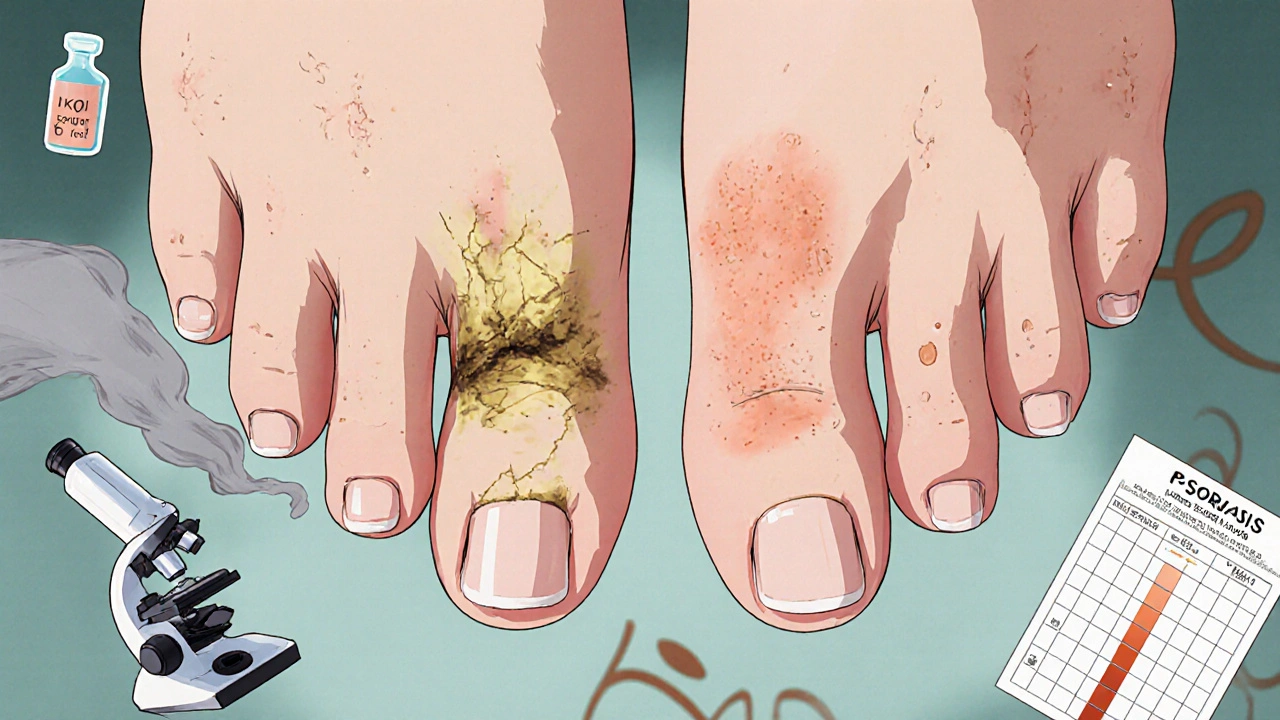
Fungal nail infections and nail psoriasis look similar but need totally different treatments. Learn how to tell them apart, what tests actually work, and why misdiagnosis is so common-and costly.
READ MORE