

When your nails become pitted, thickened, or lift off the nail bed, it’s not always fungus. It could be nail psoriasis, a visible sign of psoriasis affecting the nail matrix and bed, often linked to skin and joint inflammation. Also known as psoriatic nail dystrophy, it’s not just cosmetic—it’s a signal that your immune system is overactive, and it often comes with psoriatic arthritis, a type of inflammatory arthritis that affects joints and tends to appear alongside nail changes.
Nail psoriasis doesn’t show up alone. It’s tied to the same immune triggers as plaque psoriasis on your skin, and about 50% of people with psoriasis will develop nail changes at some point. Unlike fungal infections, which usually start at the tip and spread downward, nail psoriasis often begins with tiny pits or oil spots (yellow-brown discoloration) under the nail. The nail might separate from the bed, crumble, or grow abnormally thick. Many people mistake it for athlete’s foot or aging nails, leading to months of wrong treatments—like antifungals that do nothing. That’s why getting the right diagnosis matters. If you have psoriasis on your skin or joints, and your nails are changing, it’s not coincidence—it’s connected.
What helps? Topical steroids and vitamin D analogs applied directly to the nail can work, but they’re slow. Injections of steroids into the nail bed give faster relief for some. For more severe cases, systemic treatments like methotrexate, a disease-modifying drug used to slow immune attacks on skin and joints or biologics targeting specific immune proteins (like TNF-alpha or IL-17) can clear nail changes entirely. These aren’t quick fixes—they take weeks to months—but studies show they improve nail appearance in over 60% of patients. The key is treating the root cause, not just the symptom. And if your nails are changing, don’t ignore it. It’s often the first sign that your psoriasis is spreading beyond the skin.
What you’ll find below are real, practical guides on managing this condition—from how to talk to your doctor about treatments that actually work, to understanding why some medications help your nails while others don’t. You’ll see how psoriasis links to arthritis, how to avoid common mistakes with topical treatments, and what new options are making a difference. No fluff. Just what you need to know to get better.
Posted By John Morris On 29 Nov 2025 Comments (8)
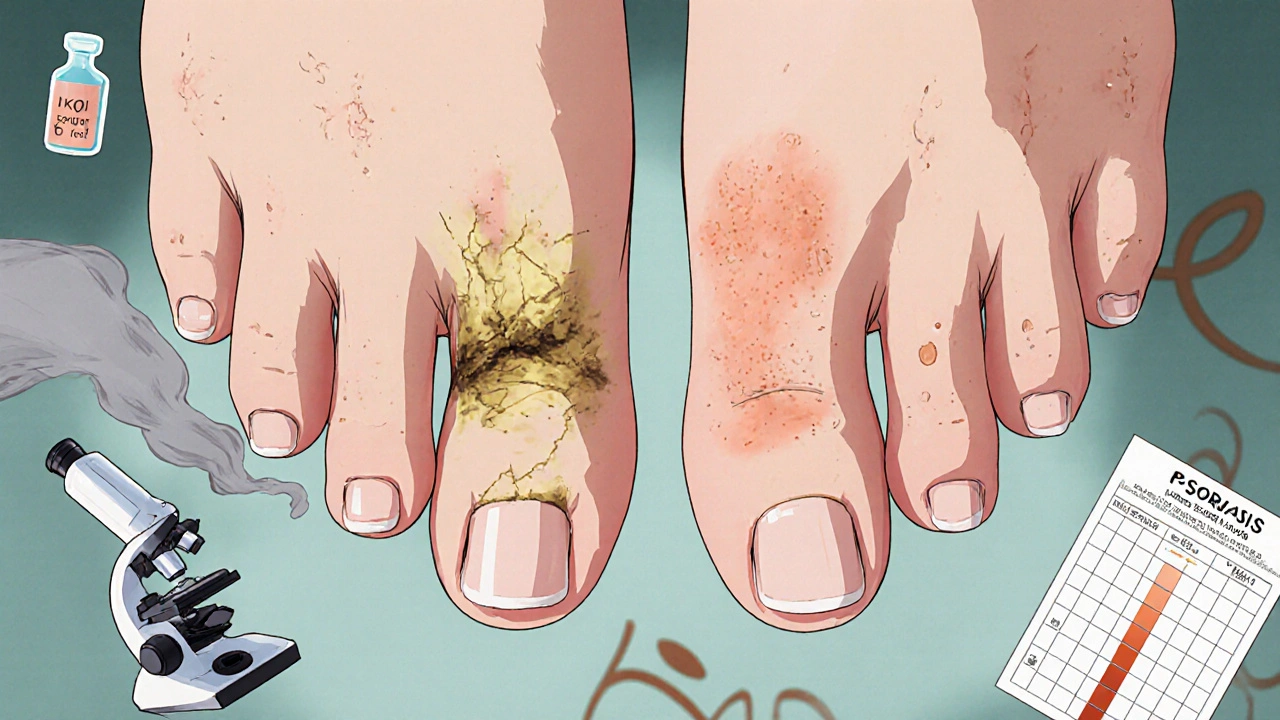
Fungal nail infections and nail psoriasis look similar but need totally different treatments. Learn how to tell them apart, what tests actually work, and why misdiagnosis is so common-and costly.
READ MORE