


Why Wound Care Matters More Than You Think
Even a small cut can turn into a big problem if not handled right. Every year, millions of people deal with wounds that don’t heal well-some because they used hydrogen peroxide, others because they left the bandage on too long, or didn’t keep it moist. The truth? Most wounds heal fine on their own, but only if you give them the right environment. Clean, moist, protected. That’s it. Skip the old myths, and follow what science actually says.
Step One: Clean the Wound the Right Way
Don’t reach for the hydrogen peroxide or rubbing alcohol. Those might feel like they’re doing something, but they’re actually killing healthy cells and slowing healing by up to 50%. Instead, use cool running water. Let it flow over the wound for 5 to 10 minutes. This isn’t just about washing off dirt-it’s about flushing out bacteria. Studies show this single step cuts infection risk by 40%.
If there’s grit or debris stuck in there, use clean tweezers. Wipe them with alcohol first. Gently lift it out. Don’t poke or dig. If you can’t get it out, don’t force it. See a professional.
For the skin around the wound, use mild soap and water. But don’t scrub the open area. Soap can irritate the raw tissue. Just rinse the area around it. Pat dry gently with a clean towel. No rubbing.
Step Two: Choose the Right Dressing
Wounds heal best when they’re moist-not wet, not dry. That’s why petroleum jelly works better than most antibiotic ointments for most people. It keeps the wound hydrated without the risk of allergic reactions. In fact, a 2021 study found that plain petroleum jelly reduced scarring just as well as antibiotic creams, with far fewer skin reactions.
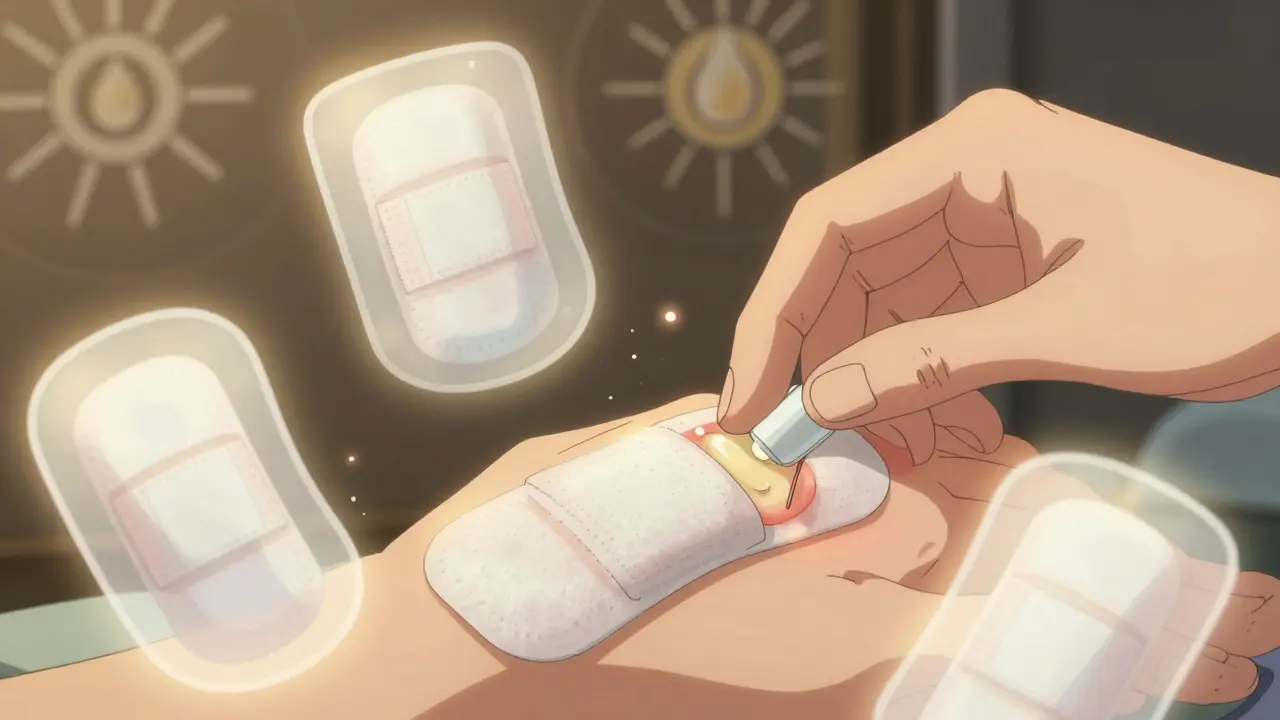
For small cuts and scrapes, a simple adhesive bandage is fine. But if the wound is weeping or draining, you need something more absorbent. Foam dressings or alginate pads soak up fluid without sticking. For dry, shallow wounds, hydrocolloid bandages (like those little clear patches) create a sealed, moist environment that speeds healing.
Change your dressing every day, or sooner if it’s soaked through. Never pull it off fast. Wet it gently with water first, or use saline to loosen it. Yanking it off tears new skin and causes pain-and delays healing.
Avoid tape wrapped tightly around arms or legs. That’s a tourniquet. It cuts off blood flow. Even a slightly tight bandage can cause swelling or nerve damage. Leave room for movement.
Step Three: Prevent Scars Before They Start
Scars aren’t just cosmetic. They can be tight, itchy, and restrict movement. The key to minimizing them? Moisture and sun protection.
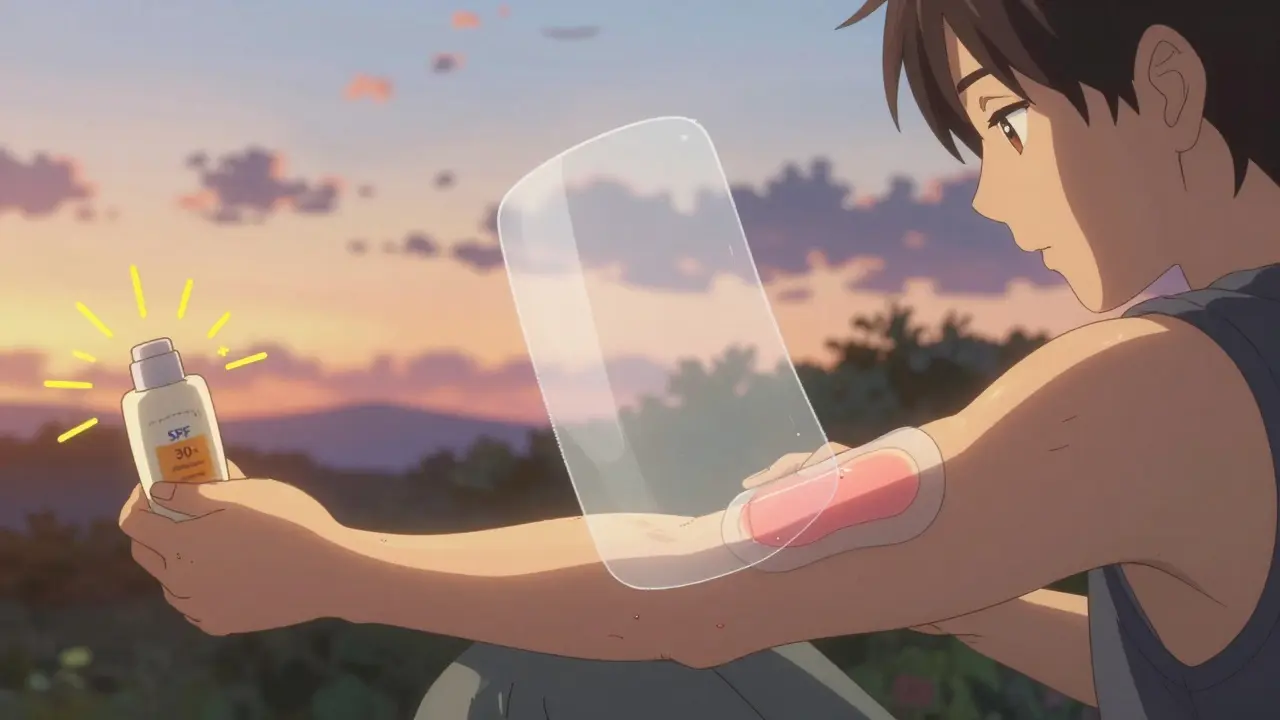
Once the wound has closed (usually after 10-14 days), start applying silicone gel sheets or silicone-based ointments. These are proven to reduce raised, red scars by 50-60%. They work by regulating moisture and pressure on the healing skin. Apply them daily for at least 12 weeks. Don’t skip this step just because it looks fine.
And never forget the sun. Healing skin is extremely sensitive to UV rays. Exposure increases dark spots and discoloration by up to 80%. For at least a year after the wound heals, cover it with clothing or apply SPF 30+ sunscreen every day. Even on cloudy days. UV damage doesn’t wait for sunshine.
What Not to Do
Here’s what most people get wrong:
- Don’t use hydrogen peroxide or alcohol. They damage tissue and delay healing.
- Don’t pop blisters. They’re nature’s protective layer. Breaking them raises infection risk by 35%.
- Don’t use wet-to-dry dressings. These rip off new skin every time you change them. They’re outdated and painful.
- Don’t ignore signs of infection. Redness spreading beyond 1 inch, pus, fever, or no improvement after 7 days? See a doctor. Cellulitis doesn’t wait.
Special Cases: Burns, Diabetic Wounds, and Pressure Sores
Not all wounds are the same.
Burns: Run cool (not ice-cold) water over the area for 10-15 minutes. Don’t break blisters. Cover loosely with sterile gauze. See a doctor for anything bigger than a palm-sized burn.
Diabetic wounds: If you have diabetes, even a tiny blister can turn serious. Check your feet daily. If you see any break in the skin, get it checked within 24 hours. Diabetics heal 40% slower and have higher infection rates.
Pressure sores: If someone is bedridden or uses a wheelchair, pressure sores are a real danger. Keep skin clean and dry. Use cushions to relieve pressure. Position at a 30-degree angle when lying down. Heels should never touch the bed.
Hydration and Nutrition: The Hidden Factors
Healing isn’t just about what you put on the skin. It’s about what you put in your body.
Drink at least 0.5 fluid ounces of water per pound of body weight every day. Dehydration slows healing by 25-30%. Eat enough protein-chicken, eggs, beans, tofu. Skin rebuilds itself from protein. Vitamin C and zinc help too. Orange juice, bell peppers, nuts, and whole grains support tissue repair.
When to Call a Doctor
You don’t need to panic over every scrape. But watch for these red flags:
- Redness spreading past the edge of the wound
- Pus or cloudy fluid
- Fever over 100.4°F (38°C)
- Wound isn’t closing after 7 days
- Pain getting worse, not better
- Numbness or tingling around the area
If any of these happen, don’t wait. Go to a clinic or urgent care. Early treatment stops small problems from becoming big ones.
The Bottom Line
Good wound care isn’t complicated. Clean it with water. Keep it moist with petroleum jelly or silicone gel. Protect it from the sun. Change the dressing daily. Watch for warning signs. That’s it.
Most people heal fine. But the ones who heal best-and with the least scarring-are the ones who skip the myths and stick to the facts. You don’t need expensive products. You don’t need to be a nurse. You just need to know what works-and what doesn’t.
Raja P
December 22, 2025 AT 15:47Harsh Khandelwal
December 23, 2025 AT 10:43Lindsey Kidd
December 24, 2025 AT 09:37Rachel Cericola
December 26, 2025 AT 01:09Blow Job
December 27, 2025 AT 20:14Christine Détraz
December 27, 2025 AT 22:43EMMANUEL EMEKAOGBOR
December 28, 2025 AT 11:37CHETAN MANDLECHA
December 28, 2025 AT 14:13Ajay Sangani
December 30, 2025 AT 05:53Pankaj Chaudhary IPS
December 31, 2025 AT 13:41