

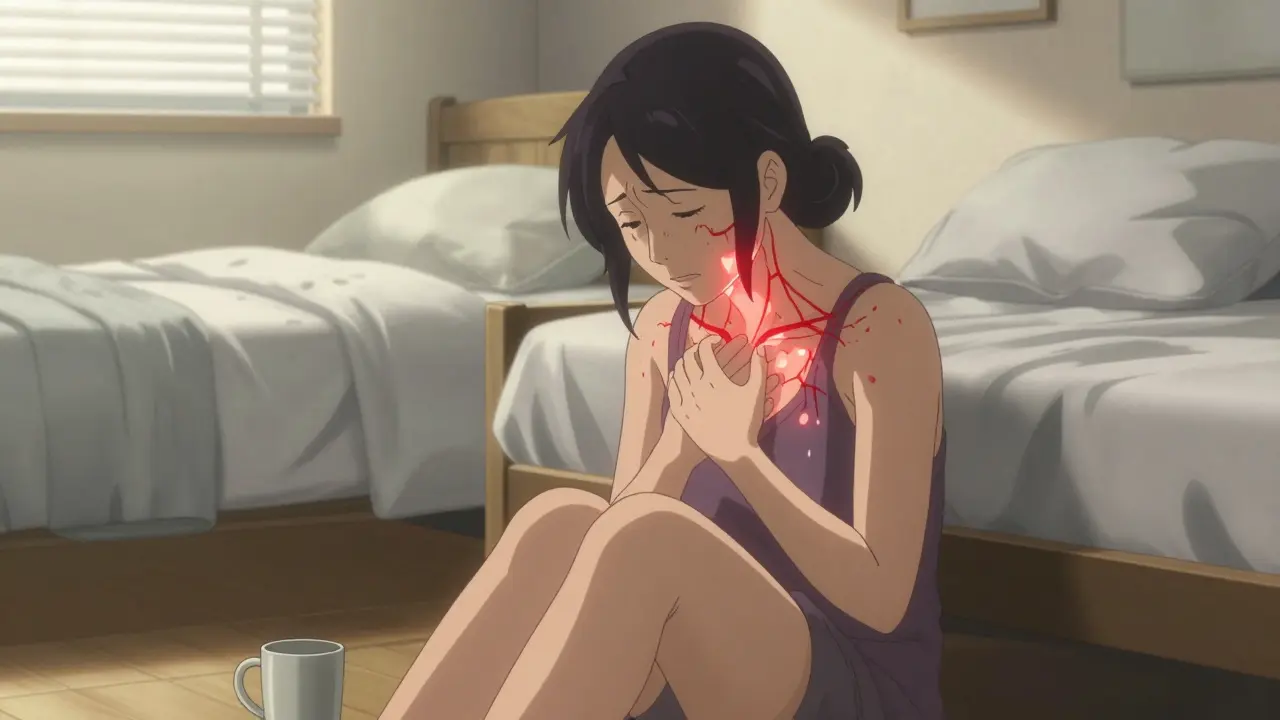
Heart disease kills more women than all cancers combined. Yet, most women still don’t realize it’s their biggest health threat. In the U.S. alone, about 307,000 women die from heart disease every year-that’s one in five female deaths. And the worst part? Many of these deaths happen because symptoms are missed, ignored, or misdiagnosed as something else-like stress, indigestion, or aging.
What Heart Disease Looks Like in Women
When people think of a heart attack, they picture a man clutching his chest, collapsing on the sidewalk. That’s the movie version. In real life, especially for women, it rarely looks like that. While chest pain is still the most common symptom, only about 65% of women report it during a heart attack. That means nearly half of women have a heart attack without classic chest pain at all. Instead, they feel things like:- Unexplained, crushing fatigue that makes even simple tasks like making the bed feel impossible
- Shortness of breath during activities they used to handle easily
- Pain or pressure in the jaw, neck, shoulder, or upper back
- Nausea, vomiting, or stomach upset that feels like the flu
- Dizziness, lightheadedness, or sudden sweating
Why Women’s Hearts Are Different
It’s not just about symptoms. Women’s hearts and arteries are physically different. Their coronary arteries are smaller. Their heart muscle responds differently to stress. Hormones play a bigger role than most doctors realize. One major condition that affects women far more than men is microvascular disease. This isn’t a clogged main artery like in traditional heart disease. Instead, the tiny blood vessels that feed the heart become inflamed or damaged. Symptoms? Fatigue, shortness of breath, chest tightness during stress-but no blockages show up on a standard angiogram. That’s why many women are told, “Your tests are normal,” when they’re actually having heart problems. Another condition unique to women is spontaneous coronary artery dissection (SCAD). This is when a tear forms in a heart artery-often without warning, and often in women under 60 with no traditional risk factors like smoking or high cholesterol. SCAD is the leading cause of heart attacks in pregnant women and women under 50. Then there’s Takotsubo syndrome, also called broken heart syndrome. It’s triggered by extreme emotional or physical stress-a death in the family, a divorce, even a surprise party. The heart muscle temporarily weakens, mimicking a heart attack. Women make up 90% of cases.Hidden Risk Factors Most Women Don’t Know About
You’ve heard about high blood pressure, smoking, and obesity. Those matter. But for women, there are other risk factors that are often ignored:- Pregnancy complications: Preeclampsia, gestational diabetes, or delivering a baby prematurely (before 37 weeks) can double or even triple your risk of heart disease later in life.
- Menopause: After menopause, estrogen drops, and the protective effect it had on the heart fades. Women’s risk of heart disease spikes after 50.
- Autoimmune diseases: Lupus, rheumatoid arthritis, and psoriasis all increase inflammation in the body-and that damages arteries over time.
- Chronic stress and depression: Women are twice as likely as men to experience depression, and mental stress triggers heart symptoms 37% more often in women than in men.
- Polycystic ovary syndrome (PCOS): Women with PCOS have higher insulin resistance, higher blood pressure, and more abdominal fat-all of which raise heart disease risk.
Why Diagnosis Is So Often Delayed
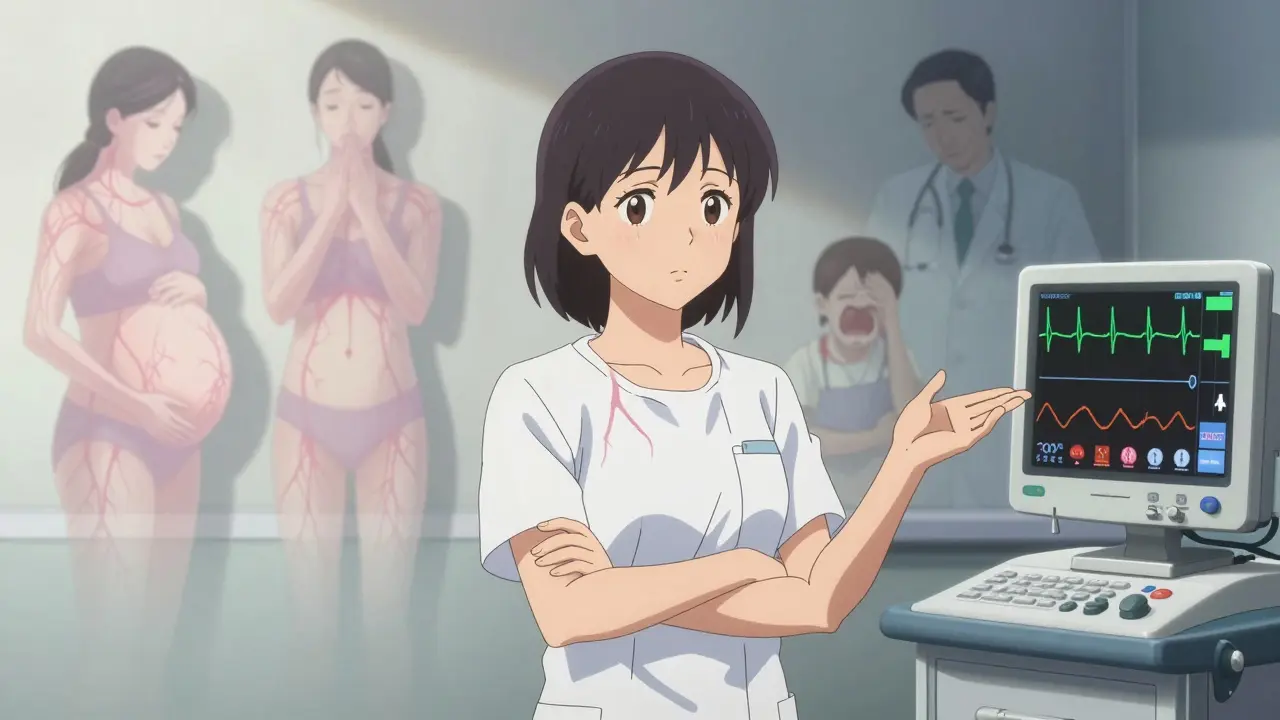
There’s a deep bias in medicine that still thinks heart disease is a “man’s disease.” A 2022 study in JAMA Internal Medicine found that in 68% of emergency room cases where women had heart symptoms, doctors assumed they were anxious or emotional-rather than checking for heart problems. Women are more likely to be told, “It’s just stress,” “You’re too young,” or “You’re probably just having hot flashes.” But these aren’t excuses-they’re missed opportunities. And it’s not just doctors. Women themselves often downplay their symptoms. A study from the Family Heart Foundation found that women are 59% more likely than men to blame their symptoms on indigestion, muscle strain, or anxiety. That leads to an average delay of 2.3 hours before seeking help. Every minute counts. After 90 minutes without treatment, heart muscle starts dying.What You Can Do to Protect Yourself
The good news? You don’t have to wait for a crisis. There are clear, practical steps you can take right now. Know your body. If you’ve had unexplained fatigue for more than two weeks-especially if it’s worse than usual or comes with shortness of breath-get checked. That’s one of the most common warning signs before a heart attack in women. Track your health history. Write down:- When you started your period
- Any pregnancy complications
- When you went through menopause
- Any history of autoimmune disease or depression
What’s Changing-and What Still Needs to Change
There’s progress. In 2023, the National Heart, Lung, and Blood Institute launched the RENEW initiative, pouring $150 million into research focused on women’s heart health. The FDA approved the first diagnostic tool designed specifically for women. And 147 hospitals now have certified women’s heart programs. But the gaps are still huge. Only 38% of participants in major heart studies are women-even though women make up over half the population. Only 34% of cardiovascular research funding targets women’s specific needs. And the messaging? Still too focused on men. Most public health campaigns show men collapsing with chest pain. They don’t show the woman who’s been exhausted for weeks, who finally calls 911 because she couldn’t lift her grocery bag. We need better education-for doctors, for patients, for families. We need research that doesn’t treat women as an afterthought. And we need to stop dismissing symptoms as “just anxiety.”What to Do If You Think It’s Your Heart
If you’re experiencing any of these symptoms-especially if they’re new, unusual, or worse than normal-don’t wait. Don’t call your doctor tomorrow. Don’t text a friend. Call 911 now.- Don’t drive yourself.
- Don’t wait to see if it goes away.
- Don’t assume it’s not serious because you’re young or healthy.
Final Thought: Your Heart Isn’t a Side Issue
Women are caregivers, mothers, leaders, workers, and warriors. But you can’t take care of anyone else if you’re not taking care of your own heart. This isn’t about looking good or living longer. It’s about staying alive. You don’t need to be perfect. You don’t need to run marathons or go vegan. You just need to listen to your body-and trust it when it says something’s wrong. Because heart disease doesn’t announce itself with a siren. It whispers. And if you don’t learn to hear it, you might never hear it again.Can women have a heart attack without chest pain?
Yes. About 35% of women who have a heart attack don’t experience classic chest pain. Instead, they may feel extreme fatigue, shortness of breath, nausea, jaw or back pain, or dizziness. These symptoms are often mistaken for other conditions, which is why many women are misdiagnosed.
What are the most dangerous symptoms for women?
The most dangerous symptoms are unexplained, persistent fatigue (reported in 71% of female heart attack cases), shortness of breath during routine activities, and nausea or vomiting without a clear cause. These symptoms often appear days or weeks before a heart attack and are frequently ignored by both women and doctors.
Is heart disease only a problem for older women?
No. While heart disease risk increases after menopause, younger women are not immune. Conditions like SCAD and Takotsubo syndrome can strike women under 50-even those with no risk factors. Pregnancy complications, autoimmune diseases, and chronic stress can raise risk at any age.
Should women get different heart tests than men?
Standard tests like stress echocardiograms and angiograms can miss microvascular disease, which is more common in women. The Corus CAD blood test, which analyzes gene expression, is more accurate for women and is recommended if symptoms are present but traditional tests are normal. Always ask your doctor if gender-specific testing is appropriate.
Can lifestyle changes reduce my risk even if I have a family history?
Yes. Even with a family history, you can lower your risk by 50% or more by managing blood pressure, avoiding smoking, staying active, and controlling stress. Pregnancy complications and menopause are also modifiable risk factors-tracking them and working with your doctor can prevent future problems.
What should I do if my doctor dismisses my symptoms?
Insist on a referral to a cardiologist who specializes in women’s heart health. Ask for the Corus CAD test or an echocardiogram. Bring a symptom journal-note when symptoms happen, how long they last, and what triggers them. If you’re still dismissed, seek a second opinion. Your life depends on being heard.
Are heart disease symptoms different during menopause?
Yes. During menopause, symptoms like fatigue, shortness of breath, and chest tightness can be mistaken for hot flashes or anxiety. But unlike hot flashes, cardiac symptoms don’t come and go with temperature changes-they persist and often worsen with activity. If you’re unsure, get checked. Silent heart attacks are 34% more common in women over 65 than in men.
How can I find a women’s heart specialist near me?
Look for hospitals with the American College of Cardiology’s Women’s Cardiovascular Centers of Excellence designation. These centers are required to show they reduce diagnostic delays for women by at least 25%. You can search for certified centers on the ACC website or ask your primary care provider for a referral.
Jennifer Littler
January 11, 2026 AT 21:06Been dealing with this for years. Fatigue so bad I’d nap after brushing my teeth. ER said ‘anxiety.’ Went to a women’s heart center last year-Corus CAD test showed microvascular disease. Turns out my ‘stress’ was my heart screaming. If you’re tired and it’s not getting better? Don’t let them gaslight you. 🩺💔
Sam Davies
January 12, 2026 AT 21:38Oh wow, a whole article about women having hearts that don’t behave like men’s? Shocking. Next they’ll tell us women cry more than men. Who knew? 🙃
Alfred Schmidt
January 13, 2026 AT 14:46YOU’RE NOT DYING FROM STRESS. YOU’RE DYING FROM BEING IGNORED. I’VE SEEN IT. MY MOM WAS TOLD SHE HAD ‘INDIGESTION’ FOR THREE WEEKS BEFORE SHE HAD A HEART ATTACK AT 58. SHE DIDN’T EVEN HAVE CHOLESTEROL ISSUES. THEY LOOKED AT HER AND SAID ‘YOU’RE TOO YOUNG TO BE THIS SICK.’ THAT’S NOT MEDICINE. THAT’S SEXISM WITH A STETHOSCOPE. I’M STILL ANGRY. AND YOU SHOULD BE TOO.
Priscilla Kraft
January 14, 2026 AT 23:24This is so important 💗 I’m a nurse and I’ve seen so many women sent home with ‘it’s just anxiety’-then come back in cardiac arrest. Please, if you’re reading this and you’ve felt weird for weeks: get the Corus CAD test. Ask for an echo. Bring a list. Write it down. Your life > their assumptions. And if they roll their eyes? Find a new doctor. You deserve better. 🌸
Michael Patterson
January 15, 2026 AT 21:05Okay so I read this whole thing and honestly? Most women just need to stop being dramatic. I mean, sure, some of this is real, but half the time it’s just hormonal nonsense. I’ve had women come in with ‘jaw pain’ and it turns out they were just stressed about their kid’s recital. Come on. Not everything is a heart attack. Also, I think the stats are inflated because they’re using self-reported data. You know, people who read articles like this and start thinking they’re dying. Lol.
Matthew Miller
January 17, 2026 AT 14:01Why are we still talking about this like it’s news? Women have been getting misdiagnosed since the 1950s. The system is broken. The research is sexist. The funding is a joke. And yet here we are, 2025, still begging doctors to believe us. The real problem isn’t the symptoms-it’s the arrogance of medicine. Fix that first. Everything else is just rearranging deck chairs on the Titanic.
Adewumi Gbotemi
January 18, 2026 AT 06:11I’m from Nigeria. Here, many women don’t even have access to a doctor. But I know one thing: if your body says something is wrong, listen. My sister had tiredness and pain in her arm. She thought it was from carrying water. Three months later, she had a heart attack. No tests. No hospital. She survived because her neighbor knew CPR. Please, if you can, get help. Don’t wait.
Sean Feng
January 18, 2026 AT 14:46So what? I’ve had fatigue. Everyone has. This article is just fearmongering. Go drink water. Sleep more. Stop Googling.
Christian Basel
January 20, 2026 AT 13:17Microvascular disease? Corus CAD? That’s just fancy jargon for ‘we don’t know what’s wrong.’ If your angiogram is clean, you’re fine. The real issue is women overinterpreting normal physiological fluctuations as pathology. It’s not medicine-it’s wellness culture gone rogue.
Roshan Joy
January 21, 2026 AT 19:59My mom had SCAD after her divorce. No smoking, no high cholesterol, just a broken heart. They didn’t even know what it was until a cardiologist in Mumbai asked about emotional stress. I’m so glad this is getting attention. If you’re a woman reading this, please-don’t wait. Write down your symptoms. Track your cycle. Tell your doctor: ‘I need to be taken seriously.’ You’re not overreacting. You’re surviving.
Jason Shriner
January 22, 2026 AT 06:56Heart disease in women? Wow. Who knew? Next you’ll tell us women have ovaries. I guess we’re just supposed to be grateful that we’re not dying from a ‘man’s disease.’ What a twist. 🤡
Vincent Clarizio
January 23, 2026 AT 18:46Let me be clear: this isn’t just about medicine. It’s about the entire patriarchal structure that reduces women’s pain to emotion, their exhaustion to laziness, their survival to an afterthought. We are not ‘hysterical.’ We are not ‘overreacting.’ We are the living, breathing evidence of a system that was never designed for us. And until we stop treating women’s bodies as anomalies, not the norm-we’re not just failing women. We’re failing humanity. This isn’t a health crisis. It’s a moral one. And we’re all complicit.