

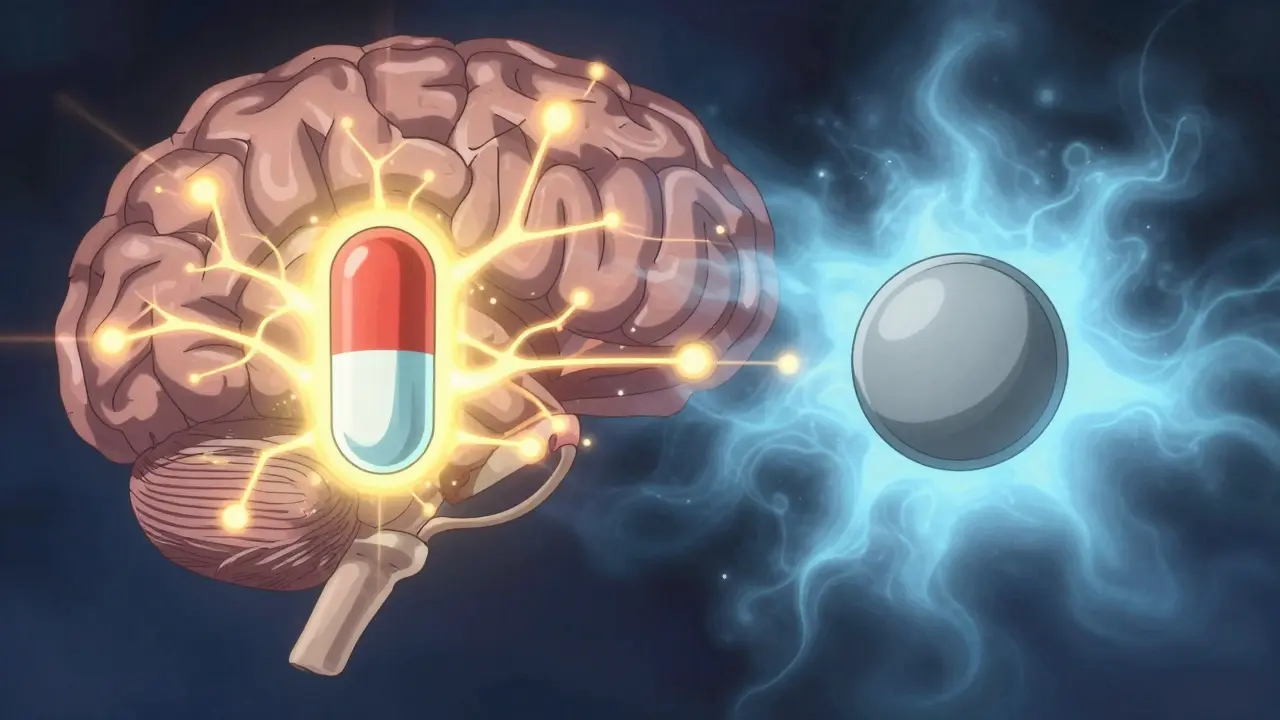
You’ve probably been there: the pharmacist hands you a generic version of a medication you’ve used for years, and suddenly, it doesn't seem to work as well. Or maybe you start noticing side effects that weren't there with the brand-name version. You might wonder if the "cheap" version is actually inferior. Here is the strange part: in many cases, the medicine is chemically identical, but your brain is tricking you into feeling worse.
This is the placebo effect with generics is a psychological phenomenon where the perception of a drug's value, branding, and price directly alters the patient's physical experience of the treatment. It isn't just "all in your head" in a fake way; it's a measurable biological response driven by expectation. When we trust a brand, our brain releases chemicals that actually help the medicine work. When we distrust a generic, we can trigger the nocebo effect, where negative expectations create real, physical symptoms.
The Branding Gap: Why Labels Change How We Feel
Our brains use shortcuts to judge quality. When you see a well-known brand name, your brain associates it with reliability and high cost, which triggers a reward response. A landmark study led by Dr. Kate Faasse at the University of Auckland proved this with a simple test. Researchers gave students placebo painkillers-pills with no active ingredients-but labeled some as "brand name" and others as "generic."
The results were striking. People who took the brand-labeled placebos reported a mean pain reduction of 2.3 points on a 10-point scale. Those who took the generic-labeled placebos only felt a 1.1-point reduction. Even though neither pill had any actual medicine in it, the brand name alone nearly doubled the perceived relief. This shows that the brand psychology attached to a medication can act as a catalyst for the drug's actual chemical properties.
This effect is particularly strong in conditions where the brain plays a major role, such as migraines or depression. In a review from Lancet Psychiatry, antidepressant trials using generic labeling showed response rates that were 11% lower than those using brand-name equivalents. If you believe the medicine is "lesser," your brain may not engage the same neurochemical pathways required for the drug to be fully effective.
The Price of Perception: Is Expensive Always Better?
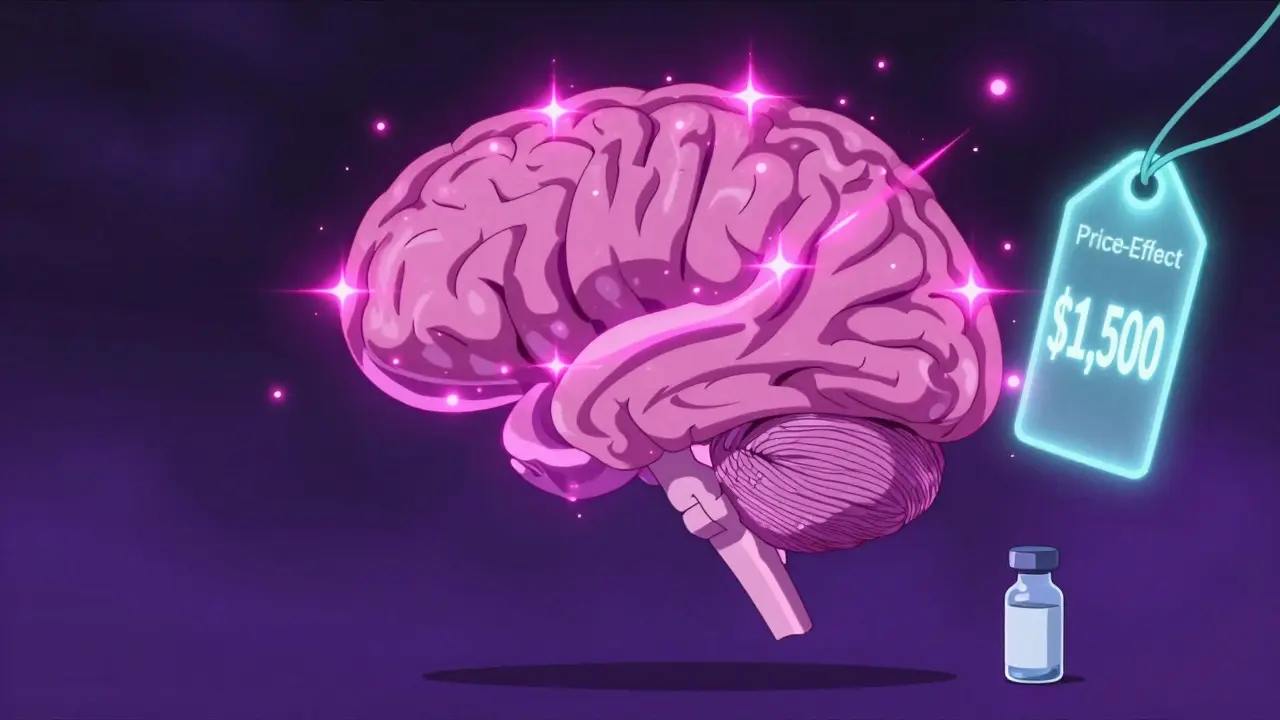
We often equate price with quality. This isn't just a shopping habit; it's a neurological trigger. Researchers at the University of Cincinnati looked at patients with Parkinson's disease and found that a placebo injection labeled as costing $1,500 led to a 28% greater improvement in motor function compared to an identical placebo labeled at $100.
Using fMRI scans, the scientists saw that the expensive-labeled pill caused 53% more dopamine release in the substantia nigra. Essentially, the placebo effect with generics is often a "price-effect." When a drug is too cheap, we subconsciously signal to our bodies that the treatment is low-quality, which can actually dampen the therapeutic outcome. This is why some people feel their GERD symptoms return or their blood pressure spikes after switching to a generic-not because the molecule changed, but because the "value heuristic" in their mind shifted.
| Factor | Brand-Name Perception | Generic Perception | Psychological Driver |
|---|---|---|---|
| Pain Relief | Higher (up to 87% efficacy of active drug) | Lower (approx. 49% efficacy of active drug) | Trust & Expectation |
| Side Effects | Lower reported incidence | Higher reported incidence (Nocebo) | Fear & Skepticism |
| Dopamine Release | Significantly Higher (with high price) | Baseline/Lower | Price-Quality Association |
| Adherence Rate | Generally Higher | Lower (especially in psychiatric meds) | Confidence in Efficacy |
The Nocebo Effect: When Generics Feel "Wrong"
While the placebo effect is the "good" side of expectation, the nocebo effect is the dark twin. This happens when you expect a drug to have side effects, and as a result, you actually experience them. This is a huge hurdle for generic medications. Because many people erroneously believe generics are lower quality, they are more likely to attribute unrelated bodily changes to the medication.
For example, a meta-analysis of statin trials found that people taking generic-labeled placebos reported muscle pain 2.1 times more often than those taking brand-labeled placebos. There was no chemical difference between the pills, yet the generic label created a psychological state that manifested as physical pain.
This creates a dangerous cycle. A patient switches to a generic to save money, feels a slight headache or bout of nausea (which could be caused by stress or weather), blames the generic drug, and then stops taking their medication entirely. This is why discontinuation rates for generic psychiatric drugs are 18-24% higher than for brand names. The risk isn't the drug; it's the loss of confidence in the drug.
The Science of Bioequivalence: Fact vs. Feeling
To understand why this gap exists, we have to look at how drugs are actually made. The FDA (U.S. Food and Drug Administration) requires that generic drugs demonstrate bioequivalence. This means the generic must deliver the same amount of active ingredient into the bloodstream at a similar rate as the brand-name drug.
Specifically, generics must fall within an 80-125% pharmacokinetic parameter. According to Dr. David LaBelle of the FDA, this standard ensures therapeutic equivalence in 98.5% of cases. If the active ingredient is the same and the absorption is the same, the pharmacological result should be the same.
However, a point of contention raised by experts like Dr. Beatrice Golomb is the role of inactive ingredients (fillers and binders). While the active drug is the same, different generics use different inactive ingredients. For a small percentage of people, these fillers can cause real allergic reactions or sensitivities. This means that while 95% of "generic failures" are psychological, a small sliver are actual physiological reactions to the non-drug components of the pill.
How to Overcome the Generic Psychology Gap
If you find yourself struggling with the switch to a generic, the solution isn't always to go back to the expensive brand. Instead, you can "reprogram" your expectation. Knowledge is the best antidote to the nocebo effect. When patients are educated about bioequivalence, their reported effectiveness of generics jumps significantly. A Drugs.com survey showed that when patients were informed about how generics are tested, the percentage of people reporting identical effectiveness rose from 67% to over 82%.
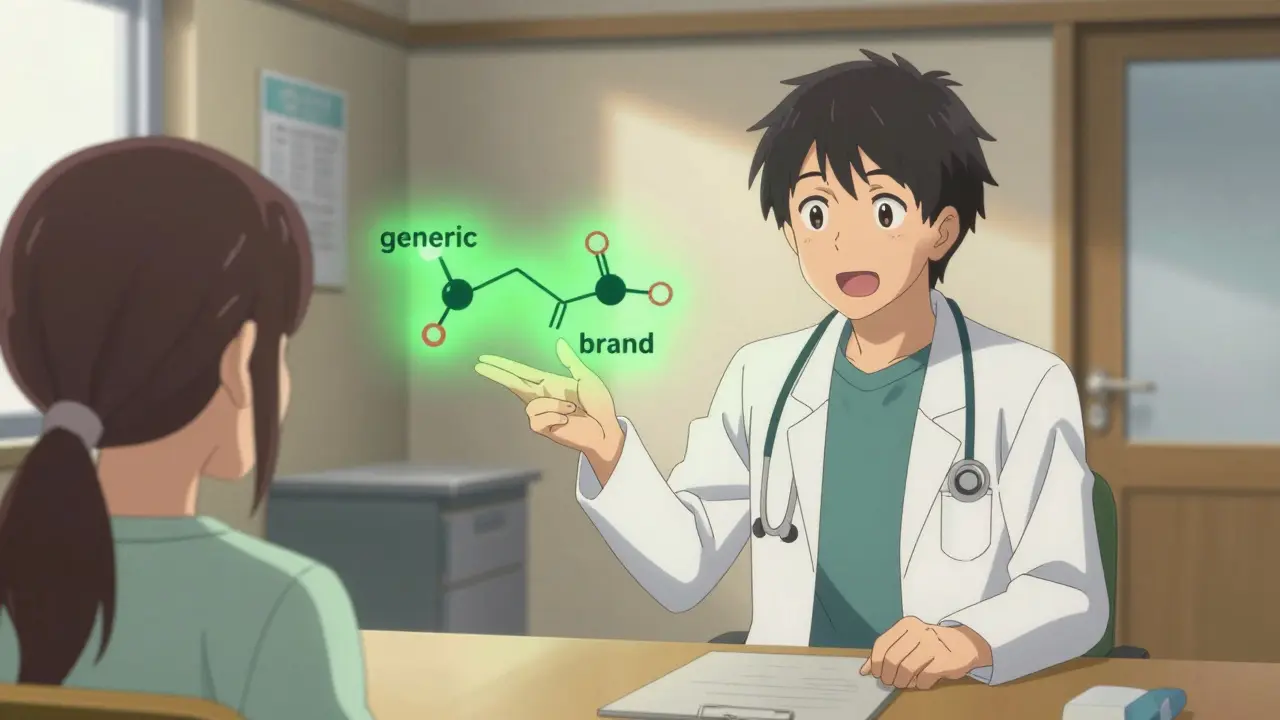
For healthcare providers, the strategy is called "positive generic messaging." Instead of saying, "We are switching you to the generic to save money," which implies a downgrade, effective doctors say, "This generic version is chemically identical to the brand and will work exactly the same way, while saving you money." This small shift in framing removes the "cheap = inferior" heuristic and replaces it with "smart = efficient."
Some newer approaches are even tackling this through design. Recent trials at the University of Wisconsin found that using "premium" packaging for generics-making them look as sleek and professional as brand-name boxes-reduced nocebo complaints by 37%. It turns out that if the box looks expensive, your brain is more likely to let the medicine work.
Are generic drugs actually less powerful than brand names?
Pharmacologically, no. The FDA requires generics to be bioequivalent to the brand name, meaning they have the same active ingredient and work the same way in your body. Any perceived difference in power is usually due to the placebo or nocebo effect-where your beliefs about the drug change how your brain perceives the results.
Why do I feel more side effects with a generic drug?
This is often the nocebo effect. If you expect a generic to be "cheaper" or "lower quality," your brain can actually generate physical symptoms of distress. However, it is also possible to have a sensitivity to the inactive ingredients (fillers/binders) used in a specific generic brand, which can differ from the original brand-name version.
Can the placebo effect actually make a drug work better?
Yes. When you trust a medication (often signaled by a brand name or a high price), your brain may release neurotransmitters like dopamine. This biological response can enhance the actual chemical effect of the drug, leading to better outcomes in areas like pain management and mood regulation.
What should I do if I feel my generic medication isn't working?
First, talk to your doctor about bioequivalence to help shift your psychological expectation. If the problem persists, ask your doctor if a different generic manufacturer might be better, as different brands use different inactive ingredients that could be causing a sensitivity.
Does the placebo effect happen with all medications?
No. It is strongest in conditions involving the central nervous system, such as depression, anxiety, and chronic pain. It has very little impact on medications for bacterial infections (antibiotics) or insulin for diabetes, where the physiological mechanism is more direct and less dependent on psychological expectation.
Next Steps for Patients and Providers
If you're a patient switching to a generic, start by focusing on the science. Remind yourself that the active molecule-the part that actually does the work-is identical. If you feel a dip in effectiveness, track your symptoms in a journal to see if the change is real or if it's coinciding with a period of high stress or skepticism.
For providers, the goal is to move away from "cost-saving" language and toward "equivalence" language. Spending an extra few minutes explaining that the generic is not a substitute but a chemical twin can prevent the nocebo effect and keep patients adherent to their treatment plans. When the patient trusts the pill, the pill works better.