

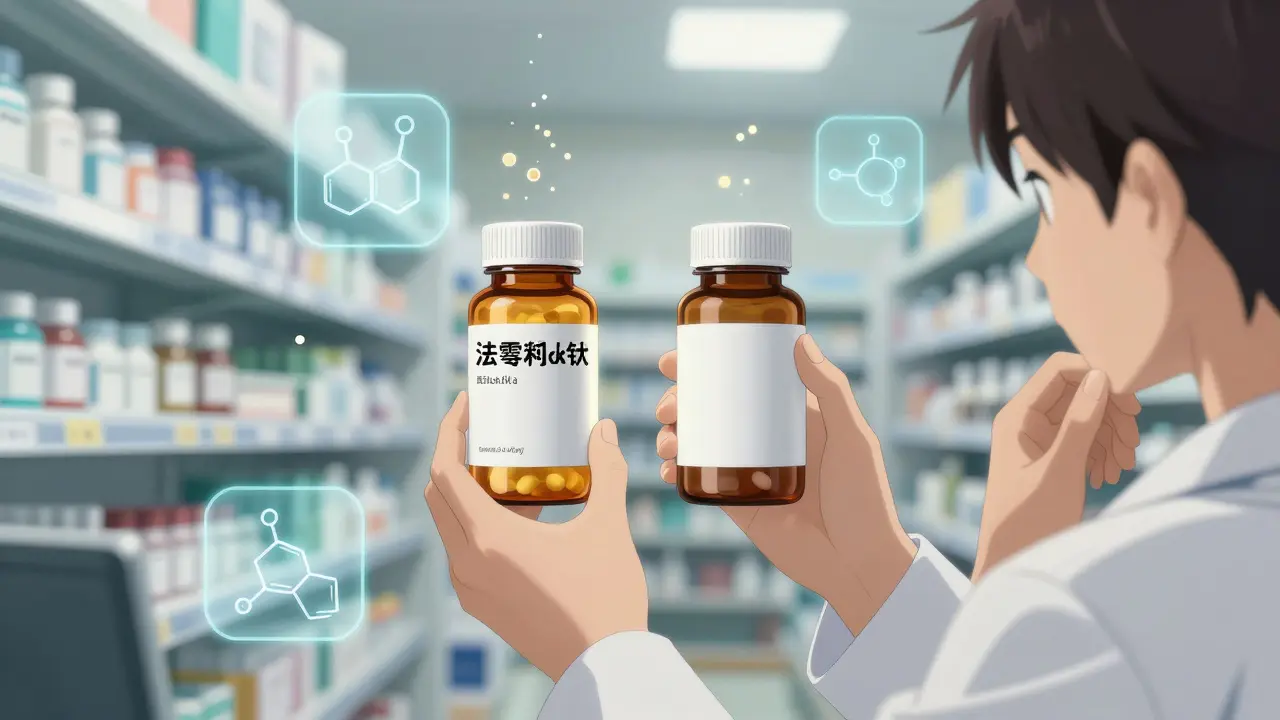
When a patient walks into the pharmacy with a prescription for a brand-name drug, the pharmacist’s job isn’t just to fill it - it’s to make sure they get the right medication at the best price without sacrificing safety. One of the most underused tools in this process is the authorized generic. Many patients and even some providers don’t realize it exists. But for pharmacists who know the difference between authorized generics and regular generics, this is a powerful way to improve outcomes and reduce costs.
What Exactly Is an Authorized Generic?
An authorized generic isn’t just another generic drug. It’s the exact same medication as the brand-name version - same active ingredients, same inactive ingredients, same manufacturing process - but sold without the brand name on the label. It’s made by the original brand company itself, or under their direct permission, and then packaged in plain labeling. Think of it like buying a name-brand cereal in a store’s private-label box: same recipe, different box.
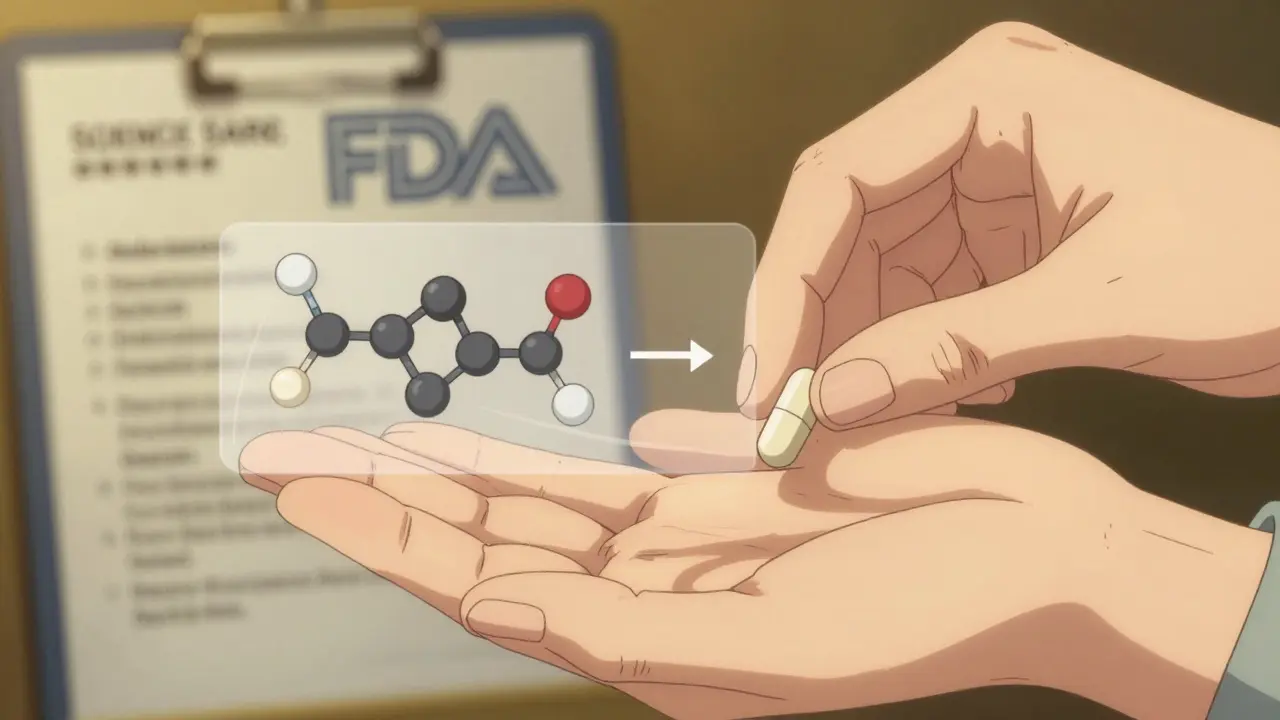
The FDA defines it clearly: an authorized generic is a listed drug approved under section 505(c) of the Federal Food, Drug, and Cosmetic Act, marketed with different labeling, packaging, or product codes than the original brand. Unlike regular generics, which go through the Abbreviated New Drug Application (ANDA) process and may have different fillers or coatings, authorized generics are chemically identical to the brand. That means if your body tolerated the brand, it will tolerate the authorized generic without issue.
When Should You Recommend It? Three Key Scenarios
Not every patient needs an authorized generic. But there are specific situations where switching to one makes a real difference.
1. Patients With Allergies or Dietary Restrictions
Regular generics often use different inactive ingredients - things like dyes, fillers, preservatives, or binders - than the brand-name version. For patients with celiac disease, those differences matter. Gluten can be hidden in corn starch or modified food starch. For vegans, gelatin capsules or lactose-based fillers can be a dealbreaker. A 2021 survey of community pharmacists found that 18% of patients reported adverse reactions after switching to a regular generic, mostly due to these inactive ingredients.
Authorized generics solve this. Because they’re made by the same company using the same formula, their inactive ingredients match the brand exactly. If your patient has been on Lipitor (atorvastatin) for years and had no issues, the authorized generic version - made by Pfizer - will have the same fillers. No surprises. No new rashes. No digestive problems.
2. Narrow Therapeutic Index Drugs
Some medications have a very narrow window between effective and toxic doses. Small changes in absorption can lead to treatment failure or dangerous side effects. Examples include warfarin (blood thinner), levothyroxine (thyroid hormone), and phenytoin (seizure medication). The FDA’s own therapeutic equivalence evaluations show that 3-5% of patients experience clinical issues after switching from brand to regular generic for these drugs.
Why? Because bioequivalence testing for regular generics only measures blood levels of the active ingredient. It doesn’t account for how different coatings or excipients affect release rates, especially in modified-release formulations. Authorized generics avoid this entirely. Since they’re identical to the brand, their absorption profile is identical too. For patients on these high-risk drugs, switching to an authorized generic isn’t just a cost-saving move - it’s a safety move.
3. When Patients Report Problems After Switching
It happens more often than you think. A 2021 American Pharmacists Association survey found that 12% of patients reported unexpected side effects or reduced effectiveness after switching to a regular generic. Common complaints: "I feel different," "My symptoms came back," or "I got dizzy after the new pill." Often, these aren’t placebo effects. The patient’s body may be reacting to a new coating, dye, or filler. In these cases, switching to the authorized generic - which looks and behaves exactly like the original - frequently resolves the issue. It’s not about the active ingredient. It’s about the whole pill.
How to Spot an Authorized Generic
You can’t tell by looking at the pill. Authorized generics come in different colors, shapes, and markings than the brand. But here’s how to verify:
- Check the Labeler Code in the National Drug Code (NDC) directory. If it matches the brand manufacturer (e.g., Pfizer, Merck) or an authorized licensee like Prasco or Greenstone, it’s an authorized generic.
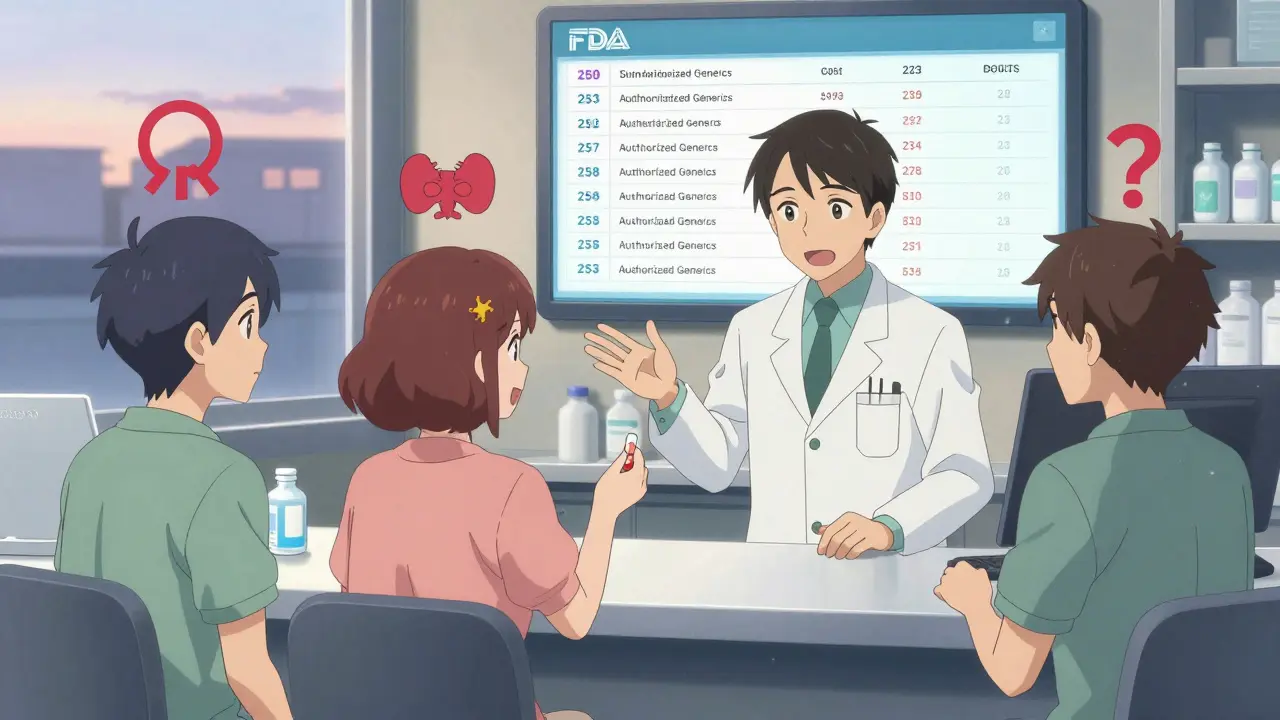
- Consult the FDA’s quarterly updated list of authorized generics. As of September 2023, there were 257 products on that list.
- Look at the manufacturer name on the bottle. If it’s the same as the brand (e.g., "Made by Pfizer" instead of "Made by Teva"), you’re looking at an authorized generic.
Remember: authorized generics are not listed in the Orange Book as separate entries. That’s because the FDA considers them therapeutically equivalent by default - they’re the same drug, just unlabeled.
Insurance and Cost: What You Need to Know
Here’s the catch: authorized generics often cost 20-80% less than the brand-name version. But they don’t always save patients money at the pharmacy counter.
Why? Because 63% of pharmacy benefit managers (PBMs) still classify authorized generics under brand-name tiers in their formularies. That means a patient might pay a $50 copay for an authorized generic when the regular generic would cost $10. This isn’t a mistake - it’s a contracting issue. PBMs often get rebates from brand manufacturers that disappear if the drug is classified as generic.
So always check the patient’s plan. Ask: "Is this classified as a brand or generic drug on your formulary?" Sometimes, the authorized generic is cheaper. Sometimes, the regular generic is. But if cost is the main concern, don’t assume the authorized generic is automatically the best deal.
How to Talk to Patients
Patients get confused when their pill changes color or shape. A 2022 study found that 27% of patients stopped taking their medication after an unexpected change - even if it was chemically identical.
When switching to an authorized generic, explain it like this:
- "This pill is made by the same company that made your old one. It’s the exact same medicine inside - same ingredients, same dose, same way your body uses it. The only difference is the label and the color."
- "You’re saving money because we’re not paying for the brand name on the box. But what’s inside? Identical."
- "If you’ve had no problems with the brand, you won’t have any with this."
For patients with dietary restrictions: "This version uses the same filler as your original brand. No gluten. No gelatin. No lactose."
Don’t assume they know. Always explain.
What You Can’t Do
There are limits. Authorized generics aren’t available for every drug. Only about 5% of brand-name medications have an authorized generic version. And while they’re safe, they’re not always the cheapest option.
Also, don’t substitute without checking state laws. In 18 states, pharmacists must notify the prescriber before substituting any generic - including authorized ones. In 42 states, substitution is allowed unless the prescriber wrote "Do Not Substitute." Always follow local rules.
The Bigger Picture
Authorized generics are growing. The number of available products has increased 18% per year since 2010. More patients are searching for them - GoodRx reports a 47% rise in searches from 2021 to 2022. And with new legislation like the Affordable Insulin Now Act of 2023 potentially expanding access, this trend will only accelerate.
For pharmacists, this isn’t just about cost. It’s about precision. It’s about matching the right drug to the right patient - not just the cheapest one. When you recommend an authorized generic, you’re not cutting corners. You’re making a smarter, safer, more thoughtful choice.
What’s Next?
Keep your eyes on the FDA’s quarterly list. Subscribe to updates. Talk to your wholesaler - some authorized generics are only distributed through certain channels. Train your staff. And most importantly: start asking patients if they’ve had trouble with generics before. That simple question could open the door to a better solution.
Are authorized generics the same as regular generics?
No. Regular generics contain the same active ingredient as the brand but may use different inactive ingredients - like fillers, dyes, or coatings. Authorized generics are made by the brand company itself and use the exact same formula, including all inactive ingredients. That means they’re not just therapeutically equivalent - they’re chemically identical.
Why don’t authorized generics show up in the Orange Book?
The Orange Book lists therapeutically equivalent generic drugs approved through the ANDA process. Authorized generics aren’t listed separately because they’re not new products - they’re the brand-name drug sold under different labeling. The FDA considers them automatically equivalent since they’re made by the same manufacturer using the same process.
Can I substitute an authorized generic without prescriber approval?
In most states, yes - as long as the prescriber didn’t write "Do Not Substitute." But 18 states require pharmacists to notify the prescriber before any generic substitution, including authorized generics. Always check your state’s pharmacy board rules.
Do authorized generics cost less than brand-name drugs?
Yes, typically 20-80% less. But because many pharmacy benefit managers classify them as brand-name drugs for reimbursement purposes, your patient’s copay might not reflect the savings. Always check the plan’s formulary before recommending.
How do I know if an authorized generic is available for a drug?
Check the FDA’s quarterly updated list of authorized generics on their website. You can also verify by looking at the NDC labeler code - if it matches the brand manufacturer (e.g., Pfizer, Merck) or an authorized licensee like Prasco or Greenstone, it’s an authorized generic.
phyllis bourassa
March 6, 2026 AT 03:19Okay but let’s be real - I’ve seen patients cry because their pill changed color. Not because it didn’t work, but because they thought they were getting ripped off. Authorized generics? Same damn thing. Just no fancy logo. Why is this even a debate?
Also, I had a patient last week who swore the generic made her dizzy. Switched her to the authorized version - same pill, different label - and she said, ‘I feel like myself again.’ No placebo. Just biology.
Pranay Roy
March 6, 2026 AT 18:14Look I’ve been in this game 20 years and I’ve seen it all. PBMs don’t care about patients. They care about rebates. That’s why authorized generics get slapped with brand-tier copays. It’s not about safety. It’s about the money trail. And don’t get me started on how some manufacturers quietly buy out competitors just to kill off generic competition. This whole system is rigged.
Also, I once had a guy on warfarin switch to a regular generic and his INR spiked to 8. He almost bled out. Authorized? Zero issue. Coincidence? I think not.
Joe Prism
March 8, 2026 AT 06:42Same pill. Different box. That’s it.
Why do we overcomplicate medicine? The science is simple. The system is broken. The solution? Educate. Advocate. Don’t assume. Ask. Listen.
And stop treating patients like they’re too dumb to understand.
Bridget Verwey
March 9, 2026 AT 17:07Oh honey. You think patients don’t notice when their pill changes? They notice everything. The shape. The size. The little ‘5’ on the side. They Google it. They panic. They stop taking it.
And then we blame them for noncompliance.
Meanwhile, the pharmacist who quietly swapped it for the authorized generic? They’re the unsung hero. No fanfare. Just quiet competence. Keep doing that. We need more of you.
Weston Potgieter
March 11, 2026 AT 06:06Authorized generics are just brand drugs in disguise. PBMs know it. Pharmacies know it. Patients don’t. That’s the whole game. You save money? Great. But if your insurance still charges you brand price? You’re being played.
And don’t even get me started on how some companies release authorized generics only after the patent expires but before the real generics show up. Sneaky. Real sneaky.
Vikas Verma
March 12, 2026 AT 15:44From a pharmacoeconomic standpoint, authorized generics represent a critical bridge between therapeutic equivalence and cost containment. Their bioequivalence profile is indistinguishable from originators due to identical manufacturing parameters. However, formulary tiering inconsistencies remain a structural barrier to optimal access. Stakeholder alignment among PBMs, insurers, and providers is imperative to realize systemic efficiency gains.
Sean Callahan
March 14, 2026 AT 07:26i just had a patient last week ask me why her new pill was blue instead of yellow. i told her it was the same thing. she looked at me like i was lying. then she asked if the company was spying on her. i swear to god i dont know what to say anymore. also my cat just knocked over my coffee. this job is a mess.
Ferdinand Aton
March 16, 2026 AT 03:45Wait-so you’re saying the brand company makes the generic too? That’s not a generic. That’s just the brand with a new name. You’re not saving money. You’re just repackaging the same thing. What’s next? Apple selling ‘authorized’ iPhones under a different label? This whole thing is a scam.