

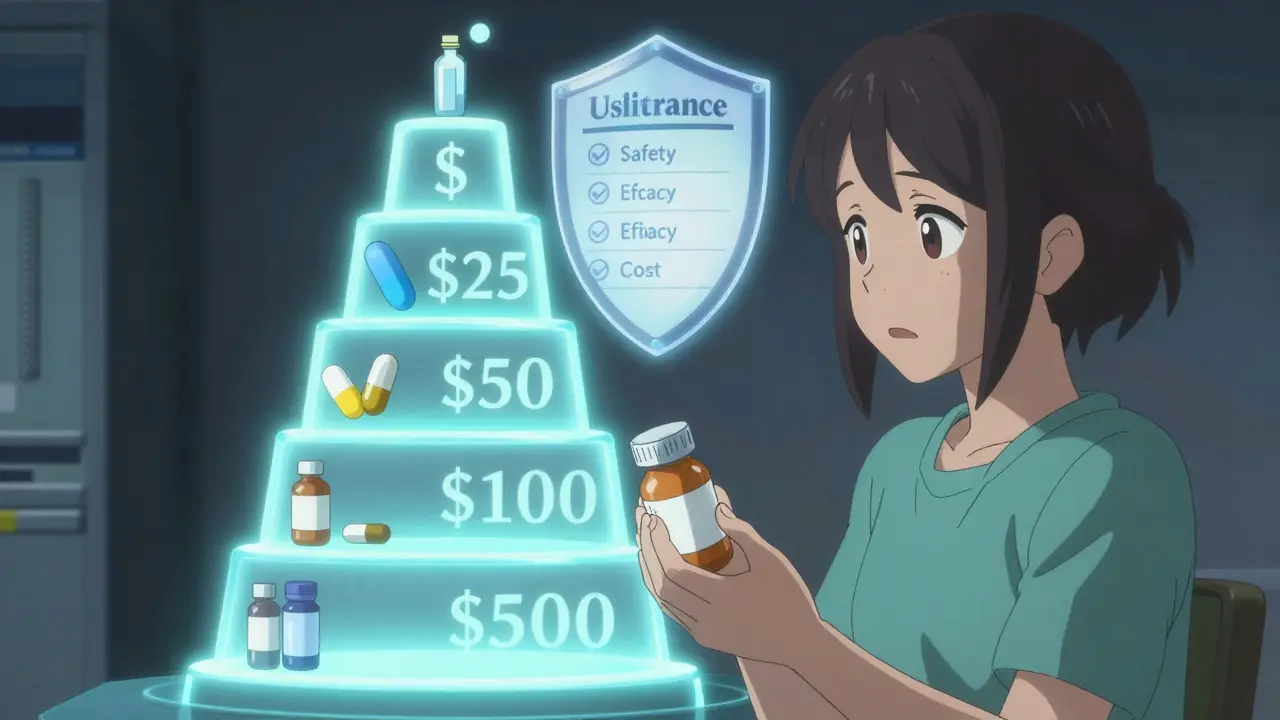
When you get a prescription, do you ever wonder why some medications cost $10 while others cost hundreds? It’s not just about the drug itself-it’s about something called a drug formulary. This is the list your health insurance uses to decide which medicines they’ll help pay for, and how much you’ll pay out of pocket. If you’ve ever been surprised by a high pharmacy bill or told your doctor you can’t get your usual medication, chances are your formulary had something to do with it.
What Exactly Is a Drug Formulary?
A drug formulary, sometimes called a Preferred Drug List (PDL), is a list of prescription medications that your health plan covers. It’s not random. Every medicine on this list has been reviewed by a team of doctors, pharmacists, and researchers who look at three things: Is it safe? Does it work? And is it worth the cost? The goal isn’t to limit your options-it’s to make sure you get effective drugs at a price you can afford.
Formularies are managed by Pharmacy Benefit Managers (PBMs), companies hired by insurers to handle prescription drug benefits. They negotiate prices with drug makers and decide which drugs make the list. In fact, over 95% of Americans with prescription coverage are affected by a formulary, whether through Medicare, Medicaid, or private insurance.
How Are Medications Organized in a Formulary?
Most formularies use a tier system, like a pricing ladder. The higher the tier, the more you pay. Here’s how it usually breaks down:
- Tier 1: Generic Drugs - These are copies of brand-name drugs that have been approved by the FDA as identical in safety and effectiveness. They’re the cheapest option. You might pay $0 to $10 for a 30-day supply.
- Tier 2: Preferred Brand-Name Drugs - These are brand-name medications that your plan has negotiated a good price for. You’ll typically pay a $25 to $50 copay or 15-25% of the cost.
- Tier 3: Non-Preferred Brand-Name Drugs - These are brand-name drugs that cost more and aren’t the plan’s first choice. Expect a $50 to $100 copay or 25-35% coinsurance.
- Tier 4: Specialty Drugs - Used for serious conditions like cancer, multiple sclerosis, or rheumatoid arthritis. These can cost $100 or more per month, and you might pay 30-50% of the total cost.
- Tier 5 (if used): - The most expensive drugs, often new biologics or rare disease treatments. Costs can exceed $500 a month.
Not all plans use all five tiers. Some have just three. The names might be different too-some call them “Preferred Generic” or “Specialty Tier”-but the structure is the same. The key thing to remember: where a drug sits on the list directly affects your monthly bill.
Why Do Formularies Change?
Formularies aren’t set in stone. Every year, a committee of doctors and pharmacists reviews new drugs, safety alerts, and price changes. They might move a drug to a higher tier if its price goes up, or drop it entirely if a cheaper, equally effective option becomes available.
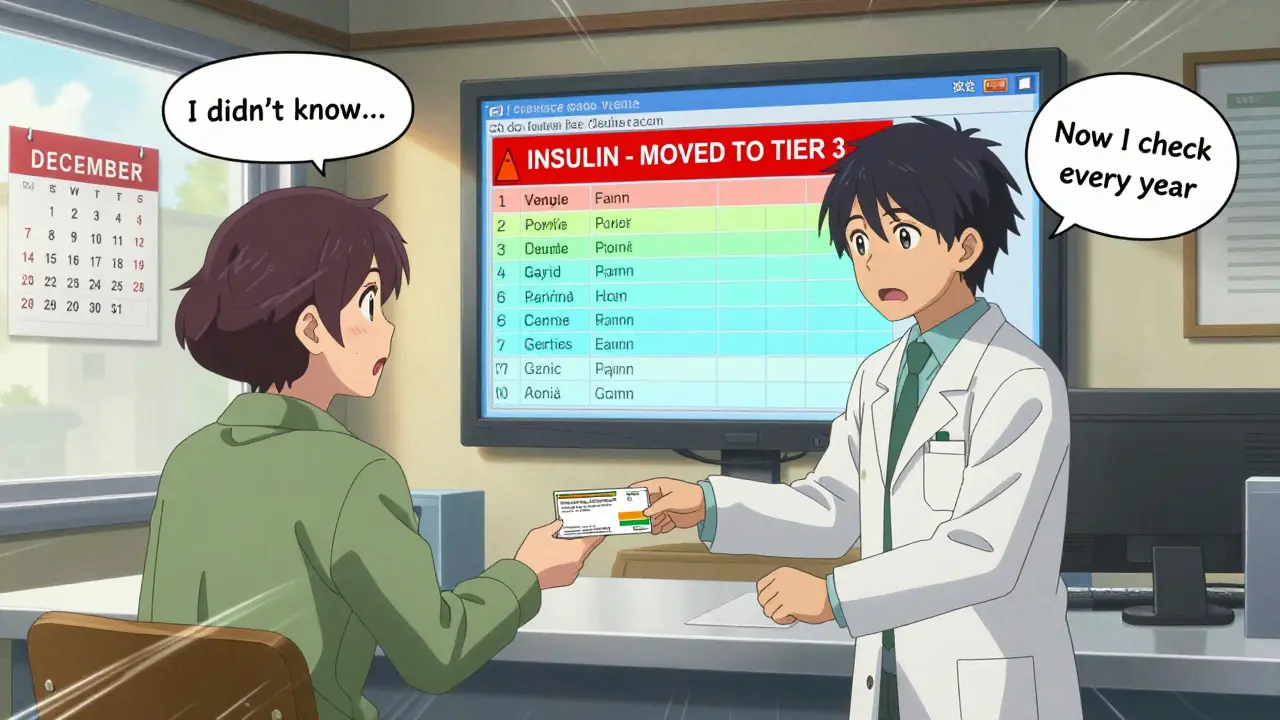
For example, if your diabetes medication was on Tier 2 last year and moved to Tier 3 this year, your copay could jump from $35 to $85. That’s why it’s critical to check your formulary every year during open enrollment-especially if you’re on Medicare, which updates its plans each October.
Some changes happen mid-year too. Federal rules require insurers to give you 60 days’ notice if a drug you’re taking is being removed or moved to a higher tier. But if you don’t check your plan’s website, you might not find out until you’re at the pharmacy counter.
What Happens If Your Medicine Isn’t on the List?
If your doctor prescribes a drug that’s not on your formulary, you have a few options:
- Switch to a covered alternative - Your doctor might suggest another medication that works similarly but is on the formulary. This is often the easiest fix.
- Request a formulary exception - Your doctor can submit a request to your insurer explaining why you need the non-formulary drug. This might be because you tried other drugs and they didn’t work, or because of side effects. The approval rate for these requests is about 67% for Medicare plans.
- Pay out of pocket - If the exception is denied and you can’t switch, you can still buy the drug yourself. But be warned: you’ll pay the full list price, which could be $5,000 a month for some cancer drugs.
Some patients have had life-changing experiences with exceptions. One person on a rare disease medication paid $95 instead of $5,000 per month because their drug was on Tier 4. Another had to switch insulin brands when their plan changed tiers and their monthly cost jumped from $35 to $85.
How to Check Your Formulary
You can’t rely on memory or your doctor’s word alone. Formularies change constantly. Here’s how to stay informed:
- Medicare Part D users: Use the Medicare Plan Finder tool. You can enter your medications and see exactly which plans cover them and at what cost. This tool updates every October for the next year.
- Private insurance: Log into your insurer’s website. Look for a link labeled “Drug Formulary,” “Formulary List,” or “Prescription Drug List.” Most plans update their lists on January 1 each year.
- Call your pharmacy: Pharmacists have access to your plan’s formulary and can tell you if your drug is covered before you even leave the doctor’s office.
A 2023 Kaiser Family Foundation survey found that 68% of insured adults check their formulary before filling a prescription. That’s smart. Because if you don’t, you could be looking at a bill that’s 10 times higher than expected.

What’s New in 2025?
Big changes are happening:
- Insulin cap: Since 2023, Medicare Part D plans cap insulin at $35 per month. This will expand to all covered drugs by 2025.
- Biosimilars: More than 40 biosimilar drugs have been approved since 2022. These are cheaper versions of expensive biologic drugs, and insurers are starting to favor them on formularies.
- AI-driven formularies: By 2027, insurers may use AI to personalize formulary decisions based on your health history, not just cost. This could mean better matches between your needs and your coverage.
What Patients Say
People have real stories:
- “My asthma inhaler moved from Tier 2 to Tier 3. I switched to a generic and saved $120 a month.”
- “I spent three months trying to get my cancer drug approved. My doctor had to write three letters. I finally got it-after paying $1,200 out of pocket.”
- “I didn’t know my formulary changed until I got a $400 bill. Now I check it every January.”
These aren’t rare cases. About 42% of patients have switched medications because of formulary changes. And 31% have been caught off guard by a non-covered drug.
How to Protect Yourself
Here’s what you can do right now:
- Check your formulary every year during open enrollment.
- Ask your pharmacist: “Is this drug on my plan’s formulary?” before you leave the pharmacy.
- If your drug is expensive or critical to your health, ask your doctor to help you request a formulary exception.
- Keep a list of your medications and their current tier level. Update it when your plan changes.
- Don’t assume your drug will stay on the same tier next year-even if it was covered this year.
Remember: Formularies aren’t designed to make things hard. They’re meant to help you get the right drugs at a price you can afford. But you have to be the one to stay informed.
Is a drug formulary the same as a prescription drug list?
Yes, they’re the same thing. A drug formulary is also called a Preferred Drug List (PDL) or prescription drug list. It’s the official list of medications your health plan covers.
Can my insurance company remove a drug from the formulary without telling me?
No. Federal rules require your insurer to give you at least 60 days’ notice if they plan to remove a drug you’re taking or move it to a higher tier. But if you don’t check your plan’s website or get updates, you might not see the notice. Always review your formulary annually.
Why do some drugs cost more even if they’re the same as others?
It’s not about the drug-it’s about the plan. Two identical medications might be on different tiers in two different insurance plans. One plan might have negotiated a lower price for a brand-name drug, so it’s placed on Tier 2. Another plan might not have that deal, so the same drug ends up on Tier 3 with higher costs.
What’s the difference between generic and brand-name drugs on a formulary?
Generics are exact copies of brand-name drugs, approved by the FDA to work the same way. They’re cheaper because they don’t require the same research and marketing costs. Formularies put generics on Tier 1 because they’re proven, safe, and cost-effective. Brand-name drugs are often placed higher on the list because they cost more, even if they’re equally effective.
Do all health plans have formularies?
Yes. Virtually all private insurance plans, Medicare Part D, and Medicaid programs use formularies. The only exceptions are some very limited plans or programs that don’t cover prescriptions at all. If you have prescription drug coverage, you have a formulary.
Can I appeal a formulary decision if my drug isn’t covered?
Yes. You can request a formulary exception through your doctor. They’ll need to submit a letter explaining why you need the specific drug-often because other drugs didn’t work or caused side effects. For urgent cases, you can request an expedited review, which is usually decided within 24 hours. About two out of three requests are approved.
How often do formularies change?
Formularies are updated annually, usually on January 1. But changes can happen mid-year too-about 28% of changes occur outside the annual enrollment period. That’s why it’s important to check your formulary even if you just did so last year.
Are there rules about what drugs must be on a formulary?
Yes. Medicare Part D plans must cover at least two drugs in each major drug category, like blood pressure or diabetes medications. Private plans have more flexibility, but they still must follow state laws and ensure patients have reasonable access to necessary treatments. They can’t exclude entire categories of drugs.
jared baker
March 20, 2026 AT 13:22Michelle Jackson
March 22, 2026 AT 10:44Also, why do PBMs get rich off this? Just saying.
Andrew Muchmore
March 22, 2026 AT 20:15Paul Ratliff
March 24, 2026 AT 12:01SNEHA GUPTA
March 24, 2026 AT 19:02jerome Reverdy
March 26, 2026 AT 01:52Stephen Habegger
March 26, 2026 AT 03:32Ayan Khan
March 27, 2026 AT 02:11Emily Hager
March 28, 2026 AT 11:21Melissa Starks
March 30, 2026 AT 10:20And now they're moving it to tier 4 next year. So I have to do it all again.
This isn't healthcare. It's a maze designed to exhaust you.
Lauren Volpi
March 31, 2026 AT 08:52Kal Lambert
April 2, 2026 AT 00:53Shameer Ahammad
April 2, 2026 AT 18:45Alexander Pitt
April 4, 2026 AT 09:02