

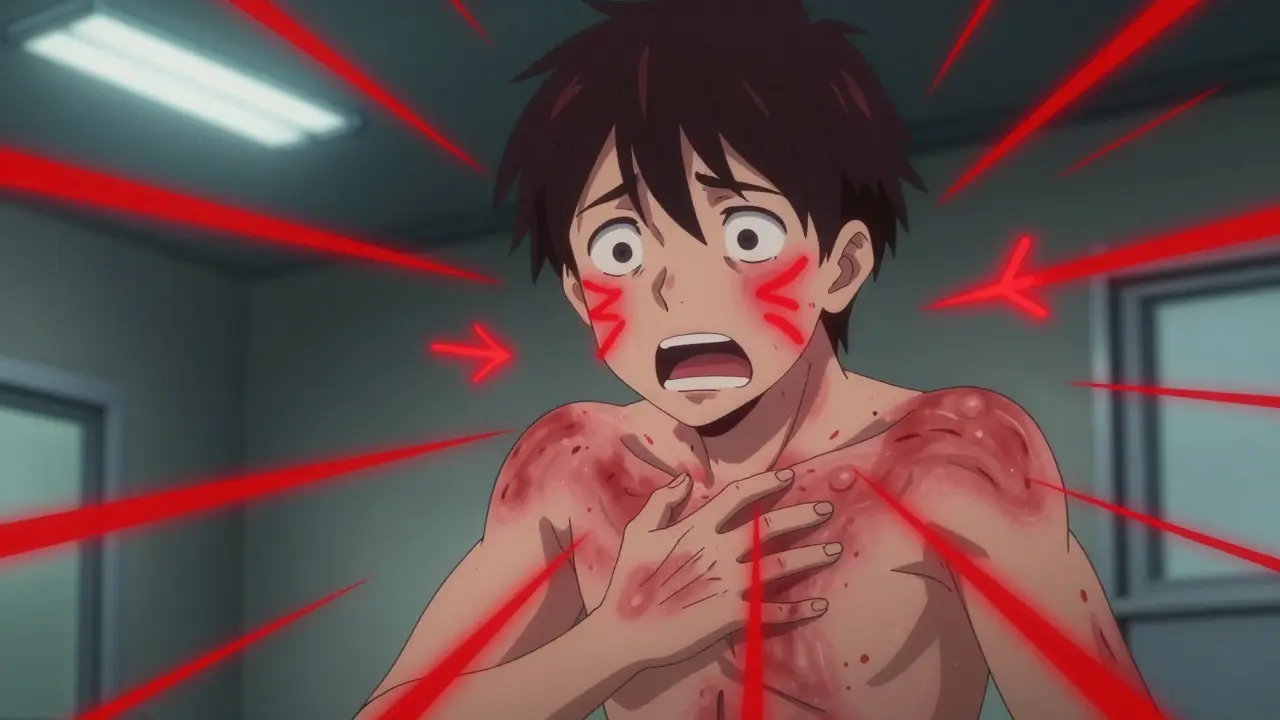
It’s easy to assume that if you’re taking a medication as prescribed, you’re safe. But the truth is, medication side effects can turn dangerous without warning. Every year, over 100,000 people in the U.S. die from reactions to prescription and over-the-counter drugs. Many of these deaths could have been prevented-if someone had known what to look for and when to act. You don’t need to be a doctor to spot the warning signs. You just need to know what’s normal and what’s not.
What Counts as a Red Flag?
Not every side effect is an emergency. Nausea after taking antibiotics? That’s common. Dry mouth from an antihistamine? Happens to a lot of people. But some reactions are serious-and they don’t wait. If you experience any of these, call your doctor right away or go to the ER:- Difficulty breathing or wheezing
- Hives, rash, or blisters on your skin or inside your mouth
- Swelling of your face, lips, tongue, or throat
- Sudden dizziness, fainting, or feeling like you’re about to pass out
- Severe nosebleeds that won’t stop
- Vomiting blood or passing black, tarry stools
- Unexplained bruising or bleeding
- Severe abdominal pain with fever
These aren’t just uncomfortable symptoms-they’re signs your body is having a dangerous reaction. For example, hives and swelling together can mean anaphylaxis, a life-threatening allergic response. It can happen within minutes. Delaying care can be fatal. The same goes for blisters on your skin or mucous membranes. That could be Stevens-Johnson Syndrome or toxic epidermal necrolysis-rare but deadly skin conditions linked to certain medications. About 100 to 200 cases are reported in the U.S. each year, and up to one in three people who get it don’t survive.
What’s Just a Minor Side Effect?
It’s important to know the difference so you don’t panic over something harmless-or ignore something dangerous. Here’s what’s usually okay, at least at first:- Mild nausea (especially with antibiotics or painkillers)
- Constipation (common with opioids)
- Diarrhea (can happen with amoxicillin or other antibiotics)
- Drowsiness (from older antihistamines or some blood pressure meds)
- Headache (a side effect of many drugs, including antidepressants)
- Mild skin rash (not blistering or spreading)
These are annoying, sure. But they’re not emergencies. The National Institutes of Health says you should keep taking your medication unless you have a severe allergic reaction. Stopping a drug on your own because you feel a little sick can cause your original condition to flare up. In fact, half of all treatment failures for chronic illnesses like high blood pressure, diabetes, or depression happen because people quit their meds too soon.
When to Call Your Doctor (Even If It’s Not an Emergency)
You don’t have to wait until you’re in crisis to reach out. If a side effect lasts more than 48 hours-or if it’s making it hard to do everyday things like work, sleep, or eat-you should call your doctor. You don’t need to suffer in silence. Many side effects can be managed with dose changes, timing adjustments, or switching to another drug.For example, if you’re taking a blood thinner and notice your nosebleeds are more frequent or harder to stop, that’s a red flag. If you’re on a statin and your muscles ache so badly you can’t climb stairs, that’s not normal fatigue. It could be muscle damage. If you’re on an antidepressant and suddenly feel worse, more anxious, or have thoughts of self-harm, that’s urgent-even if it’s only been a few days.
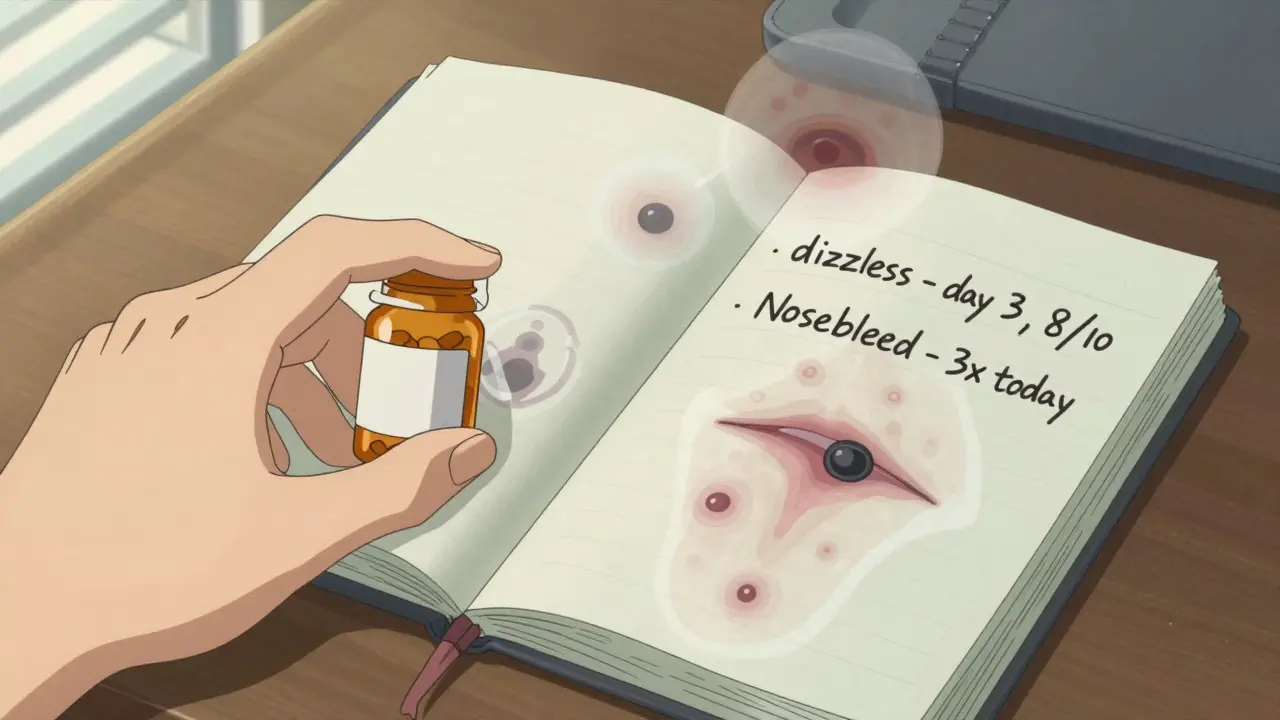
Keep a simple side effect diary. Write down:
- What symptom you felt
- When it started (after your first dose? After a week?)
- How long it lasted
- How bad it was (on a scale of 1 to 10)
- What you were doing when it happened
Studies show that patients who track their symptoms improve diagnostic accuracy by 65%. Your doctor doesn’t have to guess what’s going on-you give them the facts.
Stop the Medication? When and How
There’s a big difference between stopping a drug because you’re uncomfortable and stopping because your life is at risk. The American Medical Association says you should only stop your medication immediately if you have signs of anaphylaxis (trouble breathing, throat swelling, low blood pressure) or severe skin reactions (blisters, peeling skin, sores in your mouth or eyes).For everything else-like nausea, dizziness, or mild rash-keep taking your medicine and call your doctor. Stopping cold turkey can be dangerous. If you’re on a blood pressure pill and quit because you got dizzy, your blood pressure could spike. If you stop an antidepressant suddenly, you could get withdrawal symptoms like brain zaps, nausea, or mood swings.
Always talk to your doctor before making any changes. They might suggest taking the pill with food, switching to a different brand, or lowering the dose. Many side effects fade after a week or two as your body adjusts.
What to Do If You Think It’s an Emergency
If you’re having trouble breathing, your face or throat is swelling, you’ve passed out, or you’re covered in blisters-don’t call your doctor’s office. Don’t wait for an appointment. Call 911 or go to the nearest emergency room. These are not "wait and see" situations.Epinephrine is the only thing that can stop anaphylaxis in its tracks. If you’ve been prescribed an EpiPen, use it immediately. Then call for help. Even if you feel better after the shot, you still need to go to the hospital. The reaction can come back.
Same goes for blistering skin. Don’t try to treat it at home. Don’t pop blisters. Don’t apply creams. Get to a hospital right away. These conditions require intensive care, IV fluids, and specialized treatment.
How Your Reports Save Lives
You might think your experience is too small to matter. But it’s not. The FDA’s MedWatch program collects over 1.3 million reports of side effects every year-from doctors, pharmacists, and patients like you. About 15 to 20% of those come from consumers.These reports have led to over 200 label changes and 15 to 20 drug recalls since 2020. A rare side effect that only shows up in one in 10,000 people? Clinical trials might miss it. But if 10 people report it, the FDA takes notice. That’s how they found the heart failure risk with certain diabetes drugs-just by watching real-world data from 300 million patients.
Reporting isn’t just helpful-it’s powerful. You’re not just protecting yourself. You’re helping protect others.
What You Can Do Today
Medication safety isn’t something you handle once and forget. It’s an ongoing conversation with your health team. Here’s what to do right now:- Read the medication guide that comes with your prescription. It’s required by law for drugs with serious risks.
- Ask your pharmacist: "What are the top three side effects I should watch for?"
- Keep a list of all your meds-including vitamins and supplements-and bring it to every appointment.
- If you’re over 65, ask your doctor if any of your drugs increase your fall risk. Dizziness from certain meds can double your chance of a fall.
- Sign up for free alerts from the FDA’s MedWatch program. You’ll get updates on drug recalls and safety warnings.
Medications save lives. But they can also hurt you if you don’t know the signs. You’re not being paranoid if you pay attention. You’re being smart.
What are the most dangerous medication side effects I should never ignore?
The most dangerous side effects include trouble breathing, swelling of the face or throat, hives, blisters on the skin or inside the mouth, sudden fainting, uncontrolled bleeding, vomiting blood, or black, tarry stools. These can signal anaphylaxis, Stevens-Johnson Syndrome, internal bleeding, or other life-threatening reactions. Call 911 or go to the ER immediately if you have any of these.
Should I stop taking my medication if I have side effects?
Only stop if you have signs of a severe allergic reaction (like trouble breathing or swelling) or blistering skin. For most side effects-like nausea, dizziness, or mild rash-keep taking your medicine and call your doctor. Stopping on your own can make your original condition worse and lead to serious complications.
How do I know if a side effect is serious or just annoying?
Ask yourself: Is this new? Is it getting worse? Is it interfering with your daily life? If you’re dizzy enough to fall, nauseous enough to skip meals, or tired all day even after sleeping, it’s serious. Minor side effects usually fade after a few days. If they last longer than 48 hours or get worse, contact your doctor.
Can over-the-counter drugs cause serious reactions?
Yes. Many people assume OTC drugs are safe, but they’re not harmless. Ibuprofen and naproxen can cause stomach bleeding. Decongestants can raise blood pressure. Acetaminophen can damage your liver if taken too long or too much. Always read the label and talk to your doctor if you’re taking multiple medications or have chronic conditions.
What should I bring to my doctor when I report a side effect?
Bring a list of all your medications (including supplements), when you started each one, what side effect you’re having, when it started, how long it lasts, how bad it is (1-10 scale), and whether anything makes it better or worse. Writing this down helps your doctor figure out what’s causing it faster.
Can I report a side effect myself?
Yes. You can report side effects to the FDA’s MedWatch program by calling 1-800-332-1088 or visiting their website. Your report helps the FDA spot new safety issues and update drug labels. You don’t need to be a doctor to make a difference.
Are older adults at higher risk for medication problems?
Yes. People over 65 are more likely to take multiple medications and are more sensitive to side effects. Dizziness from blood pressure meds can double the risk of falls. Kidney and liver function slow with age, so drugs stay in the body longer. Always ask your doctor if any of your meds need to be adjusted for age.
How can I prevent medication problems in the future?
Keep an updated list of all your meds and share it with every provider. Ask your pharmacist about interactions. Use one pharmacy for all prescriptions so they can check for conflicts. Read the medication guide that comes with your prescription. And never ignore a new or worsening symptom-call your doctor before it becomes an emergency.
Sami Sahil
February 1, 2026 AT 06:43franklin hillary
February 2, 2026 AT 14:31Naomi Walsh
February 3, 2026 AT 09:53Melissa Melville
February 4, 2026 AT 02:51Deep Rank
February 5, 2026 AT 23:32Aditya Gupta
February 6, 2026 AT 23:59Nancy Nino
February 8, 2026 AT 08:21Jamie Allan Brown
February 9, 2026 AT 05:58Nicki Aries
February 10, 2026 AT 09:39Ed Di Cristofaro
February 12, 2026 AT 05:24Bryan Coleman
February 13, 2026 AT 18:55Ishmael brown
February 14, 2026 AT 23:49June Richards
February 16, 2026 AT 14:44Naresh L
February 18, 2026 AT 00:30Bob Cohen
February 18, 2026 AT 14:42