

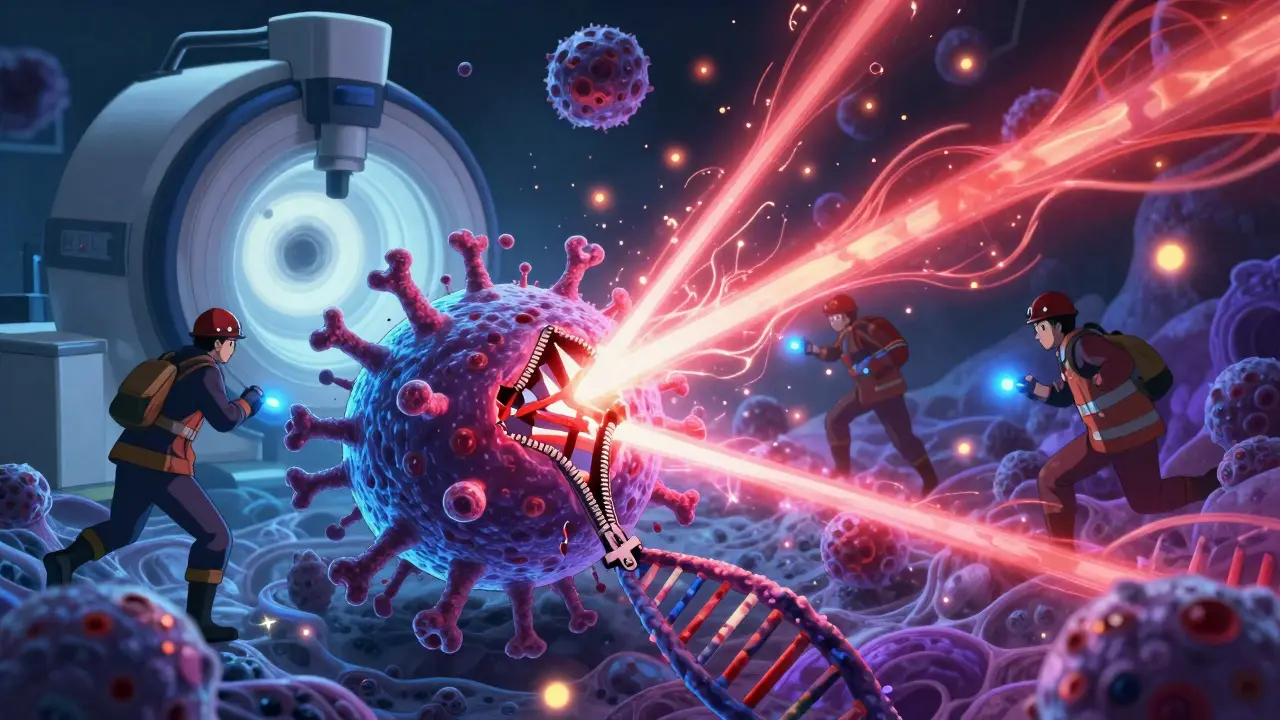
When you hear the word radiation, you might think of nuclear accidents or X-rays at the dentist. But for millions of people with cancer, radiation is a life-saving tool. Radiation therapy doesn’t just zap tumors-it attacks cancer cells at their core, breaking their DNA so they can’t multiply or survive. And the science behind it is far more complex-and fascinating-than most people realize.
How Radiation Actually Destroys Cancer Cells
Radiation therapy uses high-energy particles or waves-like X-rays or protons-to target cancer cells. The goal isn’t to burn or vaporize the tumor. It’s to break the DNA inside those cells. DNA is the instruction manual every cell uses to live, grow, and divide. When radiation hits, it shatters that manual in places the cell can’t easily fix. The most deadly damage is called a double-strand break. Imagine a zipper. Normally, if one side tears, you can rezip it. But if both sides snap at the same spot, it’s nearly impossible to put back together correctly. Radiation causes these kinds of breaks. And when that happens, the cancer cell either dies right away or loses its ability to divide forever. It’s not just direct hits that matter. Radiation also creates reactive oxygen species-unstable molecules that swirl around inside the cell like tiny bombs. These molecules attack proteins, damage cell membranes, and make DNA breaks even worse. This is called oxidative stress. It’s like setting off a chain reaction inside the cell, turning its own chemistry against it.Two Main Ways Cancer Cells Die After Radiation
Not all cancer cells die the same way. There are two primary paths:- Apoptosis: This is programmed cell death. The cell gets a signal to shut down quietly. It shrinks, breaks apart, and gets cleaned up by the body without causing inflammation. Think of it as the cell choosing to end its own life.
- Reproductive failure: This is the most common outcome. The cell doesn’t die immediately. It tries to divide anyway. But with damaged DNA, it can’t copy its genetic material properly. It gets stuck in the middle of division, swells up, and bursts. This is called mitotic catastrophe. It’s messy, loud, and often triggers the immune system.
The Cell’s Attempt to Fight Back
Cancer cells aren’t defenseless. When radiation breaks their DNA, they sound the alarm. Two key proteins-ATM and ATR-spring into action. They activate a whole repair crew, including proteins like MDC1, Nbs1, and 53BP1. These proteins rush to the break sites and try to fix them. There are two main repair methods:- Non-homologous end joining (NHEJ): Fast but sloppy. It just glues the broken ends back together, even if it’s not perfect. This often leads to errors that kill the cell.
- Homologous recombination (HR): Slow but accurate. It uses a healthy copy of DNA as a template to rebuild the break. This is how healthy cells survive radiation. But some cancer cells rely on this too.
The Immune System Gets Involved
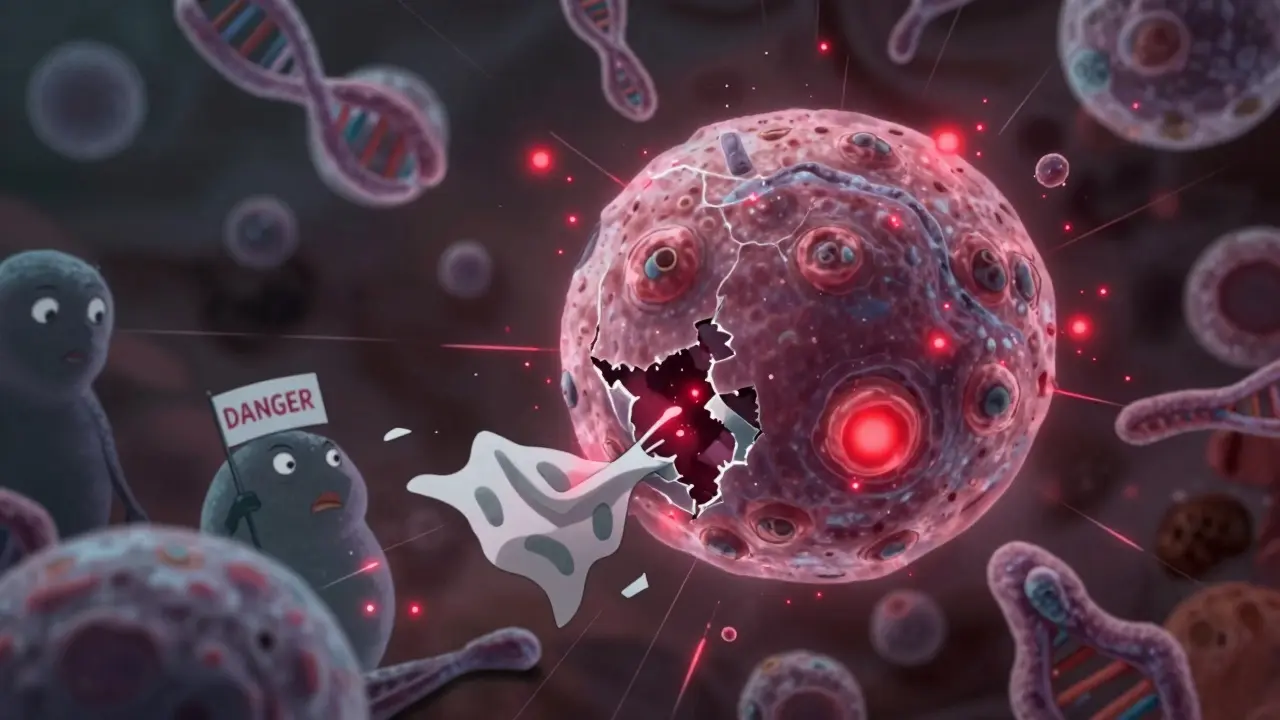
For years, doctors thought radiation only worked locally-killing cells in the beam’s path. But new research shows it can wake up the immune system. When cancer cells die the wrong way (via NHEJ or failed repair), they release molecules that look like infection signals. These act like warning flags, attracting immune cells to the tumor site. This is especially true in tumors with BRCA2 mutations. These cancers can’t use homologous recombination properly. So when they’re hit with radiation, they don’t repair quietly. They scream for help-and the immune system listens. That’s why combining radiation with immunotherapy is now one of the most promising advances in cancer care. In one study, adding the immunotherapy drug pembrolizumab to radiation boosted response rates in lung cancer from 22% to 36%.The Role of Oxygen and Tumor Environment
Radiation works best when cells are full of oxygen. Oxygen makes DNA damage harder to fix. Hypoxic (low-oxygen) tumors can be up to three times more resistant to radiation. That’s why some tumors-like those deep in the body or surrounded by scar tissue-don’t respond as well. The tumor’s surroundings matter too. Fibroblasts and immune cells hiding in the tumor can protect cancer cells, making them tougher to kill. Some even release chemicals that help cancer cells repair DNA faster. That’s one reason why radiation sometimes fails-even when the dose looks perfect on paper.Why Some Tumors Resist Radiation
About 30-40% of tumors become resistant to radiation. The reasons vary:- Too much DNA repair activity (high levels of 53BP1 or other repair proteins)
- Fast cell cycle changes that let cells avoid radiation’s peak damage window
- Activation of survival pathways like PI3K or NF-kB
- Low oxygen in the tumor core

New Frontiers: FLASH, PARP Inhibitors, and AI
The future of radiation therapy isn’t just about stronger beams-it’s about smarter targeting and smarter combinations.- FLASH radiotherapy delivers the entire dose in less than a second. Early trials show it kills tumors just as well but spares healthy tissue. It’s being tested in humans now.
- PARP inhibitors like olaparib block a key repair pathway. When used with radiation, they make BRCA-mutated cancers much more vulnerable. This is already helping women with ovarian and breast cancer.
- AI-powered planning can now design a radiation treatment plan in under 10 minutes. What used to take hours is now automatic-reducing errors and letting doctors focus on patients.
What This Means for Patients
If you’re undergoing radiation therapy, know this: it’s not just a one-size-fits-all treatment. Your tumor’s genetics, oxygen levels, and repair capacity all affect how well it works. Doctors are now using biomarkers-like γ-H2AX levels or BRCA status-to tailor treatment. For example, if your tumor has a BRCA mutation, you might be a good candidate for radiation plus a PARP inhibitor. If your tumor is hypoxic, your team might add a drug to improve oxygen flow before treatment. These aren’t theoretical ideas-they’re being used in clinics right now. Radiation therapy isn’t magic. But it’s science at its most powerful: turning a force once feared into a precise, targeted weapon against cancer. And with every new discovery, it’s getting even better.Does radiation therapy hurt during treatment?
No, radiation therapy itself doesn’t cause pain during delivery. You won’t feel the beams passing through your body, similar to getting an X-ray. Some patients report skin irritation or fatigue later, but the actual treatment session is silent and painless. The discomfort comes from side effects that develop over days or weeks, not the radiation itself.
Can radiation therapy cure cancer on its own?
Yes, in many cases. For early-stage cancers like prostate, cervical, or certain skin cancers, radiation alone can lead to complete remission. It’s often used as the main treatment when surgery isn’t safe or preferred. For more advanced cancers, it’s usually combined with chemotherapy or immunotherapy to improve results.
Why do some patients need more radiation sessions than others?
It depends on the cancer type, location, stage, and how the tumor responds to radiation. Conventional treatments use small daily doses (1.8-2 Gy) over several weeks to protect healthy tissue. Stereotactic treatments use much higher doses (8-24 Gy) in just 1-5 sessions because they’re more precise. The goal is always to maximize cancer cell death while minimizing harm to surrounding organs.
Does radiation make you radioactive?
No. External beam radiation therapy doesn’t make you radioactive. The radiation comes from a machine outside your body and stops when the machine turns off. You can safely be around other people, including children and pregnant women, right after treatment. Only in rare cases-like internal radioactive implants-is temporary caution needed.
How long does it take for radiation to kill cancer cells?
It doesn’t happen instantly. Radiation damages DNA immediately, but cancer cells often die over days or weeks as they try to divide. Some die during their next division attempt (mitotic catastrophe), others through delayed apoptosis. Imaging scans may not show shrinkage for weeks after treatment ends. The full effect can take 1-3 months to become visible.
Can radiation therapy cause new cancers?
It’s possible, but extremely rare. The risk is higher in younger patients and with very high doses over large areas. For most adults, the benefit of treating an existing cancer far outweighs the tiny risk of a second cancer developing decades later. Modern techniques focus the beam tightly, reducing exposure to healthy tissue and lowering this risk even further.
Randolph Rickman
December 15, 2025 AT 23:10Man, I never realized radiation was this sophisticated. I thought it was just blasting stuff with X-rays. The DNA zipper analogy? Perfect. I’ve got a cousin going through this right now, and now I actually get why they’re doing it this way. It’s not just destruction-it’s precision engineering at the cellular level. Mind blown.
Also, the part about immune system activation? That’s the future right there. Radiation isn’t just a scalpel anymore-it’s a wake-up call for your body’s defenses. Sick science.
sue spark
December 16, 2025 AT 00:25I read this whole thing and still feel like I barely scratched the surface. The way they described oxidative stress as tiny bombs inside the cell? That stuck with me. I don’t know anything about biology but this made sense. I’m glad someone took the time to explain it like this.
James Rayner
December 16, 2025 AT 00:38It’s fascinating… how something so destructive can be so precisely therapeutic. Radiation doesn’t just kill-it forces a choice upon the cell: repair and risk error, or die with dignity. The apoptosis vs. mitotic catastrophe distinction… it’s almost poetic. Like nature’s own justice system.
And yet… we’re the ones pulling the trigger. Who are we, to wield such power over the very code of life? Are we healers… or gods playing with fire?
Also, I just cried a little reading about how some cells scream for help and the immune system listens. That’s beautiful. And terrifying.
Josias Ariel Mahlangu
December 16, 2025 AT 08:42They’re lying to you. Radiation doesn’t cure cancer-it just weakens the body so the pharmaceutical companies can sell you more drugs. The real cure? Vitamin C, fasting, and avoiding EMF. This whole thing is a scam funded by Big Pharma to keep you hooked on treatments that don’t fix the root cause. You’re being manipulated.
Andrew Sychev
December 16, 2025 AT 21:30Okay but why are we even doing this? Why not just cut it out? This whole radiation thing feels like torture. They’re just burning people alive and calling it medicine. I’ve seen people after chemo-walking corpses. This is not science. This is punishment disguised as hope. Someone needs to stop this.
Kim Hines
December 18, 2025 AT 18:23Interesting. I didn’t know about FLASH therapy. That’s wild. One second and done? I wonder how many people are still getting the old-school 6-week regimen because their hospital hasn’t upgraded. Probably a lot.
Cassandra Collins
December 19, 2025 AT 22:18wait so if radiation wakes up your immune system… does that mean the government is using it to control our bodies? like… what if they’re secretly adding something to the machines to make us more docile? i heard the military was testing this on veterans in the 80s. also i think my neighbor is a chemtrail pilot. why is my skin tingling after my last session??
Dylan Smith
December 21, 2025 AT 08:00Okay but the BRCA2 and PARP inhibitor combo is literally life-changing. My aunt had ovarian cancer and they threw everything at it-chemo failed, surgery was too risky. Then they added olaparib with radiation and boom-tumor vanished in 3 months. I’ve been telling everyone I know to ask their oncologist about this. It’s not experimental anymore. It’s standard. Why isn’t this everywhere?
Also the part about oxygen? That’s why hyperbaric chambers are being used now. I didn’t know that. I’m telling my doctor tomorrow.
Mike Smith
December 23, 2025 AT 06:35Thank you for this exceptionally well-researched and clearly articulated piece. The integration of molecular biology with clinical outcomes is presented with remarkable clarity. I particularly appreciate the emphasis on biomarker-driven personalization-this represents the paradigm shift in oncology that we’ve been awaiting for decades. The ethical implications of tailoring therapy to genetic profiles are profound, and the field is rising to meet them with rigor and compassion. Please continue sharing insights of this caliber; they are invaluable to patients, families, and clinicians alike.
Ron Williams
December 24, 2025 AT 10:00As someone who grew up in a household where cancer was never spoken about, this was eye-opening. I didn’t know radiation could be this nuanced. The idea that it’s not just about killing cells but triggering the body’s own cleanup crew? That’s powerful. My dad had prostate cancer-he did radiation. I never asked how it worked. Now I want to understand. Thanks for making this feel human.
Colleen Bigelow
December 25, 2025 AT 16:23THIS IS A TRAP. Radiation is just the first step. They’re using it to implant nano-chips under your skin through the beam. That’s why they say you’re not radioactive-you don’t want them to know you’re carrying the tracking device. The immune system ‘activation’? That’s the signal sending your DNA to the cloud. They’re harvesting your genetic data. The AI planning? That’s how they decide who lives and who dies. Wake up. This isn’t medicine. It’s control. And they’re coming for your kids next.