

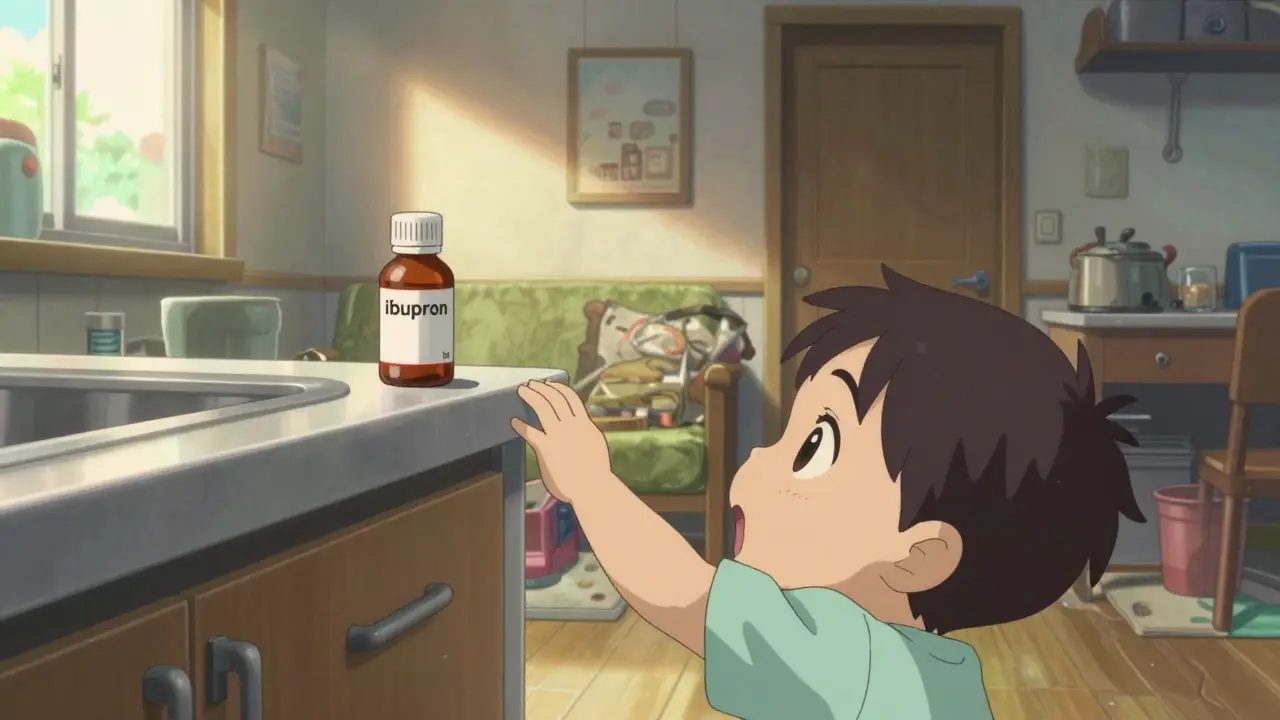
Think your medicine cabinet is safe just because it's high up? Think again. Toddlers are essentially tiny athletes with a curiosity for everything they aren't supposed to touch. Between 18 months and 5 years, children develop a knack for climbing toilets and countertops that would make a rock climber jealous. Sadly, this curiosity often leads them straight to the one thing that can be fatal in small doses: medication. With over 90 percent of poisonings happening right at home, the risk isn't a "what if"-it's a "when" if your home isn't properly secured.
The goal here isn't to make you paranoid, but to make you proactive. Whether it's a visitor's purse left on a table or a bottle of ibuprofen in a "safe" drawer, the margin for error is slim. We're talking about substances where a tiny amount can cause serious harm. To keep your kids safe, you need a strategy that goes beyond just putting things on a high shelf. You need a locked-down environment.
The Truth About "Child-Proof" Containers
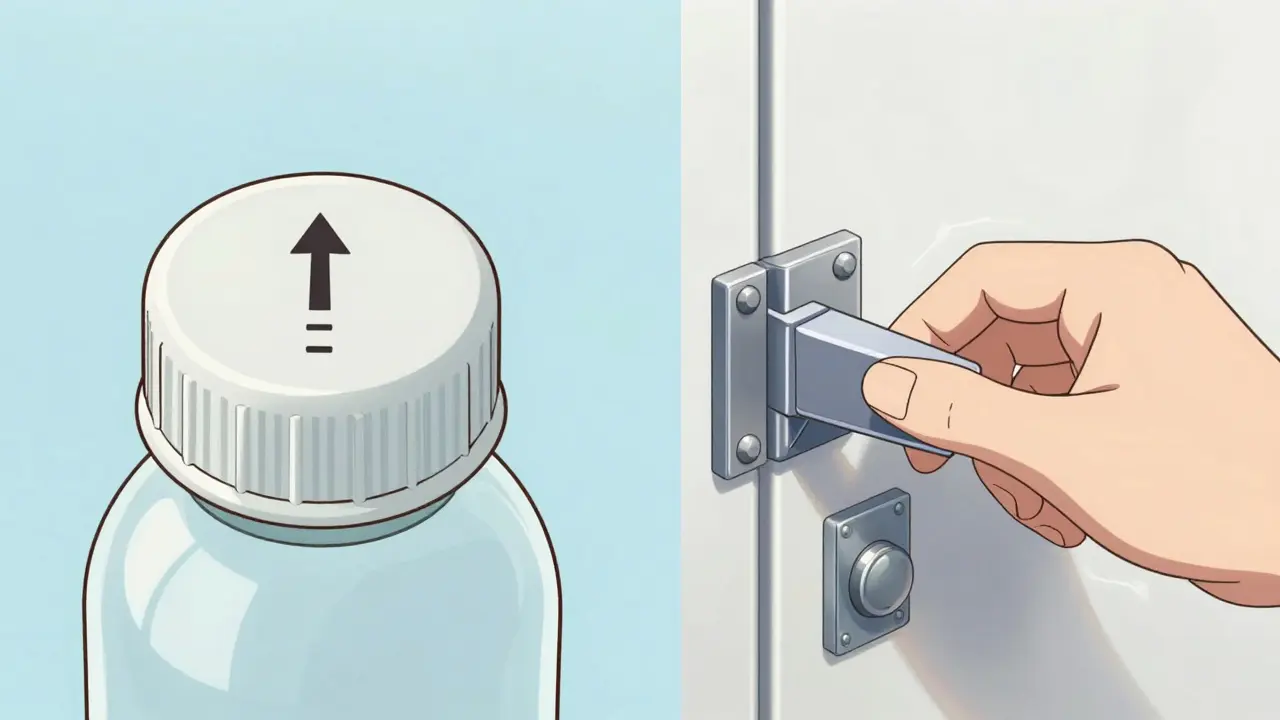
First, let's clear up a dangerous myth. Child-resistant containers is packaging designed to be significantly harder for children under five to open, though they are not impossible to breach. The phrase "child-proof" is a misnomer. No container is truly proof against a determined toddler with a few minutes of uninterrupted time. Many kids can figure out the "push and turn" mechanism through trial and error. Relying on these caps as your only line of defense is a gamble you shouldn't take.
Another huge risk factor is transferring medicine into different bottles. About 25 percent of poisoning incidents happen because medication was moved out of its original packaging. When you move a pill to a generic travel container, you lose the safety cap, the dosage instructions, and the warning labels. Always keep meds in their original bottles. It's the only way to ensure you're giving the right dose and that the safety features are actually working.
Creating a Fortress: Where and How to Store Meds
If you want to stop an accident, you have to see the world from their level. Literally. Get down on your hands and knees and crawl through every room of your house. You'll be surprised to find that a "high" shelf is actually perfectly reachable if a child uses a kitchen chair or a stack of magazines as a stepping stone. Most poisoning incidents involve products stored below 4 feet, which is the average reach of a toddler.
To actually secure your home, move beyond high shelves and start using locks. Magnetic locks are a great choice because they are invisible from the outside and incredibly hard for kids to manipulate. Aim to store medications in cabinets that are at least 54 inches above the floor and equipped with automatic-locking latches that engage the moment the door closes.
| Method | Security Level | Main Weakness | Recommendation |
|---|---|---|---|
| High Shelves | Low | Children can climb furniture/toilets | Avoid as sole method |
| Child-Resistant Caps | Moderate | Persistent kids can open them | Use as secondary layer |
| Locked Cabinets | High | Lock failure or left open | Gold standard |
| Magnetic Latches | Very High | Require specific key/magnet | Best for high-risk meds |
High-Risk Medications You Should Watch
Not all medicines are created equal when it comes to toxicity. Some of the most dangerous substances are the ones we use every day. Acetaminophen (commonly known as Tylenol) and Ibuprofen (Motrin, Advil) are among the most frequently ingested drugs in childhood poisonings. Because they are common in every household, parents often let their guard down with them.
Then there's the modern danger: liquid nicotine. Found in e-cigarettes and vaping pods, liquid nicotine is incredibly potent. A tiny amount-as little as 0.5 mL-can be fatal to a toddler. These colorful pods often look like candy or toys, making them irresistible. They must be treated with the same level of security as prescription narcotics.
A common but devastating mistake is calling medicine "candy" to get a child to take it. This creates a mental link in the child's head: "This tastes like candy, therefore it is a treat." Data shows that children are over three times more likely to self-administer medication if it has been described as candy. Call it medicine. Be honest about it, even if it means a struggle during dose time.
Dosing Disasters and How to Avoid Them
Poisoning isn't always about a child sneaking a pill; sometimes it's a dosing error. A staggering 68 percent of medication errors are dosing mistakes. The biggest culprit? The kitchen spoon. Household spoons vary by 20-40 percent in volume, meaning you could easily give your child way too much or far too little of a drug.
Stop using the silverware drawer for medicine. Always use a dedicated measuring tool with exact milliliter (mL) markings. Whether it's an oral syringe or a calibrated dosing cup, these tools remove the guesswork. Also, never leave a medication bottle open on the counter while you're prepping a dose. Distractions happen-the phone rings or the dog barks-and that's exactly when a toddler swipes the bottle.
The Guest Danger: Purses and Bedside Tables
Your home might be a fortress, but what happens when guests arrive? Visiting grandparents or relatives often bring their own medications, which they might leave in a purse on the sofa or on a guest room bedside table. In fact, about 30 percent of medication exposures come from a visitor's belongings. When guests stay over, gently remind them to keep their medications locked away or in a secure bag that is out of reach.
Keep an eye on the time of day, too. Contrary to popular belief, the highest risk period isn't at night; it's between 12 PM and 6 PM. This is when the house is most active, visitors are more likely to be present, and parents are often juggling multiple tasks, leading to those critical moments of distraction.
Emergency Response: Seconds Count
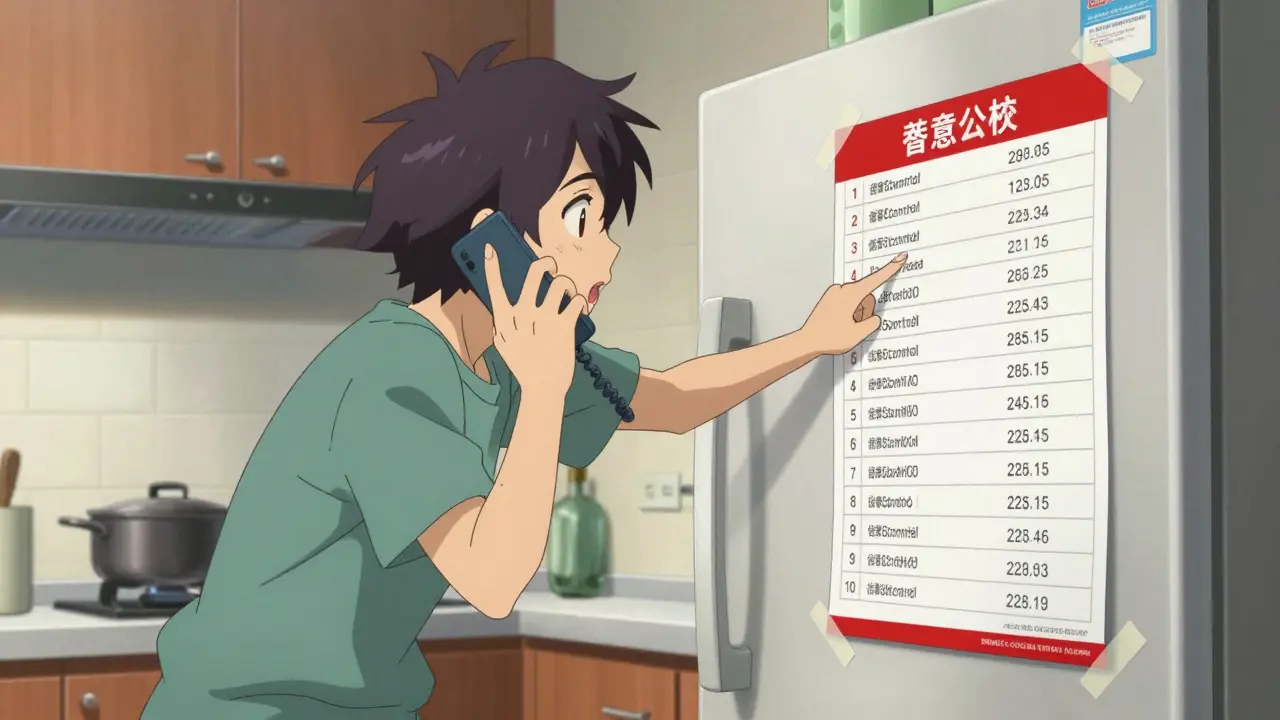
Even with every precaution, accidents can happen. The difference between a scary afternoon and a tragedy often comes down to the first five minutes. If you suspect your child has ingested something, don't waste time searching for a phone number on Google. Poison Control is a 24/7 emergency service providing expert guidance on treating poisoning incidents. In the US, the number is 1-800-222-1222.
Post this number on your fridge and inside your kitchen cabinets. Homes that have the number visibly posted respond nearly 50 percent faster in emergencies. Immediate consultation with an expert can improve outcomes by nearly 90 percent. Don't wait for symptoms to appear-by the time a child looks sick, the damage may already be done.
Can't I just keep the medicine on the top shelf of the fridge?
No. Toddlers are surprisingly agile. They can use drawers as stairs or climb up the side of cabinets. The only truly safe storage is a locked cabinet or a locked box that is physically inaccessible to a child, regardless of height.
What should I do if my child swallows a pill?
First, stay calm and remove the medication from the child's reach. Do not induce vomiting unless specifically told to do so by a professional. Immediately call Poison Control or emergency services. Have the medication bottle ready so you can tell the expert exactly what was taken and how much.
Are vitamins and supplements dangerous too?
Yes, absolutely. Some vitamins, particularly those containing iron, can be toxic in high doses for small children. Any supplement, herbal remedy, or vitamin should be stored with the same security as prescription drugs.
How often should I update my home safety measures?
You should anticipate developmental milestones 3-6 months in advance. As your child learns to climb, open doors, or use tools, your storage strategy must evolve. What was safe for a 12-month-old will not be safe for a 2-year-old.
Why is liquid nicotine so dangerous?
Liquid nicotine is highly concentrated. Because children have much smaller body masses than adults, a tiny amount can cause rapid respiratory failure or cardiac arrest. Its often sweet smell and colorful packaging make it particularly attractive to toddlers.
Next Steps for a Safer Home
If you're feeling overwhelmed, start with one room today. Clear out any expired medications (dispose of them safely at a pharmacy) and move the remaining ones into a single, locked location. If you don't have a locking cabinet, a portable medication lock box is a great investment.
For those in rural areas, remember that emergency response times can be longer. This makes your home prevention and immediate contact with Poison Control even more critical. Consider taking a basic CPR and first-aid course that includes pediatric emergency training, as these skills can be life-saving while you wait for paramedics to arrive.