

Steroid Timing Calculator
This tool helps you determine the correct timing for steroid pre-medication based on your procedure schedule and medication type. Proper timing is critical to ensure effectiveness and patient safety.
Input Your Procedure Details
Recommended Timing
For your procedure, take your pre-medication at the following times:
Important: Timing is critical. Oral prednisone requires 3 doses (13h, 7h, and 1h before procedure) for maximum effectiveness.
Why Pre-Medication Matters in Modern Healthcare
Every year, millions of patients receive contrast dye for CT scans, undergo chemotherapy, or enter surgery. For some, these procedures trigger uncomfortable or even dangerous reactions. That’s where pre-medication comes in. Using antiemetics, antihistamines, and steroids before treatment isn’t optional-it’s a proven way to reduce risks and keep patients safe. But it’s not one-size-fits-all. Getting it right means knowing who needs it, when to give it, and which drugs work best for each situation.
Who Actually Needs Pre-Medication?
Not every patient needs pre-medication. Giving it to everyone just in case creates more problems than it solves. The goal is to target only those at risk. According to Yale Medicine and the American College of Radiology, pre-medication is recommended only for patients who’ve had a prior reaction to contrast media-especially if it was moderate or severe. That means if you’ve ever broken out in hives, felt dizzy, or had trouble breathing after a CT scan with dye, you’re likely a candidate. For chemotherapy, pre-medication is standard for high-risk regimens like cisplatin or doxorubicin, where nausea and vomiting are almost guaranteed without prevention.
Doctors don’t guess. They look at history. A patient who had a mild rash after a previous scan might get antihistamines and steroids. Someone who went into anaphylaxis? They’ll get a stronger, IV-based combo. This targeted approach cuts down on unnecessary drugs, reduces side effects, and saves money.
How Steroids Work in Pre-Medication
Steroids like prednisone, methylprednisolone, and dexamethasone are the backbone of pre-medication for allergic-type reactions. They don’t work fast. That’s the catch. Oral prednisone needs at least 13 hours to reach full effect. That’s why same-day scans can be tricky. If you’re scheduled for a CT scan at 10 a.m., you’d need to take your first dose at 9 p.m. the night before.
For inpatients or emergency cases, IV methylprednisolone is the go-to. It hits therapeutic levels in about 4 hours. Dosing? For adults, it’s typically 40 mg IV. Hydrocortisone (200 mg IV) is a solid alternative if methylprednisolone isn’t available. For kids, it’s weight-based: 0.7 mg/kg of prednisolone, capped at 50 mg. The key is timing. Give it too late, and it won’t help. Give it too early, and the effect fades.
Studies show these steroids reduce moderate to severe contrast reactions from 0.2-0.7% down to just 0.04%. That’s a 90% drop. But they’re not magic. About 4% of pre-medicated patients still get mild reactions. And they don’t help much with severe reactions-only about 75% effectiveness there. That’s why they’re paired with other drugs.
Antihistamines: First-Gen vs. Second-Gen
Antihistamines block histamine, the chemical that causes itching, hives, and swelling. There are two types: first-generation and second-generation. First-gen drugs like diphenhydramine (Benadryl®) work fast but make you drowsy. In one JAMA study, 42.7% of patients on diphenhydramine felt sleepy. That’s a problem if you’re driving home after a scan or need to be alert for surgery.
Second-gen antihistamines like cetirizine (Zyrtec®) are better for most people. They’re just as effective at preventing reactions but cause drowsiness in only 15.3% of cases. That’s why many hospitals now use cetirizine as the default oral option. For kids under 6 months, diphenhydramine is still used because cetirizine isn’t approved for that age group. Dosing? 1 mg/kg, max 50 mg. For older kids and adults, 10 mg once is standard.
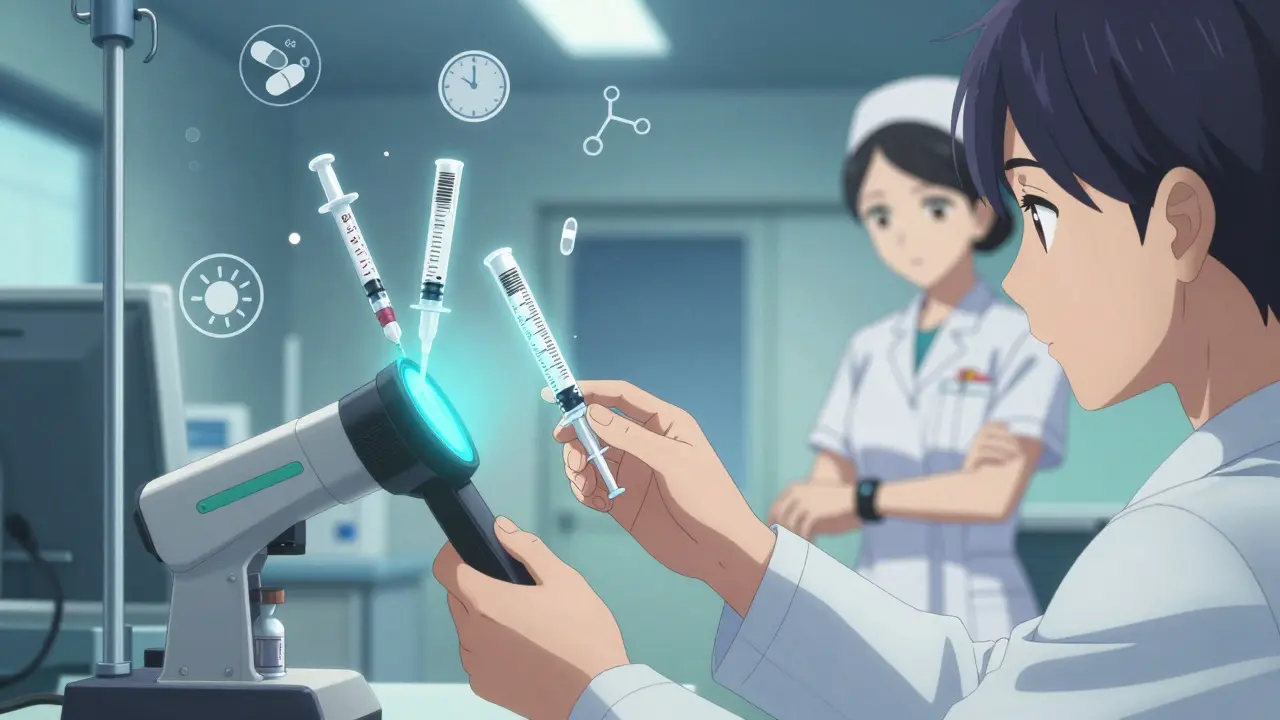
Important note: All IV antihistamines must be prepared carefully. The Institute for Safe Medication Practices (ISMP) says syringes must be labeled if prepared ahead of time. A mislabeled syringe can lead to a wrong dose or even a fatal mix-up. That’s why barcode scanning and double-checks are now standard in most hospitals.
Antiemetics: Stopping Chemo Nausea Before It Starts
When it comes to chemotherapy, nausea and vomiting are the biggest complaints. Old-school treatment used just one drug-like ondansetron. Today, the gold standard is triple therapy: a 5-HT3 antagonist (ondansetron or palonosetron), an NK1 antagonist (aprepitant or fosnetupitant), and dexamethasone. This combo cuts acute nausea in half compared to older methods.
According to the American Society of Clinical Oncology (ASCO), triple therapy gives a 70-80% complete response rate-meaning no vomiting and no need for rescue meds. A 2023 meta-analysis showed that with triple therapy, only 28.4% of patients had nausea. With just two drugs? It jumped to 56.7%. That’s a huge difference.
But it’s not perfect. Even with the best combo, 15-20% of patients on strong chemo like cisplatin still get breakthrough nausea. That’s why nurses keep rescue meds like metoclopramide on hand. Also, dexamethasone is used here too-but in lower doses than for contrast reactions, usually 12 mg orally the day before chemo and 8 mg on treatment days.
Real-World Challenges and How Clinics Are Solving Them
Even the best protocols fail if they’re not followed. One radiology tech on Reddit said their team had zero severe reactions after implementing Yale’s protocol-but scheduling became a nightmare. Patients with same-day referrals couldn’t take the 13-hour prednisone dose on time. Solution? Hospitals started using EHR alerts. When a patient’s chart shows a past reaction, the system auto-suggests pre-med orders and flags timing issues.
Another big problem? Documentation errors. A 2022 survey by ASHP found that 68% of hospitals had medication reconciliation errors with pre-med orders. That means a patient’s meds weren’t checked properly when they moved from ER to inpatient to imaging. Some of these errors reached patients. Now, many facilities use barcode scanning at the bedside. You scan the patient’s wristband, then the drug. If the dose or timing doesn’t match the protocol, the system blocks it.
Training matters too. Staff need 8-12 hours of focused education on these protocols. Pharmacy and nursing teams now meet monthly to review cases. At Yale, compliance hit 94.7% after 12 months of training and audits. That’s the kind of consistency that saves lives.
What’s Next for Pre-Medication?
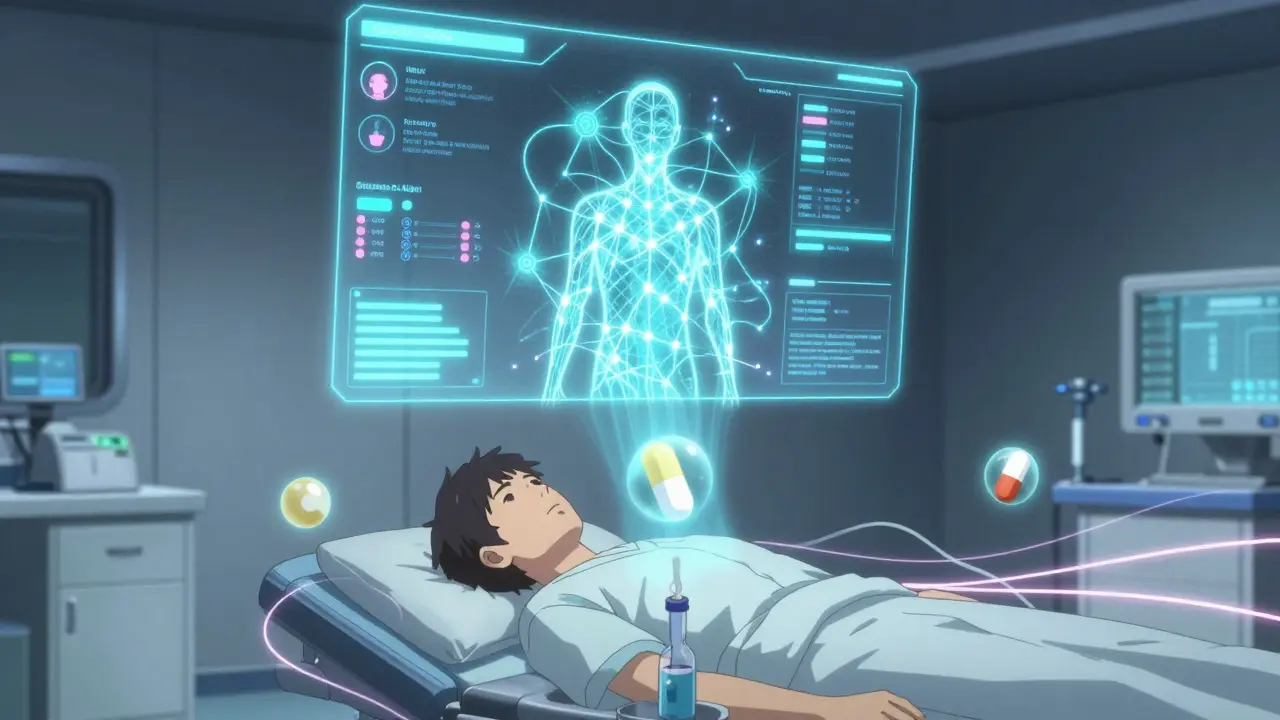
The future is smarter, not just stronger. Researchers are using AI to predict who’s at risk. A 2023 study in the Journal of the American College of Radiology trained an algorithm on 12,000 patient records. It predicted contrast reactions with 83.7% accuracy-based on age, prior reactions, kidney function, and even the type of dye used. Imagine a system that flags high-risk patients before they even walk in.
New drugs are coming too. Fosnetupitant, a next-generation NK1 antagonist, is being tested as a single-dose IV alternative to oral aprepitant. It could simplify chemo pre-med regimens and improve compliance. Also, researchers are looking at whether lower steroid doses, given closer to the procedure, might work just as well. That could solve the 13-hour timing problem.
For now, the current standards hold strong. ASCO, ACR, and ISMP all agree: pre-medication with steroids, antihistamines, and antiemetics is essential for high-risk patients. The goal isn’t to eliminate all risk-it’s to make procedures safer, smoother, and less frightening for those who need them most.
Key Takeaways
- Pre-medication is for patients with a history of reactions-not everyone.
- Steroids need time: oral prednisone requires 13 hours; IV methylprednisolone works in 4 hours.
- Second-gen antihistamines like cetirizine are preferred over diphenhydramine for less drowsiness.
- Triple antiemetic therapy (5-HT3 + NK1 + dexamethasone) is the gold standard for chemo-induced nausea.
- Medication errors are common-use EHR alerts, barcode scanning, and double-checks to prevent them.
- AI and new drugs like fosnetupitant are on the horizon but won’t replace current protocols anytime soon.
Do I need pre-medication for a CT scan with contrast?
Only if you’ve had a prior reaction to contrast dye-like hives, swelling, trouble breathing, or vomiting. If you’ve never had a reaction, pre-medication isn’t recommended. Giving it to everyone increases side effects and doesn’t improve safety for low-risk patients.
Can I take my pre-medication pills the night before a morning scan?
Yes, but timing matters. For oral prednisone, you need three doses: 13 hours, 7 hours, and 1 hour before the scan. If your scan is at 8 a.m., take your first dose at 7 p.m. the night before, the second at 1 a.m., and the third at 7 a.m. Skipping doses reduces effectiveness. Always follow your provider’s exact schedule.
Why not just use Benadryl instead of Zyrtec for pre-medication?
Benadryl (diphenhydramine) works well but causes drowsiness in over 40% of patients. Zyrtec (cetirizine) is just as effective at preventing reactions but causes drowsiness in only about 15%. For most people, especially those driving or working afterward, Zyrtec is the better choice. Benadryl is still used for young children or if Zyrtec isn’t available.
Are steroids safe for long-term use in pre-medication?
The doses used for pre-medication are low and short-term-usually just one or two doses over 24 hours. This isn’t enough to cause long-term side effects like weight gain, high blood sugar, or bone loss. These risks come from daily, long-term steroid use. For a single scan or chemo session, the benefits far outweigh the minimal risks.
What if I miss a dose of my pre-medication?
If you miss the first dose of oral prednisone, call your provider. If it’s less than 4 hours before your scan, they may switch you to IV steroids. If you miss the second or third dose, the clinic may still proceed but with closer monitoring. Never skip the antihistamine-it’s the last line of defense. Always inform the staff if you missed any doses.
Can pre-medication completely prevent all reactions?
No. Pre-medication reduces moderate to severe reactions by about 90%, but it doesn’t eliminate risk. About 4% of pre-medicated patients still get mild reactions like itching or flushing. Less than 1% may have moderate reactions. That’s why emergency equipment and trained staff are always present during contrast and chemo procedures.
Next Steps for Patients and Providers
If you’re scheduled for a procedure that requires pre-medication, ask these questions: Do I have a documented prior reaction? What exact drugs and doses am I getting? When do I take them? What if I miss a dose? Bring a list of your meds to every appointment. If you’re a provider, make sure your EHR has built-in alerts for pre-medication protocols. Use standardized order sets. Train your team. Track compliance. These steps turn a good plan into a life-saving system.
Christi Steinbeck
January 19, 2026 AT 13:44Just had my third CT with contrast this year and they gave me the full steroid + Zyrtec combo. No itching, no nausea, no drama. Seriously, if you’ve had a reaction before, don’t skip this. It’s not optional-it’s your body’s peace treaty with the machine.
Josh Kenna
January 21, 2026 AT 04:02benadryl is trash for this lol. i got so drowsy after my last scan i slept for 3 hours in the parking lot. my tech had to shake me awake. zyrtec? i was good to go. drove home, made dinner, watched netflix. same effect, zero zombie mode. hospitals are still using benadryl like its 2005.
Erwin Kodiat
January 22, 2026 AT 03:17As someone who’s had 5 CTs with contrast over the last 8 years, I can say this: pre-medication didn’t just make it safer-it made it bearable. I used to dread the whole thing. Now? I take my pills, chill, and get scanned. It’s not magic, but it’s close. Also, shoutout to the nurses who remember your name and your history. That matters more than you think.
sujit paul
January 23, 2026 AT 16:02Let us not forget that pharmaceutical corporations have long orchestrated the standardization of pre-medication protocols to ensure continued demand for their products. The 90% reduction in reactions? Likely inflated. The real goal is to normalize chronic drug dependency under the guise of safety. Why not explore natural anti-inflammatories? Turmeric? Ginger? The system fears alternatives.
Aman Kumar
January 25, 2026 AT 08:40Let me be brutally honest: most of these protocols are glorified CYA measures. Doctors don’t care about your comfort-they care about liability. If you react and they didn’t pre-med, they get sued. If you don’t react and they did? No one notices. That’s why you’re getting steroids even if your last reaction was a tiny rash in 2017. It’s not medicine-it’s legal insurance.
Jake Rudin
January 26, 2026 AT 10:04It’s fascinating, isn’t it? The precision of pharmacokinetics-how prednisone requires 13 hours to reach therapeutic levels, yet we still schedule scans at 8 a.m. with a 7 p.m. dose, ignoring circadian rhythms, ignoring individual metabolism, ignoring the fact that some of us metabolize steroids faster than others-and yet, we treat this like a universal algorithm. We quantify everything except the human variable.
Lydia H.
January 28, 2026 AT 06:34I love how this post breaks down the science without jargon. As a nurse, I see so many patients terrified of scans because they’ve heard horror stories. This kind of clarity? It’s healing. Also, the barcode scanning point? That’s the unsung hero of patient safety. Techs don’t get enough credit.
Valerie DeLoach
January 28, 2026 AT 08:44One thing no one talks about: the emotional toll of being labeled ‘high-risk.’ You start to feel like a walking liability. I had a reaction once-mild, just hives-and now every time I walk into radiology, I feel like I’m being judged. Pre-medication saved my body, but it didn’t fix the stigma. We need to talk about that too.
Tracy Howard
January 30, 2026 AT 07:30Can we just admit that American medicine is obsessed with over-treating? In Canada, we only pre-medicate if you’ve had anaphylaxis. No 3-dose steroid regimens for a little rash. We don’t drug everyone because someone’s lawyer might sue. We trust clinical judgment. Your system is broken.
Astha Jain
February 1, 2026 AT 02:27zrytec? i always thought it was zyrtec. lol. anyway, my mom got chemo last year and they gave her the triple therapy. she said she felt like a robot on autopilot but didn’t puke once. that’s wild. still, why do they always give dexamethasone? it’s like the placebo of chemo meds.
Phil Hillson
February 1, 2026 AT 15:59Pre-medication is just a bandaid on a bullet wound. The real problem? Why are we injecting toxic dye into people’s veins in the first place? Why not develop non-contrast imaging that’s just as good? Why do we keep doing the same dangerous thing and just throw drugs at it? This whole system is lazy and reactive. We’re treating symptoms, not fixing the root cause. Someone’s making money off this mess.