

People turn to natural remedies and supplements hoping to avoid the side effects of prescription drugs. Maybe you’re taking something for anxiety, menopause, or chronic pain-and you think adding an herb like black cohosh or St. John’s wort will help smooth things out. But here’s the problem: natural doesn’t mean safe. And in many cases, these so-called gentle solutions can make things worse.
Why ‘Natural’ Doesn’t Mean Safe
The idea that plants or herbs are harmless because they come from nature is deeply rooted. But the truth is, plants produce chemicals for a reason-to defend themselves. Those same chemicals can affect your body in powerful, sometimes dangerous ways. Take ephedra. It was once sold as a weight-loss aid and energy booster. Between 1995 and 1999, the FDA logged over 800 reports of serious side effects from ephedra, including heart attacks, strokes, and even death. Half of those cases happened in people under 40. The FDA banned it in 2004. But similar products still pop up under different names, and people keep using them thinking, “It’s just a plant.” Herbal supplements aren’t tested like prescription drugs. Under U.S. law (DSHEA, 1994), companies don’t need to prove safety or effectiveness before selling them. That means what’s on the label might not be what’s inside. A 2015 study found that nearly 20% of herbal products contained contaminants-heavy metals, pesticides, or even hidden prescription drugs. One product marketed as “natural ginseng” was found to contain a powerful steroid. Another “turmeric supplement” had traces of lead.Common Supplements and Their Real Risks
Some supplements get a lot of attention for helping with side effects. But the evidence is mixed-and the risks are real. Black cohosh is often used for hot flashes during menopause. Some studies suggest it might help, but only if it’s a specific, standardized brand like Remifemin®. Other versions? No proof they work. And while early fears about liver damage were based on weak evidence, the Cleveland Clinic still warns: if you start feeling nauseous, your skin turns yellow, or you’re unusually tired after taking it, stop. Liver injury from black cohosh is rare-but it happens. Echinacea is another popular one, often taken to prevent colds. Most research says it doesn’t reduce how often you get sick. But it can cause allergic reactions-especially if you’re allergic to ragweed, daisies, or chrysanthemums. People with autoimmune diseases like lupus or MS should avoid it entirely. It can trigger flare-ups. St. John’s wort is used for mild depression. But here’s the catch: it changes how your body processes other drugs. It can make birth control pills fail. It can reduce the effectiveness of antidepressants, HIV meds, and even some cancer treatments. One study found it lowered blood levels of birth control pills by up to 24%. That’s not a small risk. It’s life-changing. Ginkgo biloba and cranberry are both marketed as “blood thinners” for heart health. But if you’re already on warfarin or aspirin, combining them can lead to dangerous bleeding. One case report described a 72-year-old man who started taking ginkgo and ended up in the ER with a brain bleed. He wasn’t told it could interact with his blood thinner. Liquorice root is in about 75% of traditional Japanese herbal formulas. It sounds harmless, right? But it can cause pseudohyperaldosteronism-a condition that makes your body hold onto salt and lose potassium. Symptoms: high blood pressure, swelling, muscle cramps, and even seizures. The NHS says up to 3% of people who take it regularly develop this. And it’s not just tea. It’s in candies, throat lozenges, and supplements.Who’s at Highest Risk?
Not everyone reacts the same way. Some people are far more vulnerable. Older adults process herbs slower. As we age, our liver and kidneys don’t clear toxins as efficiently. That means even a normal dose of an herb can build up to dangerous levels. A 65-year-old taking black cohosh or ginkgo might be at twice the risk of a 30-year-old. People on multiple medications are walking a tightrope. A 2023 review found that nearly 60% of adults over 65 take at least five prescription drugs. Add in a few supplements, and the chance of a bad interaction skyrockets. St. John’s wort doesn’t just affect birth control-it can interfere with cholesterol meds, blood pressure pills, and even chemotherapy. People with liver or kidney disease should avoid most herbal supplements altogether. The liver is where most herbs are broken down. If it’s already struggling, adding even a “safe” herb can push it into failure. One study found that herbal products were responsible for 20% of acute liver injury cases in the U.S. between 2004 and 2013. And in over half of those cases, the herb itself wasn’t the problem-it was contamination or mislabeling.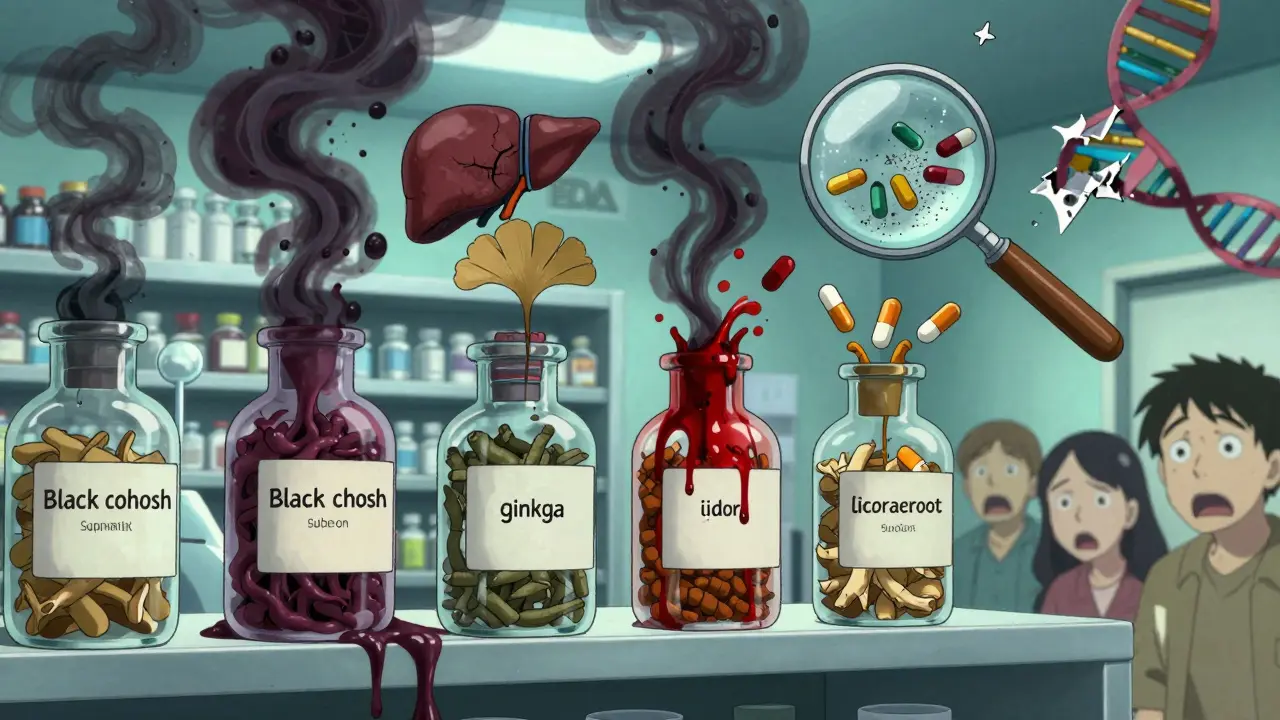
What About the Benefits? Is Anything Proven?
Yes-but only in specific cases, and only with the right product. The Natural Medicines Database, one of the most respected sources for supplement evidence, gives only a few herbs a “possibly effective” rating. Black cohosh (for menopause) is one. Ginger (for nausea during pregnancy) is another. Peppermint oil (for IBS) has decent support. But even these come with caveats: dosage matters. Brand matters. Timing matters. And here’s the kicker: most supplements have no proven benefit for preventing or reducing side effects from prescription drugs. If you’re on chemo and taking turmeric to “reduce inflammation,” you’re not protecting yourself-you might be interfering with treatment. Studies show some antioxidants can blunt the effect of radiation and certain chemo drugs.How to Use Supplements Safely
If you’re considering a supplement, here’s what to do:- Talk to your doctor or pharmacist first. Not your friend. Not your yoga instructor. Your medical professional. Tell them everything you’re taking-even if you think it’s “just a tea.”
- Check for interactions. Use a trusted tool like the Mayo Clinic’s drug interaction checker or ask your pharmacist. St. John’s wort? Ginkgo? Garlic? They all have dangerous combos.
- Buy from reputable brands. Look for third-party testing seals: USP, NSF, or ConsumerLab. These don’t guarantee safety, but they do check for what’s actually in the bottle.
- Start low, go slow. Even if something seems safe, begin with half the recommended dose. Watch for changes in sleep, digestion, mood, or energy.
- Stop if something feels off. New headache? Nausea? Rash? Dizziness? Don’t assume it’s “just adjusting.” It could be your body reacting to something harmful.
- Report side effects. If you have a bad reaction, file a report with the FDA’s Safety Reporting Portal. It helps others stay safe.
The Bigger Picture: Regulation Is Broken
The U.S. treats supplements like food. Europe treats them like medicine. In the EU, herbal products need to prove traditional use and safety before being sold. In the U.S.? No such requirement. That’s why you can buy a “natural sleep aid” online that contains melatonin, valerian, and a hidden sedative-all in one capsule. There’s hope, though. Scientists are using DNA barcoding to catch fake herbs. Labs are getting better at spotting contaminants. The European Medicines Agency’s herbal monograph system is being studied as a model for the U.S. But until regulations catch up, you’re on your own. And the burden of proof isn’t on the company. It’s on you.Bottom Line: Be Informed, Not Hopeful
Natural remedies aren’t evil. Some can help. But they’re not harmless. They’re powerful. And they can interact with your body-and your medications-in ways you can’t predict. If you’re taking a prescription drug and thinking about a supplement to manage side effects, pause. Ask: Is there real evidence this works? Is there real evidence it’s safe with what I’m already taking? And most importantly-have I talked to my doctor? The truth isn’t sexy. It doesn’t come in a bottle labeled “100% Pure.” But it’s the only thing that will keep you safe.Can natural supplements really help with side effects from prescription drugs?
Very few have solid evidence. Ginger can help with nausea from chemo. Black cohosh may reduce hot flashes-but only specific brands. Most others, like echinacea or turmeric, don’t reliably reduce side effects. And many can make things worse by interacting with your meds. Don’t assume they’re helpful just because they’re natural.
Are herbal supplements safer than prescription drugs?
No. Prescription drugs go through years of testing for safety and dosage. Herbal supplements don’t. In fact, herbal products cause more liver injuries in the U.S. than many prescription medications. The difference isn’t safety-it’s oversight. Just because something is plant-based doesn’t mean it’s gentle on your body.
What’s the most dangerous supplement people don’t realize is risky?
St. John’s wort. It’s sold as a “natural antidepressant,” but it can make birth control fail, reduce the effectiveness of antidepressants, HIV meds, and even chemotherapy drugs. People think it’s harmless because it’s herbal. But it’s one of the most dangerous supplements for drug interactions-and most users have no idea.
Can I trust supplements labeled as “USP Verified” or “NSF Certified”?
Yes, these labels mean the product was tested for what’s on the label and for contaminants. They don’t guarantee effectiveness or safety with your meds-but they do mean you’re less likely to get a bottle filled with sawdust or lead. Look for these seals. Avoid anything without them.
Why do some people say supplements helped them while others had bad reactions?
Because everyone’s body is different. Genetics, age, liver health, other meds, and even gut bacteria affect how you respond. One person might take ginkgo and feel sharper. Another might bleed internally. That’s why blanket claims like “this herb helps everyone” are misleading. What works for one person can harm another.
Should I stop my supplements before surgery?
Absolutely. Herbs like ginkgo, garlic, ginger, and fish oil can increase bleeding risk. Others, like valerian or kava, can interfere with anesthesia. Most surgeons ask you to stop all supplements at least two weeks before surgery. Don’t assume they know what you’re taking-tell them everything.
Is it safe to take herbal supplements while pregnant?
Most aren’t. Even common ones like chamomile, peppermint, or licorice can affect hormones or blood flow. Ginger is one of the few with evidence for morning sickness-but only in small doses. Always check with your OB-GYN before taking anything, even tea.
What should I do if I think a supplement caused a side effect?
Stop taking it immediately. Contact your doctor. Then report it to the FDA’s Safety Reporting Portal at safetyreporting.hhs.gov. Your report helps regulators track dangerous products and protect others. Don’t wait-side effects can be serious, and many go unreported.
Jamison Kissh
December 22, 2025 AT 03:48It’s wild how we treat plants like magic wands while ignoring that they’re chemical factories. Evolution didn’t design them to be gentle-they’re weapons. The fact that we think ‘natural’ = safe is like assuming a tiger is friendly because it’s furry. The body doesn’t care if a compound comes from a leaf or a lab-it just reacts. We need to stop romanticizing herbs and start treating them like pharmacology, not folklore.
Jeremy Hendriks
December 22, 2025 AT 17:01St. John’s wort is the silent killer of the supplement world. I knew a guy who took it for ‘mild depression’ and ended up in the ER because his antiretroviral stopped working. He didn’t even know it interacted. People think they’re being smart by avoiding pills-but they’re just swapping one risk for a sneakier one.
jenny guachamboza
December 22, 2025 AT 22:15THEY’RE HIDING STUFF IN SUPPLEMENTS!!! I read that some ‘turmeric’ has lead and the FDA just looks away because Big Herb is paying them!! Also, ginkgo is a mind control plant I swear!! 🤫💊👁️
Aliyu Sani
December 23, 2025 AT 12:38Y’know, in my village back home, we use ginger for everything-nausea, fever, even bad dreams. But we also know the roots, the soil, the season. We don’t buy powder in a plastic bag with a logo. That’s the problem-industrialization stripped the wisdom from the remedy. It’s not the herb, it’s the distance from its source.
Ajay Brahmandam
December 25, 2025 AT 11:08My uncle took black cohosh for hot flashes and ended up with liver issues. No one warned him. He thought it was ‘natural’ so it was fine. He’s fine now, but it scared the hell out of us. Always ask your doctor. Even if they roll their eyes.
Cara Hritz
December 26, 2025 AT 00:19ok so i read this whole thing and like… i think ginkgo is bad but wait what about that one time i took it and my brain felt like a laser?? also i think the FDA is corrupt and i found a youtube video that says all supplements are made by big pharma anyway?? 🤔
Tarun Sharma
December 26, 2025 AT 22:14Respectfully, the evidence presented is robust. The regulatory disparity between the U.S. and EU is a critical public health issue. I recommend adherence to the six-point safety protocol outlined. Simplicity and discipline save lives.
Johnnie R. Bailey
December 27, 2025 AT 02:49I’ve worked in pharmacy for 22 years. I’ve seen people take St. John’s wort with SSRIs and wonder why they’re ‘not getting better.’ I’ve seen ginkgo cause bleeds in patients on warfarin. I’ve seen ‘pure’ turmeric with lead levels above EPA limits. The problem isn’t the herbs-it’s the ignorance. People think they’re being ‘holistic’ when they’re playing Russian roulette with their liver. The brands with USP or NSF? They’re not perfect, but they’re the only ones not trying to poison you. And yes-tell your doctor everything. Even that ‘harmless’ chamomile tea you drink before bed. It’s not harmless.
Art Van Gelder
December 27, 2025 AT 09:02Let’s be real-this whole ‘natural remedies’ thing is a marketing scam wrapped in yoga pants and lavender candles. We live in a world where you can buy a ‘detox tea’ that costs $30 a box and contains nothing but senna and sugar, and people think they’re healing their soul. Meanwhile, real science-rigorous, boring, slow science-is telling us that the only thing these things ‘detox’ is your wallet. And the worst part? The people who benefit most from this scam aren’t the consumers-they’re the influencers who get paid to post pictures of their ‘morning ritual’ with a bottle of ashwagandha. We’ve turned medicine into a lifestyle brand. And we’re all paying for it-with our health.
Gabriella da Silva Mendes
December 27, 2025 AT 16:48OMG I KNEW IT!! The government is letting Big Pharma control everything!! Why do you think they let this happen? Because they want you to be sick and dependent!! And don’t even get me started on how they’re secretly adding fluoride to herbal teas to make you dumb!! 🤯💧🩸 Also, I read on a forum that ginkgo makes you see ghosts. I think I saw one last night. It was holding a bottle of ‘USP Verified’ ginseng. 😱
Kiranjit Kaur
December 27, 2025 AT 18:28My mom took ginger for chemo nausea and it saved her sanity. No magic, just science. But I also know someone who took licorice root for ‘energy’ and ended up in ICU with high blood pressure. So yeah-some help, some hurt. But the real win? Talking to your doctor. Not Reddit. Not TikTok. Your actual medical person. 💪🌿
Nader Bsyouni
December 29, 2025 AT 10:48Who says natural is dangerous? Who says science is truth? You’re just brainwashed by the pharmaceutical industrial complex. Plants have been healing humans for millennia. Your pills are poison. I’ve been taking echinacea for 15 years and I haven’t caught a cold since. Your ‘evidence’ is propaganda.
Sam Black
December 30, 2025 AT 16:31I’ve lived in three countries and seen how traditional medicine works-when it’s practiced with respect. In India, they use turmeric with black pepper for inflammation. In Japan, they age ginseng for years. In Australia, bush medicine is tied to land and lineage. The problem isn’t the remedy-it’s the commodification. When you strip away context, you turn wisdom into a snack. The answer isn’t to ban herbs-it’s to demand integrity. Know your source. Know your dose. Know your body.
Sai Keerthan Reddy Proddatoori
January 1, 2026 AT 09:03USA is weak. Other countries know better. In India we know herbs are powerful. But we also know not to mix them with foreign drugs. Americans think they can take anything because they have money. That’s why so many get sick. This post is right. Stop being stupid. Trust your ancestors not your Amazon reviews.
Jim Brown
January 2, 2026 AT 12:14The tragedy here is not the supplements-it’s the epistemological collapse of public discourse. We have replaced epistemic humility with algorithmic certainty. The same individuals who demand peer-reviewed clinical trials for pharmaceuticals will uncritically ingest unregulated botanical extracts based on a testimonial from a yoga instructor with 12,000 Instagram followers. We have inverted the burden of proof. The onus is no longer on the claimant to demonstrate efficacy or safety, but on the skeptic to disprove it. This is not wellness. This is the commodification of credulity.