

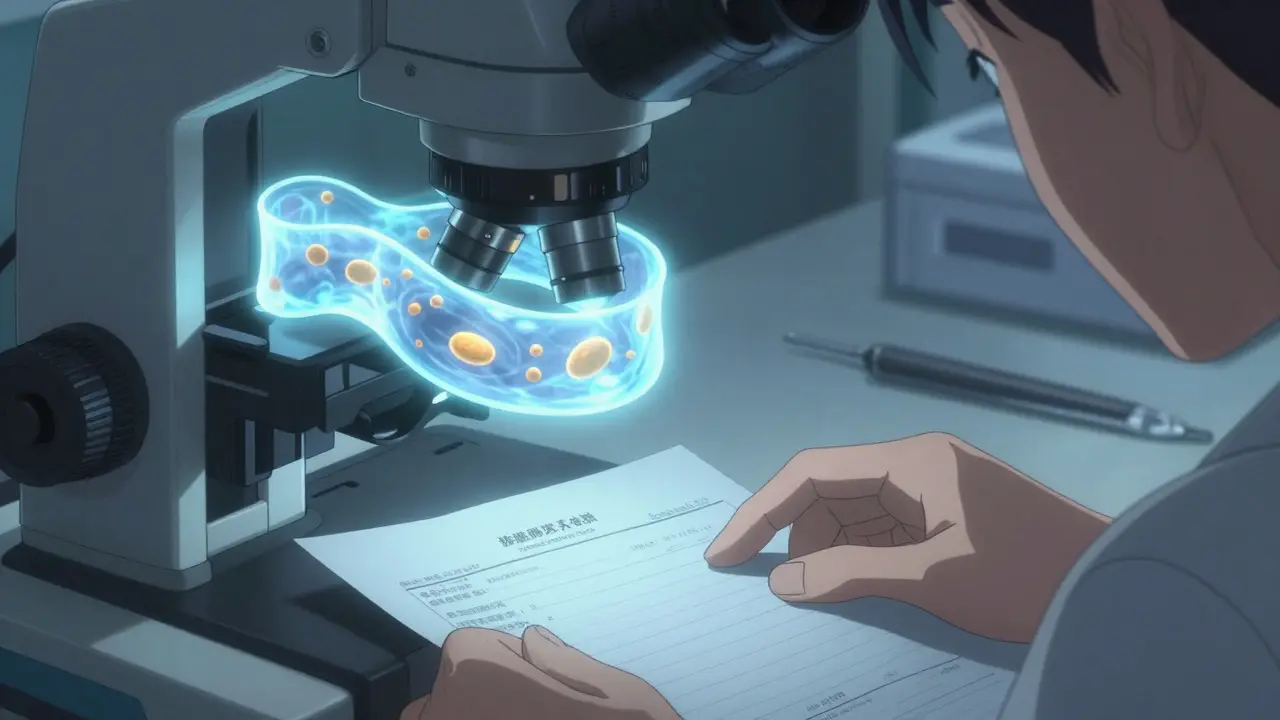
Chronic diarrhea that won’t go away-no blood, no fever, no obvious cause-can be one of the most frustrating health problems out there. You’ve tried diet changes, probiotics, antidiarrheals, and still, you’re running to the bathroom 6, 8, even 10 times a day. If this sounds familiar, you might be dealing with microscopic colitis. It’s not Crohn’s disease. It’s not ulcerative colitis. And unless a doctor takes a biopsy, your colon looks perfectly normal on a colonoscopy. That’s why it’s called microscopic colitis. The inflammation hides under the microscope.
What Exactly Is Microscopic Colitis?
Microscopic colitis is a type of inflammatory bowel disease that causes chronic, watery diarrhea without visible damage to the colon lining. It was first identified in 1984, and today, we know it comes in two forms: collagenous colitis and lymphocytic colitis. Both share the same symptoms but differ in what the biopsy shows under the microscope. In lymphocytic colitis, there’s an abnormal buildup of white blood cells (lymphocytes) inside the colon lining-more than 20 per 100 surface cells. In collagenous colitis, a thick band of collagen, at least 10 micrometers wide, forms just beneath the lining. Neither shows up on a colonoscopy. You need a biopsy, usually taken from multiple areas of the colon, to confirm the diagnosis. It mostly affects people over 50, and women are two to three times more likely to get it than men. The average time from first symptom to diagnosis? About 11 months. Many patients see multiple doctors before someone thinks to check for this condition.What Are the Symptoms?
The hallmark is chronic, non-bloody, watery diarrhea. You won’t see blood in the stool, which is why many assume it’s just a virus or food intolerance. But this isn’t temporary. It lasts for weeks, months, or even years. People often report:- 5 to 10 bowel movements a day
- Urgency-sometimes with incontinence
- Abdominal cramping or bloating (in 40-60% of cases)
- Nocturnal diarrhea (waking up at night to go)
- Weight loss, especially in collagenous colitis
Why Is Budesonide the Go-To Treatment?
Before budesonide, treatment options were hit or miss. Anti-diarrheals like loperamide helped a little. Bismuth subsalicylate (Pepto-Bismol) worked for some, but only about 26% of patients saw full relief. Mesalamine? Around 40-50% response. Cholestyramine helped if bile acid malabsorption was the issue-but not everyone has that. Then came budesonide. It’s not your typical steroid like prednisone. It’s designed to work locally in the gut. About 90% of it gets broken down by the liver before it ever reaches your bloodstream. That means it shuts down inflammation in the colon without causing the same side effects as older steroids. Multiple clinical trials show budesonide 9 mg daily for 6-8 weeks leads to clinical remission in 75-85% of patients. In one major study, 84% of collagenous colitis patients had their diarrhea completely stop after 8 weeks on budesonide, compared to just 38% on placebo. Most people start feeling better within 10-14 days.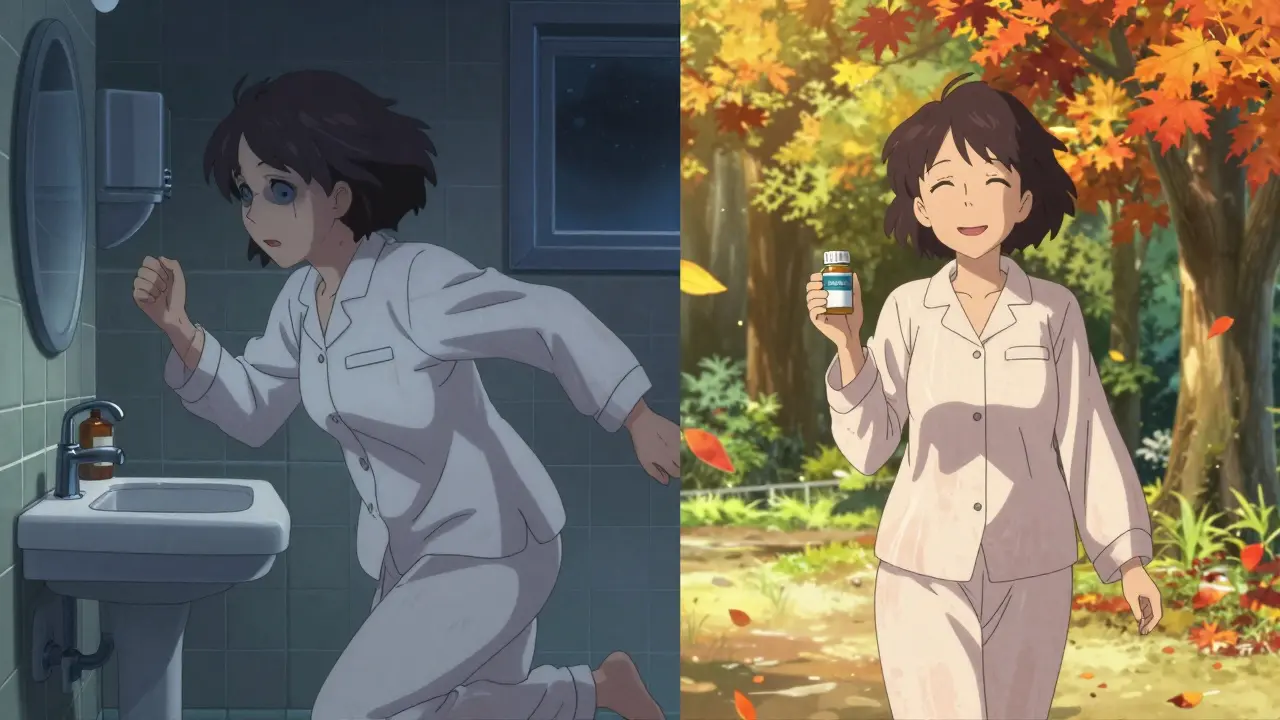
How Does Budesonide Compare to Other Treatments?
Here’s how budesonide stacks up:| Treatment | Remission Rate | Side Effects | Duration of Use |
|---|---|---|---|
| Budesonide (9 mg/day) | 75-85% | Mild: insomnia, acne, headache | 6-8 weeks (induction); maintenance possible |
| Prednisone | 75-80% | High: weight gain, bone loss, high blood sugar, mood swings | Not recommended long-term |
| Bismuth subsalicylate | 26% | Black stools, occasional nausea | Long-term use safe |
| Mesalamine | 40-50% | Mild: gas, headache | Often used as add-on |
| Cholestyramine | 60-70% (if bile acid issue) | Constipation, bloating | Long-term use common |
| Anti-TNF (e.g., infliximab) | 20-30% | High: infection risk, $2,500-$3,000 per infusion | Only for refractory cases |
What About Relapse and Long-Term Use?
Here’s the catch: about half of patients relapse within a year after stopping budesonide. That’s why many need maintenance therapy-lower doses taken long-term. Doctors often reduce the dose to 6 mg or even 3 mg daily after the initial 8 weeks, depending on how the patient responds. Some patients stay on low-dose budesonide for years. Studies show this keeps symptoms under control, but there are open questions. Can long-term, low-dose use affect adrenal function in older people? Is bone density monitoring necessary? Yes, especially if you’re over 50 and on steroids for more than 3 months. Doctors recommend checking bone density, blood sugar, and blood pressure before and during treatment. Cost is another issue. Generic budesonide costs $150-$250 for an 8-week course. The brand version, Entocort EC, runs $800-$1,200. Without insurance, many patients can’t afford it. Some turn to bismuth or cholestyramine as cheaper alternatives-even though they’re less effective.
Real Patient Stories
On patient forums, the stories are mixed but mostly hopeful. One user on Reddit wrote: “Went from 10 bathroom trips a day to 2 within 10 days. I cried the first time I made it through a movie without running to the bathroom.” Another said: “It worked great for 6 weeks. Then my symptoms came back. Now I’m on maintenance for two years. I hate being on steroids, but I hate the diarrhea more.” Side effects are usually mild-insomnia, acne, mood changes-but they’re real. About 15% report trouble sleeping. A few report weight gain or increased appetite. These aren’t the dramatic side effects of prednisone, but they’re enough to make some patients stop. Many find success combining treatments. One patient said: “Budesonide fixed the inflammation, but I still had diarrhea. My doctor added cholestyramine. That was the missing piece. I’ve been symptom-free for 18 months.”What’s Next for Treatment?
The future is looking promising. In 2023, the FDA gave Fast Track status to vedolizumab-a biologic drug already used for Crohn’s-for treating refractory microscopic colitis. Early trials show 65% of patients go into remission after 14 weeks. That’s huge for people who don’t respond to budesonide. Researchers are also looking at genetic markers. Early data suggests people with HLA-DQ2 or HLA-DQ8 genes respond better to budesonide. That could mean future testing to predict who will benefit most. The European Microscopic Colitis Group is also updating guidelines to include fecal calprotectin-a simple stool test-as a way to monitor treatment without repeated biopsies. That’s a big win for patients.What Should You Do If You Suspect Microscopic Colitis?
If you’ve had chronic watery diarrhea for more than 4 weeks-with no blood, no fever, and no clear trigger-talk to your doctor about microscopic colitis. Ask for a colonoscopy with multiple biopsies. Don’t assume it’s IBS. Don’t wait for it to go away on its own. If diagnosed, budesonide is your best bet for quick relief. Take it exactly as prescribed. Don’t stop early, even if you feel better. And don’t panic if you need to stay on a low dose for months. For many, it’s the difference between living normally and being trapped by bathroom anxiety. It’s not a cure. But for now, it’s the most effective tool we have. And for thousands of people who spent years searching for answers, that’s enough.Can microscopic colitis be cured?
There’s no known cure for microscopic colitis, but most people achieve long-term symptom control. About 30-40% of patients go into remission after a single course of budesonide and never need treatment again. For others, especially those with collagenous colitis, relapses are common, and maintenance therapy may be needed for months or years. The condition doesn’t increase cancer risk or shorten life expectancy.
Is budesonide safe for older adults?
Yes, budesonide is considered safer for older adults than traditional steroids like prednisone because it’s metabolized quickly by the liver and has minimal systemic effects. However, long-term use (over 12 months) may still affect bone density or adrenal function, especially in those over 65. Doctors typically check bone density and blood sugar before starting and monitor these during treatment.
Why do I need a colonoscopy if my colon looks normal?
Microscopic colitis causes inflammation at the cellular level, which is invisible during a regular colonoscopy. The colon lining appears completely normal to the naked eye. Diagnosis requires taking multiple biopsies from different parts of the colon and examining them under a microscope. Without biopsies, the condition is easily missed.
Can diet changes help with microscopic colitis?
Diet alone won’t treat the inflammation, but certain changes can reduce symptoms. Many patients find relief by avoiding caffeine, dairy, artificial sweeteners, and high-fat foods. A low-FODMAP diet may help with bloating and gas. If bile acid malabsorption is present, reducing fatty foods can make a big difference. But diet should complement-not replace-medical treatment like budesonide.
How long does it take for budesonide to work?
Most people notice improvement within 10 to 14 days. By week 4, 70-80% of patients report significant reduction in diarrhea frequency. Complete remission-no more watery stools-usually happens by week 6 to 8. It’s important to finish the full 8-week course even if symptoms improve earlier, to reduce the chance of early relapse.
Are there natural alternatives to budesonide?
There are no proven natural alternatives that match budesonide’s effectiveness. Bismuth subsalicylate (Pepto-Bismol) and cholestyramine are sometimes used as alternatives, but their success rates are much lower. Herbal remedies and probiotics have no strong evidence for treating microscopic colitis. Relying on unproven treatments can delay proper care and lead to prolonged suffering.
What happens if budesonide doesn’t work?
If you don’t respond to budesonide after 8 weeks, your doctor will reassess. First, they’ll confirm the diagnosis-sometimes biopsies are misread. If it’s confirmed, they may try a different approach: higher dose budesonide, combination therapy (like adding cholestyramine), or switching to a biologic like vedolizumab, which is now showing promise in clinical trials. Refractory cases are rare, but they do exist.
Nicole K.
December 30, 2025 AT 01:29People just don’t get it. You think probiotics and kale smoothies fix everything? No. You need real medicine. Budesonide isn’t optional-it’s necessary. Stop blaming your diet and start taking your pills.
Amy Cannon
December 30, 2025 AT 12:37It’s fascinating, really, how modern pharmacology has evolved to target inflammation with such surgical precision-budesonide’s first-pass metabolism in the liver is a marvel of pharmaceutical design, minimizing systemic exposure while maximizing local efficacy, and yet, so many patients still cling to the myth that ‘natural remedies’ can substitute for evidence-based treatment, even when their quality of life is crumbling beneath them.
Himanshu Singh
December 30, 2025 AT 15:01Wow this is so helpful! I was diagnoised last year and budesonide saved me. I was doing 12 times a day now its 1-2. God bless science!
Alex Ronald
January 1, 2026 AT 14:45For anyone considering budesonide, don’t skip the follow-up bone density scan. I’m 58, on low-dose for 18 months, and my doc caught early osteopenia because we monitored it. Also, take it with food-helps with the nausea. And yeah, the insomnia is real. I started taking it at 8 AM instead of bedtime and slept better.
Teresa Rodriguez leon
January 1, 2026 AT 19:43My doctor ignored me for 14 months. I had to beg for a biopsy. Then I got budesonide and my life came back. But now they want me to stay on it forever? I’m not a lab rat. I just want to be normal again.
Louis Paré
January 3, 2026 AT 09:33Let’s be real: budesonide isn’t a cure, it’s a Band-Aid on a broken leg. You’re just delaying the inevitable collapse of your gut microbiome. And who’s paying for these $1,200 prescriptions? The system’s rigged. You think this is medicine? It’s corporate profit wrapped in a white coat.
Janette Martens
January 4, 2026 AT 00:42Can we talk about how Americans just swallow pills like candy? In Canada we’d be on diet and herbs first. This budesonide stuff is overkill. My aunt in Quebec had the same thing and she just cut out dairy and now she’s fine. No drugs needed.
Emma Duquemin
January 4, 2026 AT 19:07OMG I just cried reading this. I was at 9 bathroom trips a day, hiding in office bathrooms, missing my daughter’s recital-I thought I was broken. Then I got budesonide. Day 7? I went to the movies. WITHOUT PANIC. I didn’t even know I could feel that free again. This isn’t just medicine-it’s a second chance. And yes, I’m on maintenance now. So what? I’d rather be on 3mg of budesonide than 10mg of anxiety.
Kevin Lopez
January 5, 2026 AT 14:07Collagenous colitis: Type II IBD. Budesonide = glucocorticoid receptor agonist with high first-pass hepatic extraction. Remission rate: 84% vs 38% placebo. NNT=2.6. Cholestyramine only indicated if BA malabsorption confirmed via SeHCAT. No off-label use. Stick to guidelines.
Duncan Careless
January 5, 2026 AT 19:19I’ve been on low-dose budesonide for three years now. It’s not perfect-I get dry mouth and the occasional headache-but it lets me travel, work, and sleep through the night. I wish I’d known about this sooner. Don’t wait like I did. Ask for the biopsy. Your colon might look normal, but your life doesn’t have to be.
Jim Rice
January 6, 2026 AT 02:56Everyone’s acting like budesonide is magic. But what about the people it doesn’t work for? You just ignore them? What about the 15% who get worse? You think this is the only option? Maybe it’s not the colon-it’s your brain. Maybe you’re just stressed. Try therapy. Or yoga. Or a vacation. Stop blaming your gut.