

Quick Takeaways
- MedWatch is the FDA’s primary system for collecting safety data on medical products, including generic medications.
- Although generic drugs account for about 90% of prescriptions, they are underrepresented in specific safety reports compared to brand names.
- A common reporting hurdle is that over 60% of consumers don’t know the specific NDC code or manufacturer of their generic pill.
- Improved algorithms launched in 2024 help distinguish generic versions within the massive FAERS database.
- You can report issues online or via Form FDA 3500, focusing on therapeutic inequivalence if you notice reduced effectiveness.
Think about the last time you filled a prescription. If you didn’t specifically ask for the brand-name version, your pharmacist likely handed you a generic. It happens to almost everyone. Generic drugs fill roughly 90% of all prescriptions written in the United States, yet we rarely talk about how we track their safety once they hit the shelves. We trust the FDA to keep an eye out, and indeed, they do. However, there is a blind spot in this safety net when it comes to distinguishing one generic manufacturer from another.
This is where things get interesting. While the system is robust, the specific challenge lies in identifying which company actually made the tablet you took. When something goes wrong-whether it’s a side effect or a lack of effectiveness-the mechanism to catch those signals relies heavily on voluntary reporting. Today, we are going to break down exactly how MedWatch reporting works for generics, why the data collection process is tricky, and how recent updates are making this surveillance sharper than ever before.
What is MedWatch and Why Does It Matter for Generics?
When we talk about drug safety after approval, we are talking about MedWatch is the U.S. Food and Drug Administration's safety information and adverse event reporting program. Also known as the FDA Safety Information and Adverse Event Reporting Program, it was established back in 1993. Over the decades, it has become the engine room for post-marketing surveillance. While many people think clinical trials prove a drug is safe forever, those trials are limited. They test thousands, not millions, of people over a short period. Once a drug is out in the real world, used by diverse populations for long periods, new risks emerge.
This is especially true for Generic Drugs are medicines that have the same safety and effectiveness as their brand-name counterparts. Although they must meet strict Bioequivalence standards, the manufacturing process involves different inactive ingredients. Sometimes these variations cause reactions in sensitive patients. A 2022 study highlighted that patient concerns regarding generic safety have risen significantly, particularly around therapeutic equivalence.
The importance here isn't just academic; it's about signal detection. If a specific batch from a specific manufacturer causes a rash in 10% of users, we need to know. MedWatch allows healthcare professionals, patients, and manufacturers to submit reports directly to the Food and Drug Administration. These reports populate a massive database called FAERS. As of 2024, this system holds over 9 million reports. It is a living logbook of real-world experiences that guides label changes or even recalls.
The Identification Problem: Brands vs. Generics
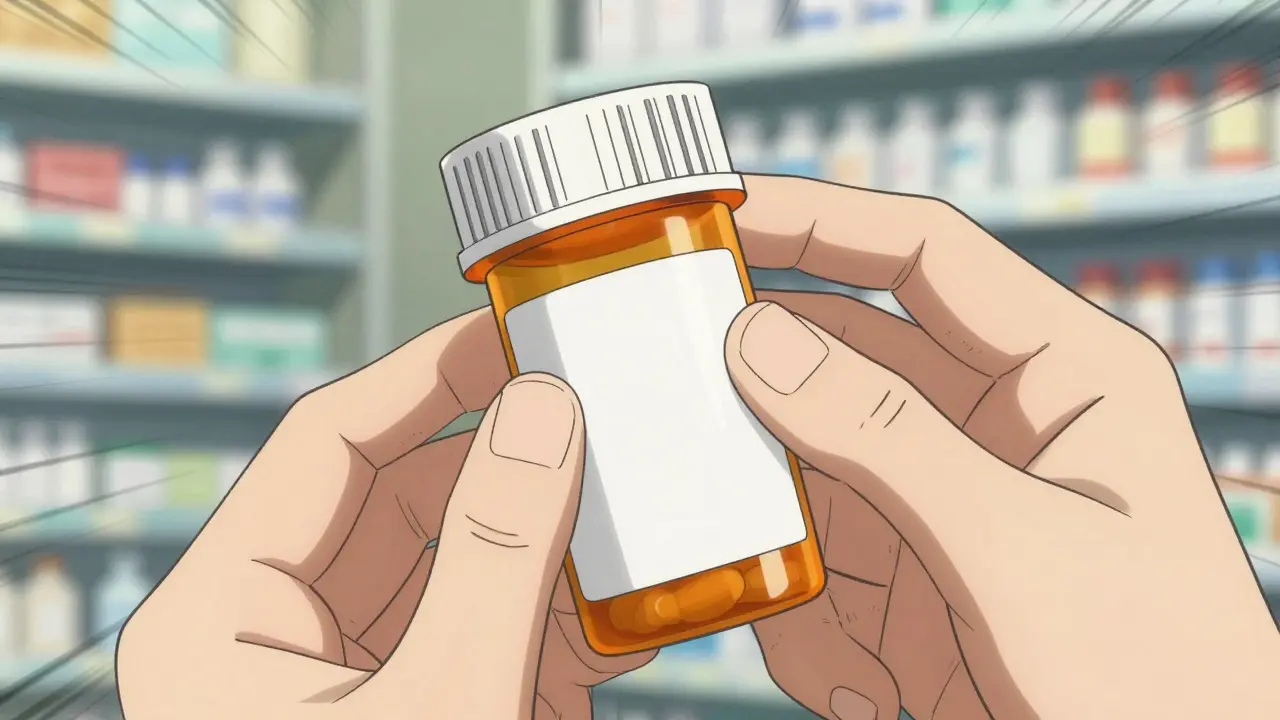
Here is where the friction usually starts. When you take a pill, do you know who made it? Most consumers pick up a white bottle, see a barcode, and maybe read "Sertraline 50mg" on the label. That’s it. Unlike brand-name drugs which are marketed with recognizable names like Zoloft or Lipitor, generics are labeled by their chemical name. To make matters worse, one medication might be produced by five different companies simultaneously.
This creates a data quality issue. In the FAERS database, analysts found that nearly 60% of consumer-submitted reports failed to specify the generic manufacturer. Instead of saying "Sandoz Sertraline," the report might just say "Sertraline." Dr. Robert Reynolds, Director of the FDA's Division of Pharmacovigilance, noted in 2024 that distinguishing between brand and generic sources remains a persistent challenge. If the FDA gets 500 reports of liver issues for "Sertraline," but doesn’t know the maker, they cannot pinpoint if one factory has a quality control failure.
To solve this, we rely on the National Drug Code, or NDC. Think of this as the social security number for drugs. Every single package has a unique 10-digit code that links directly to a specific product and manufacturer. However, capturing this data relies entirely on the reporter remembering to look and type it in. According to FDA analysis of 2023 data, only about 28% of consumer reports included the NDC. This gap means potential safety signals from specific generic makers remain hidden in the noise.

How Safety Data Is Collected: The Workflow
The actual mechanics of submitting data have evolved to be more accessible, but the requirements for useful reporting remain technical. You generally have two paths: the online portal at fda.gov/MedWatch or the paper Form FDA 3500. In 2026, the online method is vastly preferred because it forces certain fields to be filled, reducing incomplete submissions.
| Data Field | Importance | Typical Consumer Accuracy |
|---|---|---|
| Drug Name (Generic) | Critical | High (Usually correct) |
| Manufacturer Name | High (for tracing) | Low (Often unknown) |
| NDC Code | High (Exact ID) | Very Low (<30%) |
| Date of Event | Moderate | Moderate |
The data flows into the FAERS tables, which adhere to international safety guidelines set by the International Conference on Harmonisation (ICH E2B). There are essentially seven tables tracking patient demographics, the drug involved, the adverse event, outcomes, the source of the report, therapy dates, and indications for use. When you file a report, you aren't sending a letter; you are filling a structured database entry. The FDA uses automated systems to triage this data.
In 2024, a significant upgrade occurred. An enhanced algorithm was integrated into the processing pipeline. Before this update, the system struggled to link vague descriptions to specific products. This new algorithm achieved a sensitivity of roughly 92% in distinguishing generic products from brands. It looks at combinations of spelling patterns, dosage strengths, and packaging descriptors to make a better guess when the user misses the NDC. However, automation still needs human detail to confirm signals.
Therapeutic Inequivalence: A Specific Reporting Category
Standard adverse events are reactions like rashes or nausea. But generics face a unique accusation: sometimes they just “feel” weaker. Patients switch from Brand X to Generic Y and swear the pain relief doesn’t last as long. This is technically termed therapeutic inequivalence. While bioequivalence testing ensures the drug delivers similar blood levels, individual metabolism varies, and small differences in filler ingredients can alter absorption rates in some bodies.
MedWatch explicitly includes a category for this. It acknowledges that while regulators approve generics based on average performance, individuals experience variance. A study analyzing 5,247 reports involving generics showed that therapeutic failure was a major driver of submissions. For instance, there was a notable case involving a generic version of Bupropion XL manufactured by Mylan. Multiple reports flagged therapeutic failure, leading to an investigation and labeling changes within 11 months.
If you experience this, your report matters. Simply checking the box for “increased severity” or “lack of efficacy” helps build the signal. Without these inputs, the FDA sees silence, which can be mistaken for safety. Silence in pharmacovigilance is often dangerous because it suggests a product is benign when it might actually be ineffective.

Practical Steps for Reporting Issues
Most people assume reporting is bureaucratic drudgery reserved for hospital administrators. Not anymore. The learning curve is surprisingly shallow. In a 2024 survey, 96% of physicians rated the system as easy to use. For patients, it’s a bit harder but manageable.
Here is the practical workflow for filing a report:
- Gather Details: Before you go to the website, grab your empty prescription bottle. Find the NDC number. It is usually printed under the barcode.
- Select Product Type: On the form, select “Drug” and then “Generic.” Do not leave this blank.
- Describe the Event: Be specific. Instead of “it didn’t work,” write “pain returned after 4 hours instead of 8 hours.” Timelines are crucial for determining causality.
- Submit: You can remain anonymous if you wish, though leaving contact info allows FDA officials to call you if they need clarification.
A critical tip: If you do not know the manufacturer, state clearly in the comments section that you checked the bottle and could not find it. This flags the data point differently than if you simply forgot to enter it.
The Future of Generic Surveillance
We are standing on the edge of a shift in how this data is gathered. Looking forward from our current date in 2026, the FDA is moving toward automating parts of this capture. The Digital Health Innovation Action Plan announced the integration of MedWatch with electronic health records (EHR). By late 2026, this means your doctor’s computer could automatically send safety data when they document a reaction, rather than relying on them to manually fill out a web form.
However, the foundation remains the same. The General User Fee Amendments (GDUFA) III action plan committed resources to enhance generic signal evaluation. We expect the volume of high-quality generic-specific reports to rise by roughly 20% annually as identification tools improve. Despite this progress, Commissioner Dr. Robert Califf noted in testimony that we are likely still missing signals due to the voluntary nature of the system.
While we cannot force reporting, understanding the mechanism empowers you. When you hand over a report, you aren’t just complaining; you are contributing a data point to the 9 million that define the boundaries of drug safety.
Frequently Asked Questions
Is MedWatch reporting confidential?
Yes, reports submitted to MedWatch are handled with confidentiality. Your personal information is not shared with third parties, though investigators may contact you for clarification. Anonymous reporting is also permitted without consequence.
Can I report a generic drug if I don’t know the manufacturer?
You can and should still report it. While identifying the manufacturer (via NDC) is ideal for specific investigations, reporting the drug name and symptoms still contributes to broader safety trends for that specific molecule.
Does the FDA compensate reporters?
No, MedWatch does not offer financial compensation for reports. It is a voluntary safety system designed to protect public health, not a rewards program.
What is the difference between MedWatch and FAERS?
MedWatch is the portal and program for humans to submit data. FAERS is the secure database where that data is stored and analyzed by FDA scientists. Think of MedWatch as the mailbox and FAERS as the filing cabinet.
How soon do I get a response after reporting?
There is no guaranteed timeline for individual feedback. Depending on the nature of the adverse event and the FDA’s workload, responses vary. Often, unless the event poses an immediate risk to the public, you may receive an acknowledgement but not a detailed reply.
Jordan Marx
March 27, 2026 AT 19:01The integration of ICH E2B guidelines into the workflow really streamlines data capture. Most people overlook how the seven tables interact during submission. Patient demographics get cross-referenced with therapy dates automatically now. This automation reduces the human error margin significantly compared to legacy systems. We need to acknowledge the algorithm sensitivity rates mentioned in recent updates. A ninety-two percent sensitivity rate is actually quite robust for automated linking. Spelling patterns help identify products when the NDC is missing completely. Packaging descriptors also provide useful metadata for the analysts behind the scenes. Without this granularity the signal-to-noise ratio remains unacceptably low. Therapeutic inequivalence requires specific flags in the event description fields. Simply noting side effects without specifying efficacy loss misses critical markers. Healthcare professionals should know which box triggers deeper investigation protocols. The digital health innovation plan aims to bridge the gap with electronic records soon. Automatic triggering from doctor visits could double the volume of quality reports. That is why we must advocate for these technological improvements at every opportunity.
Debra Brigman
March 29, 2026 AT 19:59There is something profound about realizing our pills come from invisible factories. It feels like trusting strangers with our biology on a daily basis. Generic medicine is truly the great equalizer in healthcare access today. The silence surrounding manufacturer transparency creates a peculiar kind of anxiety though. When you swallow a white tablet you are making a leap of faith in science. I find this topic deeply moving because it touches on collective responsibility. We are all part of a massive surveillance network whether we realize it or not. The beauty lies in the potential for individual action to shape public health outcomes. Every report is a brick in the wall of safety that protects the vulnerable among us.
tyler lamarre
March 30, 2026 AT 21:50I would hardly call that robust when they admit sixty percent of reports lack basic identifiers. Algorithms are just fancy guessing games that require manual oversight. Trusting a computer to distinguish manufacturers based on spelling seems hilariously optimistic. The real world rarely aligns with theoretical sensitivity rates in practice. People fill forms while sick or distracted and expect magic results later.
Philip Wynkoop
April 1, 2026 AT 01:30glad to see people finally looking at this issue 😊
Devon Riley
April 3, 2026 AT 01:07That sounds pretty harsh honestly but understanding the flaws helps improve things 😊 Everyone brings a different perspective to the table here. We should focus on how we can make the system better together 💪 It takes all kinds of voices to refine safety data collection processes. Please remember that frustration often stems from wanting the best care possible for patients ❤️
kendra 0712
April 4, 2026 AT 07:01This is absolutely fantastic news!!! I am so excited to learn more about NDC codes!!! Finally we can take control of our own medication safety!!! The future looks bright with these new digital tools!!! We need to share this information with everyone we know!!! Reporting is a civic duty that we cannot ignore!!!
Rohan Kumar
April 5, 2026 AT 18:24They say digital tools will save us but history shows data gets buried or ignored 🙃 The FDA collects millions of reports yet recalls happen way too late sometimes 🤨 Who really benefits from voluntary reporting systems when profits matter more 😒 I doubt any amount of software fixes the core incentive structure issues 🧐
Sabrina Herciu
April 6, 2026 AT 02:43It is important to note that Form FDA 3500 is still available for those who prefer paper submissions. The online portal was designed to validate fields before submission completes. Electronic Health Record integration will automate much of the burden eventually. Accuracy improves when the prescription bottle label is scanned directly. Patients should always retain packaging until they know the batch number.
Monique Louise Hill
April 6, 2026 AT 07:54You really need to understand that keeping your medication labels is a moral obligation 👉 Ignoring this step puts your entire community at risk of hidden contamination events 🚫 We cannot allow apathy to erode the safety net meant for protection 💢 Start checking your NDC codes immediately before it is too late 🛑
Sarah Klingenberg
April 6, 2026 AT 21:31It is interesting to see how perspectives vary on the same topic 🙂 Some worry about privacy while others want maximum visibility. Both views contribute to a more balanced understanding of the system overall 😌 Hopefully we move forward with more transparency and less friction soon enough. Safety data is complex but necessary work for all of us involved 🌈
Shawn Sauve
April 8, 2026 AT 08:33I think that strikes a good balance between concern and optimism 👍 Keeping an open mind is essential when discussing regulatory changes 🙏 Thanks for sharing your thoughtful observations on this complex subject 🙂