

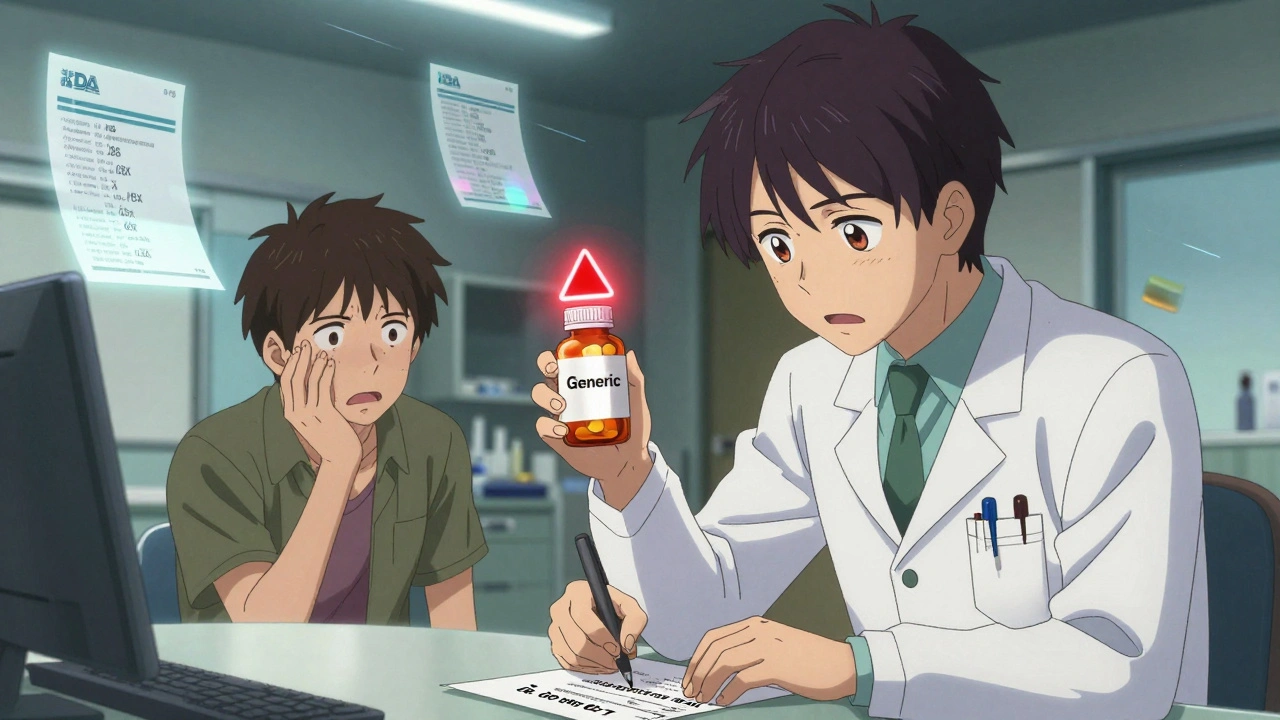
When a pharmacist hands you a pill bottle with a different name than what your doctor wrote, it’s not a mistake. It’s generic substitution - and it happens in 90% of cases when a generic version exists. But not every doctor is okay with it. Some medical societies have issued clear, official positions that directly contradict what pharmacies are allowed to do under state law. And the tension isn’t about cost - it’s about safety.
Why Generic Drugs Are Everywhere
Generic drugs make up 90% of all prescriptions filled in the U.S., yet they cost only 23% of what brand-name drugs do. That’s not a coincidence. The 1984 Hatch-Waxman Act created a fast-track approval system for generics, requiring them to prove they’re bioequivalent to the brand-name version. That means the same active ingredient, same strength, same way of taking it - and a blood concentration range that falls within 80% to 125% of the original. The FDA says that’s enough to be safe and effective. And for most drugs, it is.But here’s the catch: that 80-125% window isn’t a tiny margin. For drugs like warfarin or lithium, even a 10% shift can mean the difference between a seizure and a stroke. That’s why medical societies don’t treat all generics the same.
The Neurology Standoff: Why Anticonvulsants Are Different
The American Academy of Neurology (AAN) is one of the few medical societies that explicitly says: Don’t substitute generic versions of antiepileptic drugs. Their position isn’t based on suspicion - it’s based on real patient outcomes. Around 3.4 million Americans live with epilepsy. For many, seizure control is razor-thin. A study cited in AAN’s guidelines found that 68% of neurologists have seen patients experience breakthrough seizures after switching to a generic version.It’s not that generics are unsafe. It’s that the body’s response to these drugs is unpredictable. One patient might switch from brand-name Keppra to its generic and feel fine. Another might have a seizure within days. There’s no way to know ahead of time. That’s why the AAN recommends that prescribers write "Do Not Substitute" on the prescription - and why some states have passed laws requiring explicit consent before switching NTI (narrow therapeutic index) drugs.
NTI drugs aren’t just anticonvulsants. They include thyroid meds like levothyroxine, blood thinners like warfarin, and some immunosuppressants. For these, even minor variations in absorption or metabolism can cause serious harm. The FDA acknowledges this and flags these drugs in its Orange Book with special notations. But state pharmacy laws vary wildly. In some places, pharmacists can swap them anyway unless the doctor says no. In others, they’re locked down.
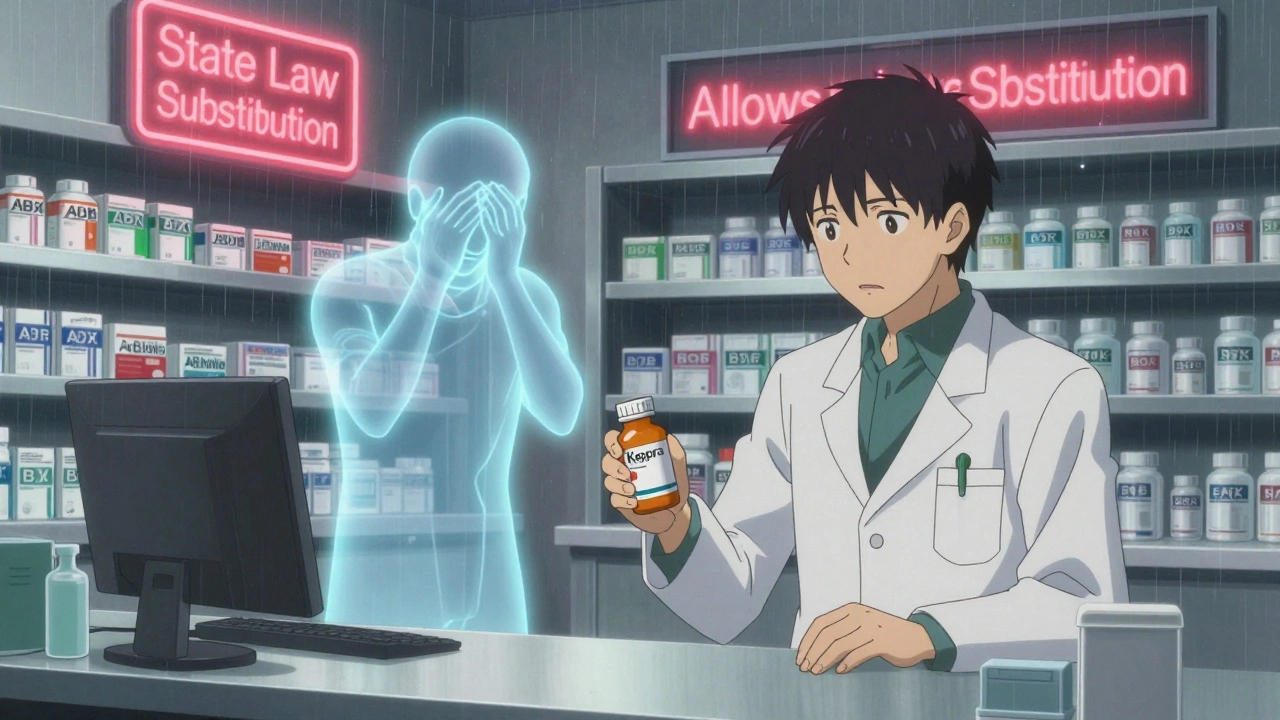
What Other Societies Say
While neurologists are cautious, other specialties take a different view. The American College of Physicians supports generic substitution across most drug classes, citing the FDA’s position that generics meet the same quality standards as brands. Their stance is backed by data: for antibiotics, statins, and blood pressure meds, substitution rates are high and complication rates are low.In oncology, the National Comprehensive Cancer Network (NCCN) takes a unique approach. Many cancer drugs are used off-label - meaning they’re prescribed for conditions not listed on the FDA label. The NCCN Compendia, which doctors and insurers rely on for coverage decisions, includes dozens of off-label generic uses. And because these drugs are often used in combination therapies, switching between generic versions is common. The NCCN treats them as interchangeable if they’re bioequivalent - even if the brand version wasn’t originally approved for that use.
The American Medical Association (AMA) doesn’t take a direct stance on substitution, but it does control how generic drugs are named. Through its United States Adopted Names (USAN) Council, the AMA assigns standardized names to ensure doctors and pharmacists don’t confuse similar-sounding drugs. For example, the suffix “-mab” tells you it’s a monoclonal antibody. The council avoids names that look or sound too much like existing drugs - a small but critical step in preventing medication errors. That’s why you’ll see names like “etanercept” and “adalimumab” instead of random labels. It’s not about branding. It’s about safety.
The Real Problem: Conflicting Rules
The biggest challenge isn’t science - it’s confusion. A neurologist writes “Do Not Substitute” on a prescription for lamotrigine. The pharmacist sees a state law that allows substitution unless the prescriber explicitly blocks it. The patient gets the generic. Then they have a seizure. Who’s at fault? The doctor? The pharmacist? The state law?There’s no clear answer. Medical societies issue guidelines. Pharmacies follow state regulations. Insurance companies push for the cheapest option. Patients get caught in the middle. A 2023 ASPE report found that relatively few states have strict rules protecting NTI drugs from automatic substitution. That means in most places, the burden falls on the prescriber to know which drugs are risky and to write the right instructions.
And here’s the irony: the same system that makes generics affordable also makes it easy to swap them without thinking. A pharmacy technician doesn’t know whether lamotrigine is being used for epilepsy or bipolar disorder. They just see a generic with an “A” rating in the Orange Book and assume it’s safe. But for patients with epilepsy, that assumption can be deadly.

What Patients Should Do
If you’re on a drug for epilepsy, thyroid disease, or another NTI condition, don’t assume your generic is the same as your brand. Ask your doctor: Is this drug on the list of ones we don’t switch? If you’re not sure, ask your pharmacist to check the Orange Book for therapeutic equivalence codes. Drugs marked “AB” are considered interchangeable. Drugs with “BX” or no rating are not.Also, check your prescription. If your doctor didn’t write “Dispense as Written” or “Do Not Substitute,” the pharmacist may legally swap it. Don’t wait until something goes wrong to ask. Make it part of your routine check-in.
For most other medications - antibiotics, antidepressants, cholesterol drugs - generics are safe, effective, and the smart choice. But for a small group of drugs, the difference isn’t just in the price tag. It’s in the risk.
The Future: Alignment or Division?
The FDA continues to update its Orange Book, and medical societies are slowly incorporating those ratings into their guidelines. But specialty groups aren’t backing down from their warnings. The AAN isn’t going to change its stance because a generic got an “A” rating. The NCCN won’t stop listing off-label uses just because a drug is cheaper.What’s emerging is a two-tier system: one for common drugs where substitution is routine, and another for high-risk drugs where caution is non-negotiable. The challenge for healthcare isn’t to eliminate generics - it’s to make sure the right drugs are substituted, and the wrong ones aren’t.
As prescribing becomes more data-driven, we’ll likely see electronic health records flag NTI drugs automatically. That’s the future. But for now, the responsibility still lies with you - the patient - to ask the right questions before you swallow that pill.
Are generic drugs really as safe as brand-name drugs?
For most drugs, yes. The FDA requires generics to have the same active ingredient, strength, dosage form, and bioequivalence as the brand. But for drugs with a narrow therapeutic index - like anticonvulsants, thyroid meds, and blood thinners - even small differences in absorption can cause serious side effects or treatment failure. That’s why some medical societies advise against substitution for these specific drugs.
Can a pharmacist substitute a generic without my doctor’s permission?
It depends on your state. In most states, pharmacists can substitute a generic unless the doctor writes "Do Not Substitute" or "Dispense as Written" on the prescription. Some states have extra rules for drugs with narrow therapeutic indices, requiring prescriber consent before switching. Always check your prescription label and ask if you’re unsure.
Which drugs should never be switched to a generic version?
Drugs with a narrow therapeutic index (NTI) are the main concern. These include antiepileptic drugs like lamotrigine and phenytoin, thyroid hormone levothyroxine, blood thinners like warfarin, and some immunosuppressants like cyclosporine. Medical societies like the American Academy of Neurology and the American Thyroid Association strongly advise against automatic substitution for these drugs.
How do I know if my drug is considered therapeutically equivalent?
The FDA publishes the "Approved Drug Products with Therapeutic Equivalence Evaluations," also called the Orange Book. Look up your drug there. If it’s marked with an "AB" rating, it’s considered interchangeable. If it’s "BX," it’s not recommended for substitution. You can ask your pharmacist to check this for you - or search online using the FDA’s public database.
Why do some doctors refuse to prescribe generics even when they’re available?
Some doctors avoid generics not because they doubt their quality, but because they’ve seen patients have bad reactions after switching - especially with NTI drugs. Others follow guidelines from their specialty societies, like the AAN, which explicitly oppose substitution for seizure medications. It’s a precaution based on experience, not distrust of generics in general.
Do generic drugs have different side effects?
The active ingredient is the same, so the side effect profile should be too. But inactive ingredients - like fillers, dyes, or coatings - can differ between brands and generics. For most people, this doesn’t matter. But for those with allergies or sensitivities, or for NTI drugs where absorption is critical, these differences can lead to unexpected reactions. That’s why switching isn’t always harmless.
Chris Wallace
December 2, 2025 AT 12:16Man, I’ve been on lamotrigine for six years now. Switched to generic twice-first time, no big deal. Second time, I started zoning out mid-conversation, like my brain was buffering. Took me three weeks to figure out it was the generic. My neurologist didn’t even blink when I brought it up. Said, ‘Yeah, we’ve seen this.’ Now I always check the label and make sure it’s the brand. I know generics save money, but when your seizures are the price you pay for savings, it’s not worth it.
And don’t get me started on how pharmacies just slap on the generic without even telling you. I found out I’d been switched because I noticed the pill was a different shade of blue. Not exactly something you’d notice unless you’re paying attention. Shouldn’t there be a notification? A little pop-up on the receipt? Something?
I’m not anti-generic. I take generic statins, antihistamines, even my antidepressant. But for NTI drugs? Nah. This isn’t about cost. It’s about not waking up in the ER because a pill changed its shape.
Also, the Orange Book? Most people don’t even know it exists. Pharmacists should be required to explain it. Not just hand you the bottle and say ‘Same thing.’ It’s not the same thing. Not for everyone.
And yeah, I know doctors are busy. But if they’re not writing ‘Do Not Substitute,’ they’re basically gambling with someone’s brain. That’s not a professional standard. That’s negligence dressed up as efficiency.
william tao
December 4, 2025 AT 08:52It’s not the generics. It’s the incompetence of the medical-industrial complex. The FDA approves them. Pharmacies dispense them. Doctors don’t bother to intervene. Patients? They’re just cargo. This isn’t healthcare. It’s logistics with a stethoscope.
John Webber
December 4, 2025 AT 17:11people need to stop being so dramatic about pills. if it has the same chem stuff its the same. why do u think they call it generic? its not magic. its just cheaper. if ur seizure happens cause of a pill change then ur doc prob didnt even know what ur on. blame the doc not the pharmacy. also why do u care what color the pill is? its still the same drug lol
Shubham Pandey
December 5, 2025 AT 04:35Generic works for 90%. Stop overthinking.
Elizabeth Farrell
December 6, 2025 AT 16:17I just want to say how important it is that we’re having this conversation. I’ve had patients come to me terrified after switching generics, and I’ve seen how much anxiety it causes-not just the physical side effects, but the emotional toll of wondering, ‘Was this my fault?’
It’s not about distrust in science. It’s about recognizing that bodies aren’t lab models. One person’s ‘bioequivalent’ is another person’s crisis.
I always tell my patients: ‘If you feel different after a switch, trust yourself. Go back to your doctor. Bring your pill bottle. Don’t wait for permission to speak up.’
And if you’re on levothyroxine or warfarin? Don’t let anyone pressure you. Your health isn’t a cost-center. You deserve consistency. You deserve to be heard.
Also, thank you to the doctors who write ‘Do Not Substitute.’ You’re the quiet heroes in this system. Keep doing it.
Sheryl Lynn
December 7, 2025 AT 00:50Oh, darling, this is the *height* of pharmaceutical theatre. We’ve turned medicine into a spreadsheet, then pretended the human body is just a slightly glitchy algorithm. The FDA’s 80-125% window? That’s not science-it’s a corporate compromise dressed in white lab coats.
And let’s be real: if a pill can make someone seize because it’s ‘bioequivalent,’ then bioequivalence is a myth. A beautifully packaged lie sold to the masses by people who’ve never held a trembling hand after a breakthrough seizure.
Meanwhile, the AMA is busy naming drugs like they’re designing perfume scents-‘etanercept’ sounds like a rejected Bond villain. But heaven forbid we give patients a consistent experience.
It’s not about generics. It’s about the arrogance of systems that treat biology like a commodity.
And yet… somehow, we still expect miracles from these pills. How poetic.
Paul Santos
December 8, 2025 AT 12:17Ah, the ol’ NTI conundrum-where pharmacoeconomics collides with the ontological fragility of human homeostasis. 🤔
It’s not that generics are ‘unsafe’ per se-it’s that the therapeutic window isn’t a range, it’s a razor’s edge, and the body’s absorption kinetics are a chaotic system influenced by gut flora, circadian rhythm, and whether you ate a bagel or a banana that morning.
Meanwhile, pharmacists are just trying to hit their quarterly savings targets. The FDA? They’re playing whack-a-mole with bioequivalence metrics while real people are having seizures. 😔
So yes, we need EHR flags. We need mandatory patient notification. We need a paradigm shift from ‘interchangeable’ to ‘contextually appropriate.’
Otherwise, we’re just automating harm. And that’s not innovation. That’s negligence with a patent.
Eddy Kimani
December 8, 2025 AT 21:11This is such a nuanced issue, and I appreciate how the article breaks it down. I’ve been researching therapeutic equivalence codes for my work in clinical informatics, and the Orange Book is a goldmine-if you know how to read it.
What’s missing is interoperability. Right now, EHRs don’t auto-flag BX-rated drugs. Pharmacists don’t get pop-ups. Patients get zero context. Imagine if your EHR auto-popped a warning when a prescriber ordered lamotrigine without ‘Do Not Substitute’-and then reminded the pharmacist to verify with the patient.
Also, the fact that the NCCN includes off-label generics in their compendia is brilliant. It shows that interchangeability isn’t binary. It’s clinical context-dependent.
What we need isn’t a ban on generics. It’s smarter systems. Data-driven alerts. Better education. And maybe-just maybe-a national standard for NTI drug substitution.
It’s doable. We just need the will.
Chelsea Moore
December 9, 2025 AT 11:28HOW DARE YOU say generics are ‘safe’ for everyone?!?!?!!? Have you MET people with epilepsy?!?!? My cousin had a seizure in a grocery store because the pharmacist swapped her pill-without telling her, without asking, without even a sticky note!!! And now she’s terrified to leave the house!!! This isn’t about money-it’s about LIVES!!! People are dying because of this!! I’m so angry I could scream!!!