


When you take a pill for high blood pressure, you expect every tablet to be exactly the same. That’s because small-molecule drugs are made in labs using chemical reactions - the same ingredients, same process, same result. But if you’re on a biologic for rheumatoid arthritis, psoriasis, or cancer, what’s in your vial isn’t a single molecule. It’s millions of slightly different versions of the same protein. And that’s completely normal.
What Is Lot-to-Lot Variability?
Lot-to-lot variability means that each batch - or lot - of a biologic drug can have tiny differences from the one before it. These aren’t mistakes. They’re natural. Biologics aren’t chemically synthesized. They’re grown inside living cells - yeast, bacteria, or mammalian cells - like tiny biological factories. Even under perfect conditions, those cells don’t produce identical copies every time. A sugar molecule might attach in a slightly different spot. An amino acid might change shape. These are called post-translational modifications, and they happen in every batch of every biologic - whether it’s the original brand-name drug or a biosimilar.
The U.S. Food and Drug Administration (FDA) says it plainly: ‘Inherent variation may also exist within lots and between different lots of reference products and biosimilars.’ A single lot can contain millions of slightly different versions of the same antibody. That’s not a flaw. That’s biology.
Biosimilars vs. Generics: The Big Difference
People often think biosimilars are just like generics. They’re not. Generics are exact copies of small-molecule drugs. If the brand-name drug has 27 atoms arranged in a specific pattern, the generic has the same 27 atoms in the exact same pattern. No variation. No guesswork.
Biosimilars are different. They’re highly similar - but not identical - to the original biologic. That’s because you can’t copy a living cell’s output the way you copy a chemical formula. The FDA calls this out clearly: ‘Biosimilars Are Not Generics.’
For a generic drug, the FDA only needs proof of pharmaceutical equivalence and bioequivalence - meaning the body absorbs it the same way. For a biosimilar, the approval path is far more complex. Manufacturers must show:
- Identical amino acid sequence
- Similar structure and function
- Comparable purity and stability
- Minimal differences in post-translational modifications
- No clinically meaningful difference in safety or effectiveness
That’s why biosimilars go through hundreds of analytical tests, animal studies, and sometimes clinical trials - even though they’re not new drugs. The goal isn’t to eliminate variation. It’s to prove that the variation is no different from what’s already seen in the original product.
How Do Manufacturers Control These Variations?
You might wonder: if every batch is different, how do companies make sure the drug still works? The answer lies in control. Biologic manufacturers don’t try to make perfect copies. They make consistent ones.
They use advanced tools - like high-resolution mass spectrometry and AI-driven analytics - to map out the full profile of each lot. They track things like glycosylation patterns (how sugar molecules attach to proteins), charge variants, and aggregation levels. Then they set strict limits: ‘This batch can vary by up to 5% in glycosylation, but no more.’
The FDA reviews these control strategies before approving any biosimilar. They look at data from 10, 20, even 50 different lots. If the variation in the biosimilar matches the variation in the original biologic - and stays within safe, predictable bounds - it gets approved.
It’s like baking cookies. You can’t make every cookie exactly the same size or color. But if every batch is within a few grams of weight and bakes the same way, you know they’ll taste the same. That’s what manufacturers aim for.
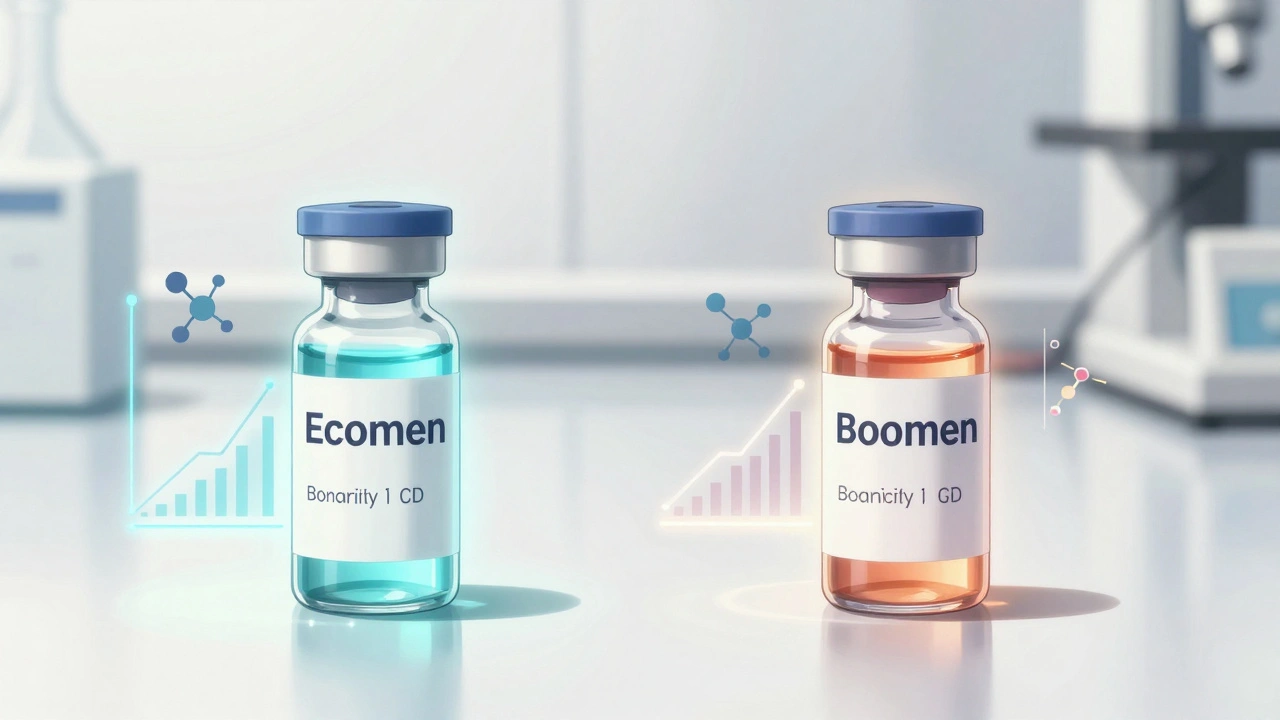
Why This Matters for Patients
Some doctors and patients worry: if the drug changes slightly between batches, could it affect how well it works? Could it cause side effects?
The data says no. Over 15 years of real-world use, there’s no evidence that natural lot-to-lot variation leads to worse outcomes. In fact, the original biologics themselves have always varied between lots. Patients have been switching between batches of the same brand-name drug for years without issue.
The key is consistency - not sameness. A biosimilar that behaves like the reference product, even with its own natural variation, is safe. The FDA requires manufacturers to prove this through clinical studies. For interchangeable biosimilars - the 12 approved as of May 2024 - there’s an extra step: a switching study. Patients alternate between the reference product and the biosimilar multiple times over months. The results? No drop in effectiveness. No increase in side effects.
One 2018 case study showed a 0.5% shift in HbA1c test results due to a reagent lot change - a reminder that variability matters in diagnostics. But that’s not the same as a drug changing its effect. In biologics, the body doesn’t notice small molecular differences. It responds to the overall function of the protein.
What About Labs and Testing?
While patients don’t need to worry, lab professionals do. Lot-to-lot variability affects diagnostic tests - not the drugs themselves. When a lab switches to a new reagent lot for a blood test, even small changes can throw off results. A 2022 survey found 78% of lab directors consider this a major challenge.
Why? Because quality control samples don’t always behave like real patient samples. A new reagent lot might give perfect QC numbers but still shift patient results. That’s why labs must verify each new lot with at least 20 patient samples and duplicate measurements. They use statistical tools to detect differences before the new lot goes live.
This is a behind-the-scenes job - and it takes time. Smaller labs spend 15-20% of their technical staff’s time each quarter just verifying reagent lots. It’s not glamorous, but it’s essential.

The Bigger Picture: Growth and Future
The biosimilars market is growing fast. In 2023, it was worth $10.6 billion. By 2028, it’s expected to hit $35.8 billion. More than 53 biosimilars are approved in the U.S., and 12 of them are interchangeable - meaning pharmacists can swap them for the brand-name drug without asking the doctor.
Companies like Amgen, Pfizer, and Sandoz are leading the charge, bringing down costs for treatments used in cancer, autoimmune diseases, and diabetes. As complex biologics - like antibody-drug conjugates and cell therapies - become more common, managing lot-to-lot variability will only get more important.
Advances in analytics are helping. Tools that used to take weeks to analyze a single lot now do it in hours. AI can predict how a change in cell culture conditions might affect protein structure. This means better control, fewer surprises, and more reliable drugs.
Bottom Line: Variation Isn’t a Risk - It’s a Feature
Lot-to-lot variability isn’t something to fear. It’s a natural part of making drugs from living systems. The same variation exists in the original biologics. The FDA, manufacturers, and labs have built systems to manage it - not eliminate it.
For patients, this means access to life-changing treatments at lower prices. For the system, it means a more sustainable future for biologic therapy. The goal isn’t perfection. It’s consistency. And that’s exactly what biosimilars deliver.
Paul Dixon
December 12, 2025 AT 00:53Honestly, this made me feel way better about my biosimilar. I was worried the batch I got last month was 'inferior' but now I get it-it's like cookies, not Lego bricks. Biology is messy, and that's okay.
Thanks for explaining it so clearly.
Mia Kingsley
December 13, 2025 AT 22:05LOL so now we're just supposed to trust that some lab in India or Germany made my cancer drug 'close enough'? I mean, what if the sugar molecules decide to go on vacation? This is how people die. I'm not taking it. #BiosimilarScam
Katherine Liu-Bevan
December 14, 2025 AT 22:35The analogy with cookies is actually spot-on. What matters isn't that every cookie looks identical, but that they all bake evenly, taste consistent, and don't contain harmful contaminants. The FDA's control thresholds for biosimilars are far stricter than most people realize-each lot is analyzed for over 100 different structural parameters. The variability isn't random noise; it's bounded, monitored, and statistically validated. Patients who've switched between lots of the same brand for years have never shown increased adverse events. The science here is robust, not hand-wavy.
Kristi Pope
December 16, 2025 AT 00:27I love how you framed this. It’s not about perfection-it’s about reliability. Like how your favorite coffee shop’s latte never tastes exactly the same but always feels right. That’s the magic of biology. And honestly? It’s kind of beautiful that we can harness living systems to heal people, even if the results aren’t pixel-perfect. More people need to hear this.
Thank you for writing this.
Aman deep
December 16, 2025 AT 17:01Man, I never thought about this before but now I’m thinking about how my mom’s insulin works. She’s been on the same biosimilar for 4 years. I remember her saying once, ‘The vial looks different but it still works.’ I thought she was just being chill. Turns out she’s got a PhD in biology without knowing it.
Big respect to the scientists who make this work. India’s making some damn good biosimilars too.
Sylvia Frenzel
December 18, 2025 AT 09:12So let me get this straight. The FDA lets companies sell a drug that’s ‘slightly different’ every time, but if your phone charger has a 1% voltage fluctuation, it gets recalled? This is corporate fraud. They’re just trying to save money. And don’t even get me started on how they hide this from patients. Wake up, sheeple.
Doris Lee
December 18, 2025 AT 13:55This is such a calming read. I used to stress about switching biosimilars like it was a gamble. Now I see it’s more like changing brands of olive oil-you still get the good stuff, just from a different press. Grateful for people who explain science without jargon.
Raj Rsvpraj
December 19, 2025 AT 00:16As a molecular biologist with a Ph.D. from IIT Bombay, I must point out that the article fundamentally misunderstands the nature of post-translational modifications. Glycosylation patterns are not merely ‘slight’-they are epigenetically regulated and can vary by up to 18% between lots, depending on cell line passage number, which is rarely disclosed. The FDA’s ‘no clinically meaningful difference’ claim is a regulatory fiction. This is not biology-it’s corporate convenience disguised as science. The West ignores Indian manufacturing realities because they’re cheaper. Shameful.
Jack Appleby
December 20, 2025 AT 04:10Let’s be real: the entire biosimilar paradigm is an elegant intellectual compromise. The article’s cookie analogy is charming but misleading. A cookie’s variability is qualitative; a monoclonal antibody’s variability is quantitative and structurally consequential. The FDA’s approval process is a statistical mirage-hundreds of analytical tests, yes, but none of them capture the dynamic immunogenic potential of subtle glycoform shifts over time. If you truly understood structural biology, you’d know this isn’t ‘normal variation’-it’s uncontrolled heterogeneity masked by regulatory euphemisms. The real innovation? Marketing.
Frank Nouwens
December 21, 2025 AT 21:36Thank you for presenting this topic with such clarity and nuance. The distinction between chemical generics and biological products is often lost in public discourse. The regulatory framework, while complex, is grounded in rigorous analytical and clinical evidence. The emphasis on consistency-not identity-is both scientifically sound and clinically prudent. This is a model for how complex therapeutic modalities should be evaluated.
Rebecca Dong
December 22, 2025 AT 10:58They’re lying. Every single batch is tracked by a microchip implanted in your body. The ‘variability’ is just a cover for the government’s secret nanobot program that makes you docile. You think your insulin is helping? It’s syncing you to the mainframe. I’ve seen the leaked documents. The sugar molecules? They’re the signal carriers. Don’t let them fool you.
Michelle Edwards
December 24, 2025 AT 03:08I just wanted to say this post helped me stop overthinking my treatment. I’ve been on biosimilars for three years now and honestly, I feel better than ever. It’s easy to fear what you don’t understand, but this broke it down in a way that felt human. You’re not alone in wondering if it’s safe. You’re not broken for needing reassurance. It’s okay to trust the science-and yourself.