


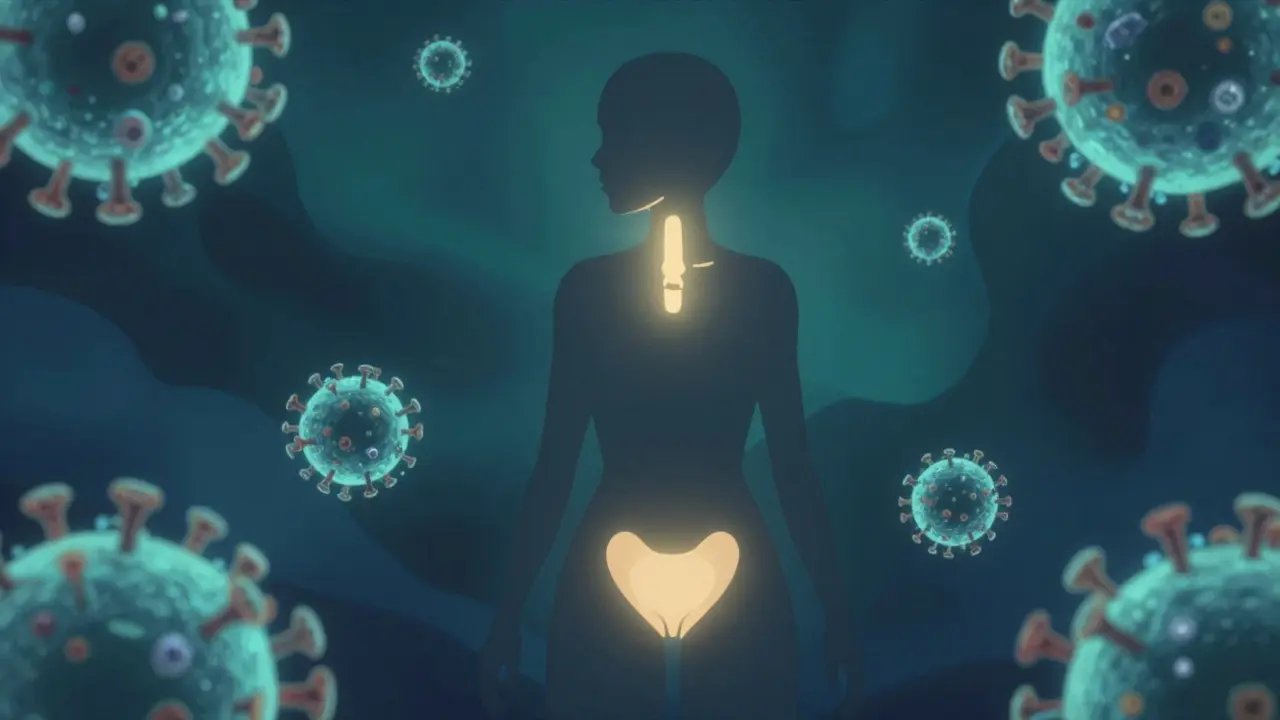
Most of us have heard of HPV in the context of cervical cancer, but there is a quieter, more concerning trend happening right now. While cervical cancer rates are dropping thanks to better screening, cancers of the throat and anus are on the rise. In fact, for men, throat cancer is now the most common HPV-associated malignancy. The reality is that Human Papillomavirus is a common group of viruses that can lead to several types of cancer if the infection persists over many years. It isn't just a "women's health issue"-it's a universal health challenge that affects anyone regardless of gender.
The Hidden Connection Between HPV and Cancer
HPV is an incredibly common virus; most sexually active people will contract it at some point in their lives. Usually, the immune system clears it on its own. However, when a "high-risk" strain-specifically HPV 16 or HPV 18-stays in the body, it can change the way cells grow, eventually leading to tumors. These high-risk types are the primary drivers behind the vast majority of these cases, with HPV 16 alone causing about 85% of HPV-positive throat cancers.
It is a common misconception that these cancers only affect specific groups. While data shows some racial disparities-with non-Hispanic White men and women often showing higher incidence rates in certain US registries-the virus does not discriminate. The real danger lies in the long latency period; you can contract the virus in your 20s, and the cancer may not appear until your 50s or 60s.
Oropharyngeal Cancer: The Rising Threat to Men
When we talk about "throat cancer" in this context, we are usually referring to Oropharyngeal Cancer, which affects the back of the throat, the base of the tongue, and the tonsils. Unlike traditional throat cancers caused by smoking or alcohol, these are triggered by the virus. This shift is dramatic: in men, this now accounts for over 80% of all HPV-related cancers.
The impact on a person's life is often severe. Because the tumor grows in the area used for eating and speaking, treatment often involves aggressive surgery and radiation. Some survivors describe a grueling recovery involving feeding tubes for months and permanent changes to their voice. The financial toll is also heavy, with treatment costs for oropharyngeal cancer averaging nearly $200,000 in the US.
Anal Cancer and Other HPV-Associated Sites
While less discussed than throat or cervical cancer, Anal Cancer is strongly linked to HPV, with the virus responsible for about 91% of all cases. Because there is no routine screening test for anal cancer (like the Pap smear is for the cervix), these cases are often caught later, making prevention even more vital.
Beyond the throat and anus, HPV is a major player in several other areas. It is responsible for roughly 75% of vaginal cancers, 69% of vulvar cancers, and 63% of penile cancers. This wide range of targets proves that the virus can establish a foothold anywhere it is introduced to the mucosal membranes of the body.
| Cancer Type | Approximate HPV Contribution | Primary Risk Group |
|---|---|---|
| Cervical | 91% | Women |
| Oropharyngeal | 70% | Men (Higher incidence) |
| Anal | 91% | Both sexes |
| Penile | 63% | Men |
The Most Powerful Tool: HPV Vaccination
The good news is that we have a way to stop this before it starts. The HPV Vaccine (such as Gardasil-9) is designed to protect against the strains most likely to cause cancer. The goal is to get the vaccine into a person's system before they are ever exposed to the virus. The CDC recommends routine vaccination at ages 11-12, though it is available up to age 26.
Why vaccinate 11-year-olds? Because the vaccine's effectiveness is highest when given early, and it prevents the infection from ever occurring. For adults aged 27-45, the decision is based on a conversation with a doctor about their specific risk factors. If we can reach 90% vaccination coverage for both boys and girls, experts believe we could actually eliminate cervical cancer as a public health problem within a few decades.
Screening and Early Detection Strategies
Vaccination is the first line of defense, but screening is the safety net. For cervical cancer, the approach has shifted toward Primary HPV Testing. This means doctors look specifically for the virus rather than just looking for abnormal cells (the traditional Pap smear). Women aged 25-65 are generally advised to get this testing every 5 years.
A huge breakthrough in recent years is the introduction of self-sampling HPV tests. These allow people to collect their own sample at home, which has significantly increased participation rates among people who might be anxious about a clinic visit. However, a major gap remains: there is currently no standardized screening for oropharyngeal or anal cancers. This makes the vaccine the only reliable primary prevention tool for these specific areas.

Dealing with the Stigma and Psychological Burden
One of the hardest parts of an HPV-related diagnosis isn't the physical treatment-it's the shame. Because HPV is a sexually transmitted infection, many patients feel "blamed" for their cancer. This stigma can lead to isolation and depression, which only slows down the recovery process.
It is important to remember that HPV is incredibly common. Most adults will have it at some point, and the body usually handles it. Having a cancer caused by HPV isn't a reflection of a person's character or a "mistake" they made; it's a biological event that happened years after the initial exposure. Support networks and open conversations are key to breaking this cycle of shame.
Can I get the HPV vaccine if I've already been sexually active?
Yes. While the vaccine is most effective if given before any exposure to the virus, it can still provide protection against other high-risk HPV types you may not have encountered yet. You should discuss your history with a healthcare provider to determine the best schedule.
Are there any screening tests for throat or anal cancer?
Unfortunately, there are no routine, population-wide screening tests for oropharyngeal or anal cancers like there are for cervical cancer. The best strategy is vaccination and seeing a doctor if you notice persistent sore throats, lumps in the neck, or unusual bleeding/masses in the anal area.
Is the HPV vaccine safe for boys?
Absolutely. Vaccinating boys is critical because they not only protect themselves from throat, anal, and penile cancers but also stop the spread of the virus to their future partners, contributing to a "herd immunity" that protects everyone.
How long does the HPV vaccine protect me?
Current research suggests that the protection provided by the HPV vaccine is long-lasting. While lifelong protection is the goal, studies have shown strong antibody levels remaining for at least a decade after the series is completed.
What are the symptoms of HPV-related throat cancer?
Early signs can be vague, such as a persistent sore throat, difficulty swallowing, or a lump in the neck that doesn't go away. Because these can mimic a common cold, it's important to get a professional evaluation if symptoms last more than a couple of weeks.
Next Steps for Prevention
If you are a parent, the most immediate action is to ensure your children receive the HPV vaccine series starting at age 11 or 12. This simple step can literally save their lives decades from now. For adults, check your screening history. If you are a woman in the target age group, ensure you are up to date with your primary HPV tests or Pap smears.
For those who may have already dealt with an HPV-related diagnosis, seeking out specialized support groups can help manage the emotional fallout and the physical challenges of survivorship, such as speech therapy for throat cancer or pelvic health services for cervical and anal cancers.