

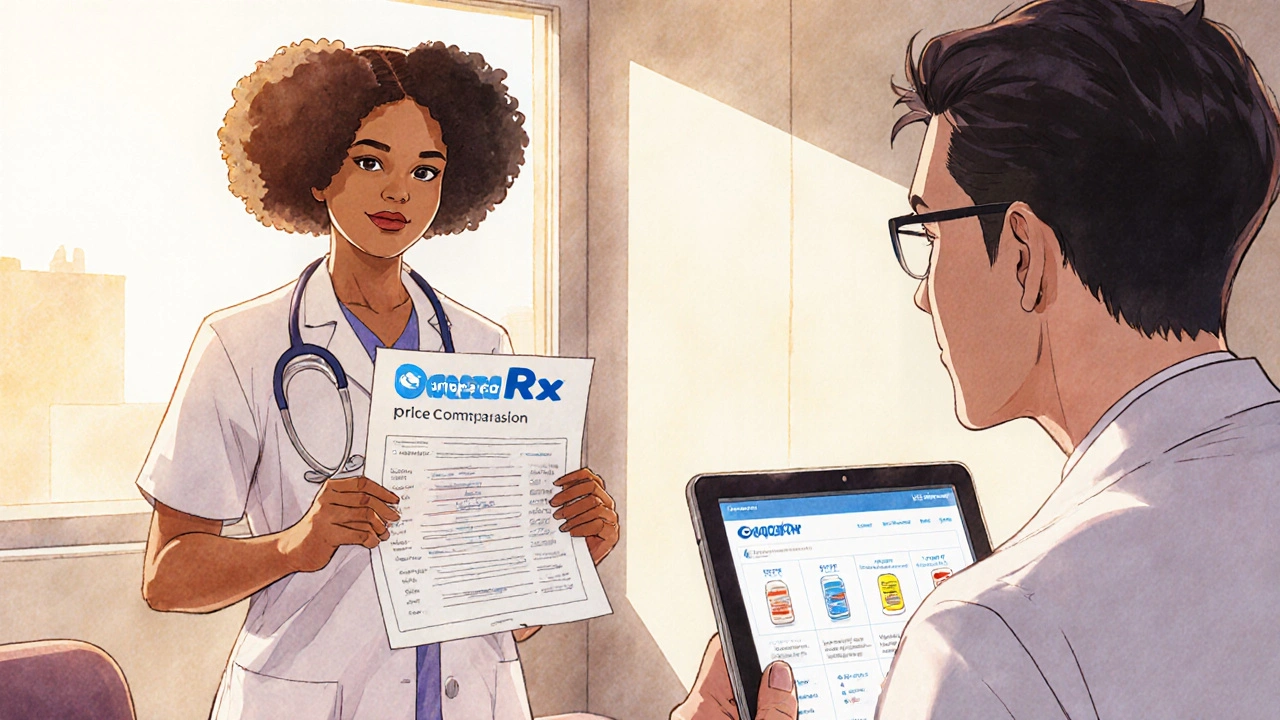
Every year, millions of Americans skip doses, split pills, or skip refills altogether because their medications are too expensive. If you’ve ever stared at a $500 co-pay for a monthly prescription and wondered if there’s another way, you’re not alone. The good news? There’s often a safer, equally effective, and far cheaper option available - and you don’t need a degree in pharmacology to ask for it.
What Is a Therapeutic Alternative?
A therapeutic alternative isn’t just a generic version of your drug. It’s a different medication that works the same way in your body. For example, if you’re taking esomeprazole (Nexium) for acid reflux, your doctor might suggest switching to omeprazole - a different chemical, but the same class of drug, with nearly identical results. The cost? Instead of $365 a year, you pay around $15. This isn’t a loophole. It’s a medically accepted practice called therapeutic interchange. The American Society of Health-System Pharmacists defines it as swapping one drug for another within the same therapeutic class when they’ve been proven to produce similar outcomes. It’s used in hospitals, clinics, and pharmacies across the country - and it’s one of the most effective ways to cut drug costs without sacrificing care.Why Therapeutic Alternatives Work Better Than Generic Substitution
Generic drugs are cheaper because they’re chemically identical to brand-name versions. But what if there’s no generic? Or what if the generic still costs $200 a month? That’s where therapeutic alternatives come in. While generic substitution saves you 80-90%, therapeutic interchange can save you 30-60% - even when no generic exists. For example:- Switching from Lyrica (pregabalin) to gabapentin cuts monthly cost from $450 to $15.
- Replacing Crestor (rosuvastatin) with atorvastatin saves $380 a month.
- Swapping Eliquis (apixaban) for warfarin drops your bill from $450 to $10.
How to Start the Conversation With Your Doctor
Many patients assume their doctor already knows about cheaper options - but that’s not always true. A 2023 AAFP survey found that 43% of patients had trouble convincing their provider to consider alternatives. Here’s how to make it easier:- Start with cost. Say something like: "I love this medication, but I can’t afford it. Is there another option that works just as well but costs less?"
- Be specific. Don’t just say "I need something cheaper." Mention a drug you’ve heard about. Example: "I read that gabapentin works for nerve pain like Lyrica - could we try that?"
- Bring data. Print out a GoodRx price comparison or show your pharmacy receipt. Providers respond better when you show proof.
- Ask about extended prescriptions. A 90-day supply often reduces your copay by 25%. Ask: "Can I get a 3-month supply to lower my monthly cost?"

Where to Find Reliable Alternatives
Not all alternatives are created equal. Some are backed by decades of research. Others aren’t. Here’s where to look:- GoodRx: Free website and app that compares prices across 70,000+ pharmacies. Shows both generic and therapeutic alternatives with real-time pricing.
- Walmart, CVS, Walgreens $4 List: Over 100 common medications - like lisinopril, metformin, and atorvastatin - are $4 for a 30-day supply. Many are therapeutic alternatives to pricier drugs.
- NeedyMeds and RxAssist: Free databases listing patient assistance programs from drug manufacturers. Many offer free or near-free meds if your income is under $60,000/year.
- HealthWell Foundation: Helps cover copays for therapeutic alternatives. In 2024, they assisted over 8,000 patients with average monthly savings of $312.
When Therapeutic Alternatives Don’t Work
It’s not magic. Some drugs have no good alternatives - especially newer biologics for conditions like psoriasis, rheumatoid arthritis, or cancer. In those cases, therapeutic interchange isn’t an option. Even when alternatives exist, they don’t always work for everyone. One patient switched from Jardiance to metformin for diabetes and ended up with uncontrolled blood sugar. Another switched from Taltz to methotrexate for psoriasis - and had a flare-up that cost $18,000 in emergency care. That’s why the American College of Physicians says three things must be true before switching:- The alternative must have proven equal effectiveness in head-to-head studies.
- The side effect profile must be similar.
- The dosing schedule must be compatible with your lifestyle.
What to Do If Your Doctor Says No
If your provider refuses, don’t give up. Ask why. Common reasons:- "I’ve never tried that alternative."
- "I’m not sure it works as well for your condition."
- "Your insurance won’t cover it."
- If they’re unfamiliar: "Can we look at the guidelines from the Institute for Clinical Systems Improvement? They have evidence for this swap."
- If they’re worried about efficacy: "I found a 2021 study showing gabapentin worked just as well as pregabalin for neuropathic pain in patients like me."
- If it’s insurance: Ask for a tiering exception. For Medicare Part D patients, this must be processed within 72 hours for urgent cases. Your pharmacist can help you file it.
Real People, Real Savings
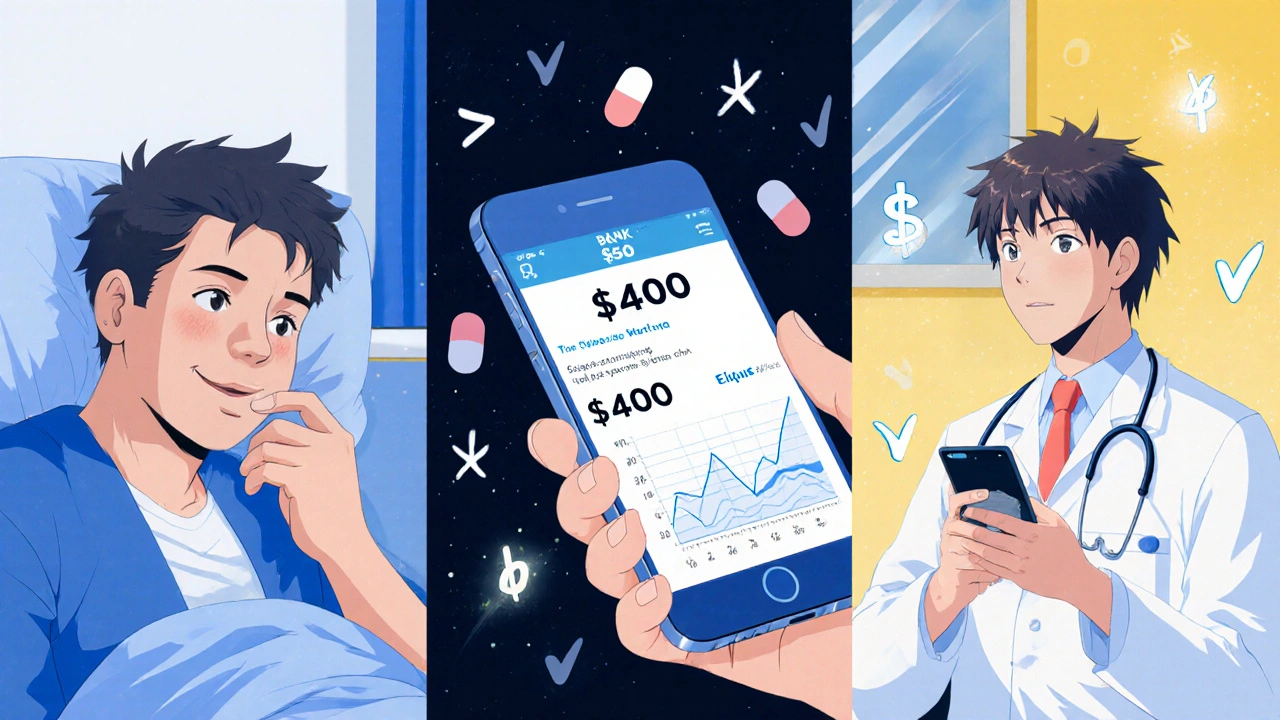
One woman on Reddit switched from Eliquis to warfarin after her monthly bill hit $450. Her new copay? $12. She started taking it regularly for the first time in years. A man with type 2 diabetes switched from Jardiance to metformin - and saved $400 a month. His A1C stayed stable. Another patient, on Lyrica for nerve pain, couldn’t afford it anymore. After asking her neurologist, they switched to gabapentin. Her pain didn’t get worse - and her out-of-pocket dropped from $450 to $15. These aren’t outliers. They’re people who asked the right question at the right time.What’s Changing in 2025
New rules are making therapeutic interchange easier:- Medicare Part D now requires all plans to use standardized criteria for therapeutic alternatives and process exceptions within 72 hours for urgent cases.
- Epic and Cerner, the two biggest electronic health record systems, now flag therapeutic alternatives automatically at the point of prescribing.
- AI tools are being tested to predict which patients would benefit from a switch - with 89% accuracy in early trials.
- More states are expanding laws to allow therapeutic substitution for biologics - a category that’s been off-limits until now.
Next Steps: Your Action Plan
Here’s what to do today:- Check your current prescriptions. Use GoodRx to see what they cost at your pharmacy.
- Look up therapeutic alternatives. Type your drug name + "therapeutic alternative" into Google. Stick to reputable sources like Medscape or the AAFP.
- Print or screenshot the price comparison. Show it to your doctor at your next visit.
- Ask: "Is there a cheaper option that works just as well?" Be calm, be clear, be persistent.
- If denied, ask for the reason and request a tiering exception or a second opinion.
Can I switch to a therapeutic alternative without telling my doctor?
No. Never change your medication without your doctor’s approval. Even if two drugs are in the same class, they can affect your body differently. Switching on your own could lead to side effects, ineffective treatment, or dangerous interactions. Always involve your provider.
Are therapeutic alternatives as safe as my current drug?
Yes - if they’ve been properly evaluated. The American College of Physicians requires that therapeutic alternatives have proven equal safety and effectiveness in clinical trials. For example, switching from brand-name Nexium to generic omeprazole is well-studied and safe for most people. But not all swaps are equal. Always confirm with your doctor that the alternative is appropriate for your specific condition and health history.
Why doesn’t my doctor suggest cheaper options?
Many doctors aren’t trained to prioritize cost during prescribing. They focus on clinical effectiveness first. Some are unfamiliar with alternatives, especially newer ones. Others assume insurance covers everything. That’s why you need to bring it up. Studies show that when patients ask, doctors are more likely to consider alternatives - especially when given clear data.
Will my insurance cover a therapeutic alternative?
Most do - but not always. Insurance plans often list preferred drugs on lower tiers. If your alternative isn’t on your plan’s formulary, your doctor can file a tiering exception. For Medicare Part D, this must be approved within 72 hours if it’s urgent. Pharmacies can help you file the paperwork. If denied, you can appeal.
How long does it take to switch to a therapeutic alternative?
It can be as fast as one visit. If your doctor agrees, they can write a new prescription the same day. Some pharmacies have pre-approved lists of therapeutic alternatives and can dispense them immediately. If insurance approval is needed, it may take a few days. For urgent cases under Medicare, the process must be completed within 72 hours.
What if the alternative doesn’t work for me?
That’s why monitoring matters. Your doctor should check in after 2-4 weeks to see how you’re doing. If your symptoms return or side effects appear, you can switch back. Many patients find the alternative works just fine - but if it doesn’t, going back to your original medication is always an option. Don’t feel like you’re stuck.
Nathan Brown
November 29, 2025 AT 14:22It’s wild how the system makes you beg for basic healthcare. We spend billions on ads for drugs that cost $500 a month while the generic that does the same thing sits there like a forgotten sibling. It’s not about science-it’s about who owns the patent. I get why doctors don’t push alternatives-they’re not paid to think about cost. But we’re the ones paying with our wallets and our health.
And yet, the fact that someone can switch from Eliquis to warfarin and save $400 a month and still be safer? That’s not innovation. That’s just common sense being treated like a crime.
Melissa Michaels
November 29, 2025 AT 22:39I’ve helped three elderly patients switch to therapeutic alternatives this year. One was on Lyrica-$420/month. We switched to gabapentin, and her pain didn’t worsen. Her monthly out-of-pocket went from $80 to $5. She cried when she saw the receipt.
Doctors don’t always know these options exist. But patients who come prepared with GoodRx printouts? They get listened to. It’s not about being pushy-it’s about being informed. You deserve care you can afford.
Curtis Ryan
November 30, 2025 AT 10:13OMG this is life changing i had no idea gabapentin was like 15 bucks a month and lyrica was 400+ i just thought i was bad at budgeting lmao
just asked my doc and she said yes and gave me a script same day. i’m saving like 400 a month. thank you internet you beautiful weirdo
Rajiv Vyas
December 1, 2025 AT 02:54They don’t want you to know this. Why? Because the pharmaceutical industry owns Congress. The FDA? Mostly ex-pharma execs. The ‘therapeutic interchange’ you’re talking about? It’s a distraction. Real solution? Single-payer. Or just make all drugs public domain. This is capitalism playing god with your insulin.
They’ll let you swap gabapentin for Lyrica… but only if you’re still buying into the whole broken system.
Olivia Currie
December 1, 2025 AT 22:37THIS. THIS. THIS.
I switched from Eliquis to warfarin last year. My husband thought I was insane. I had to go to three pharmacies to find one that knew how to manage the INR. I had to get blood drawn every two weeks. But guess what? I paid $12 a month. I’m alive. I’m not in debt. And I finally sleep at night.
Don’t let anyone tell you saving money is ‘compromising your health.’ It’s surviving. And you’re not weak for asking.
Astro Service
December 2, 2025 AT 06:33Why are we letting foreigners tell us how to treat our own bodies? Warfarin? That’s a Soviet-era drug. And gabapentin? That’s just a cheap knockoff. We’re Americans. We deserve the best, even if it costs $500. This is weak. This is surrender. You think Canada knows better? No. They’re just lazy.
Matthew Stanford
December 3, 2025 AT 14:40People think asking for cheaper meds is being greedy. It’s not. It’s being smart. It’s being responsible.
I had a friend on Crestor-$400/month. Switched to atorvastatin. Same results. $18/month. She started taking it consistently for the first time in 3 years.
Doctors aren’t villains. They’re overworked. But they’re not mind readers. If you don’t say you’re struggling, they assume you’re fine. Just ask. It’s not rude. It’s necessary.
farhiya jama
December 4, 2025 AT 13:50Ugh. Another ‘just ask your doctor’ post. Like that’s gonna help when your insurance denies everything and your doctor doesn’t even return your calls. I’ve been trying to switch for 11 months. Got denied 4 times. My A1C is rising. My anxiety is worse. And now I’m supposed to feel good because someone on Reddit saved $400?
Thanks for the guilt trip, internet.