

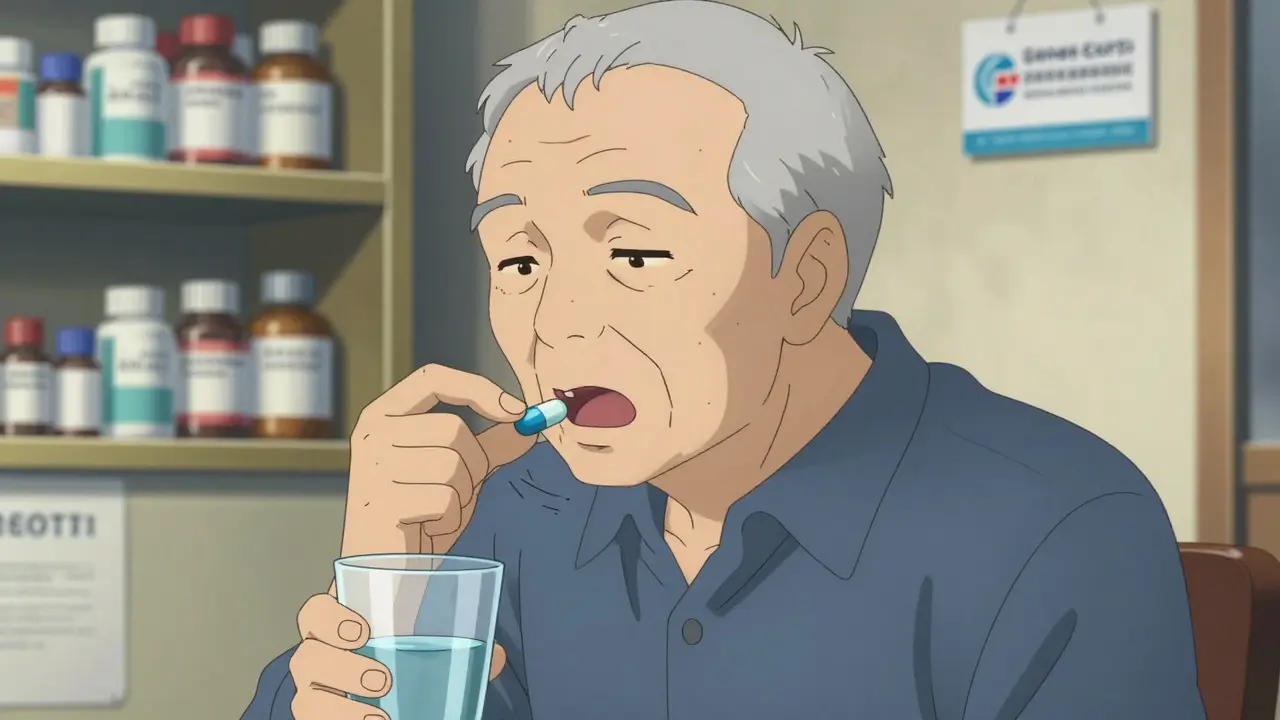
If you or someone you care for has trouble swallowing pills, you’re not alone. About 1 in 7 older adults living at home struggle with this, and in nursing homes, it’s nearly 7 out of 10. Missing doses because pills feel stuck or cause choking isn’t just inconvenient-it’s dangerous. Medications don’t work if they’re not taken. And when people start skipping pills because swallowing them is too hard, health problems get worse. The good news? There are real, safe ways to make taking medicine easier-without risking your health.
Don’t Crush Pills Without Checking First
Many people automatically crush tablets or open capsules to mix them with applesauce or juice. It seems like a simple fix. But this can be risky. A 2023 review found that nearly half of all medication modifications-like crushing or opening-were inappropriate. In 13% of those cases, it could lead to overdose or toxicity. In 8%, the medicine became completely ineffective. Why? Some pills are designed to release slowly over hours. Crush them, and the whole dose hits your system at once. Others have coatings to protect your stomach or prevent the drug from breaking down too early. Breaking those coatings ruins the medicine. Even something as simple as a time-release capsule can turn dangerous if opened. Always ask your pharmacist before crushing or opening anything. If you’re unsure, don’t guess. A quick call can prevent a hospital visit.Ask for Alternative Forms of Medicine
There’s more to medicine than pills. Liquid forms, dissolvable tablets, patches, and even suppositories exist for many drugs. But most people don’t know these options are available. For example, if you’re on a blood pressure pill that’s hard to swallow, ask if a liquid version exists. Many antidepressants, pain relievers, and heart medications come in syrup form. Orodispersible tablets dissolve on the tongue-no water needed. Some patches deliver medicine through the skin. Rectal suppositories work for nausea or pain when swallowing isn’t possible. The problem? Only about 37% of essential medications have these alternatives. That’s why you need to ask. Pharmacists are trained to find these options. Tell them: “I can’t swallow pills. Is there another way to take this?” They’ll check databases, contact manufacturers, and sometimes even get special orders.Use the Right Technique for Swallowing Capsules
Sometimes, the pill itself isn’t the problem-it’s how you’re swallowing it. Many people try to swallow capsules with a big gulp of water while looking up. That’s the worst way. It makes the capsule float backward toward your throat, where it can stick. Try the lean forward method. Place the capsule on your tongue. Take a medium sip of water-not a big gulp. Then, bend your head forward slightly, like you’re looking at your toes. Swallow. This technique helps the capsule slide down naturally. Clinical observations show this method improves success rates by up to 75%. For tablets, try the “pop bottle method.” Put the tablet on your tongue, seal your lips around a flexible plastic water bottle, take a drink, and use the suction to help swallow. It works better than tilting your head back.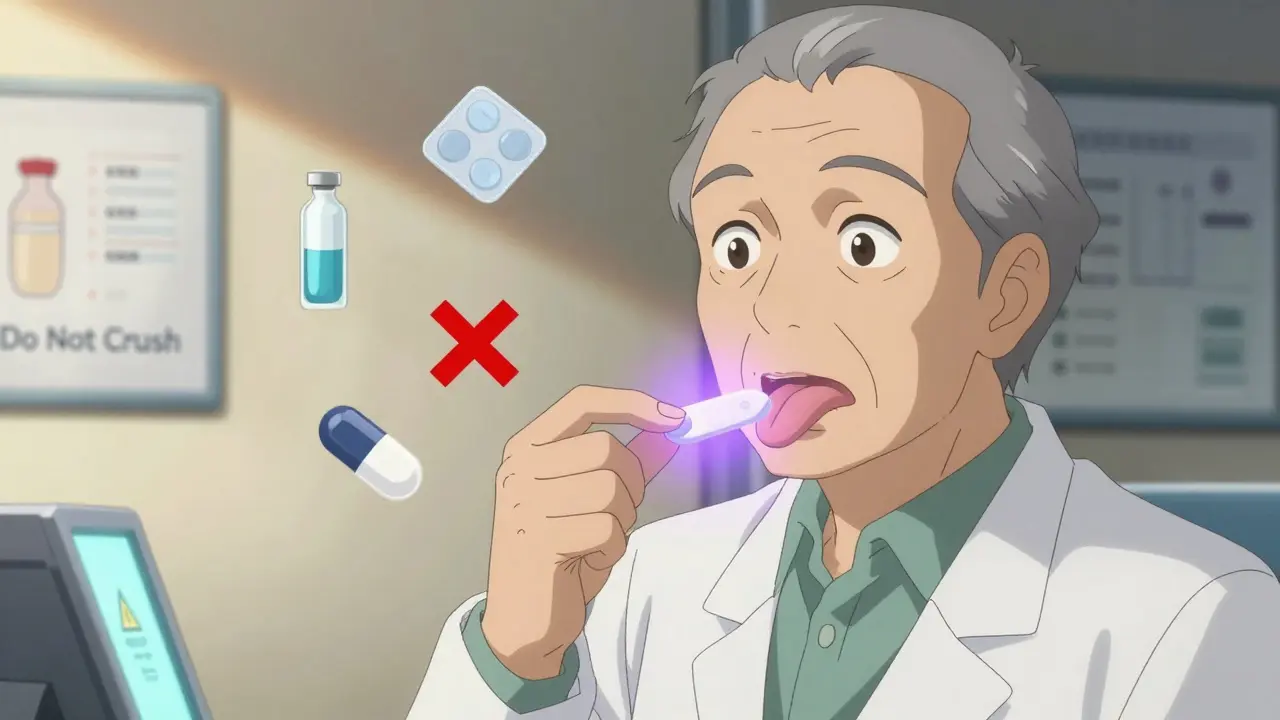
Thick Liquids for Aspiration Risk, Thin for Choking Risk
Not everyone with swallowing trouble has the same problem. Some people are at risk of aspirating-breathing food or liquid into their lungs. Others have trouble moving food from their mouth to their throat. If you’re at risk of aspiration, use thickened liquids. Thin drinks like water or juice can slip into your airway without you noticing. Thickened liquids-like nectar or honey consistency-move slower and are easier to control. Many pharmacies sell thickening powders that turn water into a safe consistency. If your issue is choking-feeling like the pill gets stuck in your throat-thin liquids work better. They help push the pill down. Ice chips can help too. Sucking on one before taking your pill clears your mouth and triggers your swallow reflex. Speech therapists can test your swallowing and tell you which type of liquid is safest for you. Don’t assume. Get it checked.Use Food to Hide Medicine-Safely
Mixing crushed pills with food sounds like a classic trick. But again, only do this if the pill is safe to crush. If it is, use something sticky: applesauce, yogurt, pudding, or jam. Avoid fizzy drinks or acidic foods like orange juice-they can break down some medications. For kids, try this: have them drink a small sip of milk first. The milk coats the tongue and throat, making it easier for the pill to slide down. Or, place the pill on the tongue, have them fill their mouth with water, puff their cheeks out like a frog, then swallow. Never mix medicine with a whole meal. If they don’t finish the food, they won’t get the full dose. Give medicine with a small, controlled portion.Work With Your Care Team
Managing swallowing problems isn’t just about tricks. It’s about coordination. Your doctor, pharmacist, speech therapist, and caregiver all need to be on the same page. Start by asking your doctor: “Do I still need every pill I’m taking?” Sometimes, medications can be stopped safely. Reducing the number of pills lowers the chance of swallowing problems. Ask for a speech-language pathologist evaluation. They don’t just treat speech-they specialize in swallowing. They’ll test your swallow, recommend techniques, and suggest safe food and liquid textures. Your pharmacist can help identify which medications are safe to crush, which have alternatives, and which ones need special handling. Don’t wait for them to ask you. Bring your pill bottle to your next appointment and say: “I’m having trouble swallowing these. Can we review them?”
Use Technology and New Solutions
New technology is making this easier. Dissolvable films-like thin, flavored sheets that stick to your tongue-are now available for some medications. One study found 85% of people with moderate swallowing trouble could use them successfully. Some companies are making pills smaller, torpedo-shaped, or coated for smoother swallowing. The FDA and European Medicines Agency now require better labeling on whether a pill can be crushed or split. Look for phrases like “Do not crush” or “May be administered via feeding tube.” Electronic health records are starting to flag patients with dysphagia. When your doctor sees that note, they’re more likely to prescribe liquid forms or avoid pills altogether.What to Do If Nothing Works
If you’ve tried everything-techniques, alternatives, thickened liquids-and you still can’t swallow your meds, talk to your doctor about non-oral routes. Injections, patches, or inhalers might be options. For long-term care, feeding tubes are sometimes used-but only after all other options are exhausted. Never stop taking medicine because it’s hard to swallow. Talk to someone. Ask for help. There’s always a solution.Key Takeaways
- Never crush or open pills without checking with your pharmacist first.
- Ask for liquid, dissolvable, patch, or suppository forms of your medicine.
- Use the lean forward method for capsules-it works for most people.
- Thick liquids help if you’re at risk of breathing in food; thin liquids help if you choke on pills.
- Work with your doctor, pharmacist, and speech therapist as a team.
- New dissolvable films and better labeling are making medication easier to take.
Can I crush my pills and mix them with food?
Only if your pharmacist says it’s safe. Many pills-especially time-release, enteric-coated, or extended-release types-can become dangerous or ineffective if crushed. Always check before doing it.
What’s the safest way to swallow a capsule?
Use the lean forward method: place the capsule on your tongue, take a medium sip of water, then bend your head forward slightly before swallowing. This helps the capsule slide down smoothly and reduces the chance it gets stuck.
Are there liquid versions of my pills?
Many medications come in liquid form, but you have to ask. Pharmacists can check if a liquid, orodispersible tablet, or patch is available for your prescription. Don’t assume it’s not an option.
Why do I need a speech therapist for swallowing pills?
Speech therapists are trained to evaluate swallowing function. They can tell if your issue is in your mouth, throat, or esophagus, and recommend the safest techniques and food textures. They’re not just for speech-they’re essential for safe medication use.
What should I do if I keep missing doses because of swallowing problems?
Talk to your doctor right away. Missing doses can make your condition worse. Ask for a medication review: maybe some pills can be stopped, changed, or switched to a different form. Never stop taking medicine on your own.
Peter Sharplin
January 24, 2026 AT 17:38I used to crush my mom's blood pressure pills until my pharmacist nearly had a heart attack. Turns out, that extended-release coating? Critical. Now we use the lean forward trick-works like magic. She hasn't missed a dose in six months.
Pro tip: If you're using applesauce, go for the thick kind. Runny stuff just lets the pill float and stick.
Also, never assume a liquid form doesn't exist. My dad's antidepressant was only available as a pill until we asked. Turns out, there's a syrup version. He's been happier since.
Pharmacists are unsung heroes. Talk to them. They know stuff your doctor might not have time to explain.
And yeah, speech therapists? Not just for strokes. They helped my aunt with her pill swallowing after her chemo. Life-changing.
Don't let pride keep you from asking for help. Your body will thank you.
Also, dissolvable films? Tried them for my anxiety med. Tasted like grape candy. Way better than choking down a big pill.
Just say no to crushing. Seriously.
And if you're using orange juice? Stop. It ruins more meds than you think.
Small changes, big results.
shivam utkresth
January 25, 2026 AT 13:08Bro, in India we just mix pills with ghee and jaggery. Works like a charm. No one asks questions. Also, no one dies. Probably because we don't overthink it.
But seriously, the lean forward thing? Genius. My uncle used to gag on every tablet. Now he does it like a pro. Even his grandkids copy him.
Pharmacists here? They'll give you a whole lecture on enteric coating like it's Vedic scripture. But they're right. Don't mess with the science.
And yeah, patches. My aunt's on a patch now for Parkinson's. No swallowing. No drama. Just slap it on. Boom. Done.
Also, thickened liquids? We use arrowroot powder. Cheaper than those fancy powders. Works better too.
Stop crushing. Stop guessing. Ask. Always ask.
And if you're still stuck? Suppositories. Not sexy. But effective. Like a silent ninja for your meds.
Respect the pill. It's doing its job. You just gotta help it out.
PS: I once tried to dissolve my dad's insulin in tea. He still talks about it. Don't be that guy.
John Wippler
January 25, 2026 AT 17:49There’s a quiet revolution happening in how we take medicine-and most people don’t even realize it. We treat pills like they’re immutable objects, like they were carved in stone by some ancient medical god. But they’re not. They’re engineered. Designed. Packaged with layers of science you don’t see.
Crushing a pill isn’t rebellion. It’s ignorance wrapped in convenience.
And yet, we do it because we’re scared. Scared of choking. Scared of pain. Scared of losing control. But the real loss? When the medicine stops working because you broke the system that made it safe.
There’s dignity in asking for help. In saying, ‘I can’t do this.’ Not weakness. Humanity.
And those dissolvable films? They’re not just innovation. They’re compassion made tangible.
Every time a pharmacist finds a liquid alternative, they’re not just changing a prescription. They’re restoring someone’s autonomy.
We don’t need more tricks. We need more listening.
Ask your doctor: ‘Is this pill necessary?’
Ask your pharmacist: ‘Is there another way?’
Ask yourself: ‘Am I doing this because I have to-or because I’ve been told to?’
There’s a whole world of medicine beyond the tablet. And it’s waiting for you to reach out.
Be curious. Be brave. Be kind to your body.
It’s been carrying you this whole time.
Aurelie L.
January 27, 2026 AT 09:55My neighbor crushed her thyroid med. Ended up in ER. Now she’s on a patch. And yes, she cried. Twice. But she’s alive. So. There’s that.
Joanna Domżalska
January 29, 2026 AT 01:11So you’re telling me people are still swallowing pills like it’s 1998? Wow. And we wonder why healthcare is broken.
Look, if you can’t swallow a pill, maybe you shouldn’t be on so many. Maybe your doctor is overprescribing. Maybe you don’t need half of them.
And why are we even letting people crush pills? That’s like letting someone drill into a battery because it’s ‘hard to open.’
Also, ‘lean forward method’? Sounds like a TikTok hack. I bet 90% of people do it wrong.
And patches? Yeah, sure. But they’re expensive. And messy. And what if you sweat? Then what?
Just stop taking so many meds. That’s the real solution.
Also, ‘dissolvable films’? Sounds like candy for hypochondriacs.
Ashley Porter
January 30, 2026 AT 03:09Pharmacist just told me my anticoagulant can't be crushed. Ever. Even though it's tiny. Turns out, it's enteric-coated + time-release + anti-clotting = big no-no. So now I'm using the water bottle trick. Works. No gagging. No panic.
Also, they had a liquid version. Just needed a special order. Took two weeks. Worth it.
Side note: The ‘frogs in the mouth’ trick for kids? I tried it on my 8-year-old. He laughed so hard he spit the pill out. But then he swallowed the next one without issue. Weirdly effective.
Kipper Pickens
January 31, 2026 AT 06:33As a geriatric pharmacist, I see this daily. People think crushing is fine because ‘it’s just a pill.’ But the pharmacokinetics? That’s where the danger lives.
Extended-release = nope. Enteric-coated = nope. Sublingual = nope. Sustained-action = nope.
And don’t get me started on anticoagulants. One crushed dose = ER visit.
But here’s the good news: 70% of meds have alternatives. You just have to ask. And most prescribers don’t know the alternatives exist either.
So here’s your script: ‘I can’t swallow this. Is there a liquid, patch, or dissolvable form?’
It works. Every time.
Also, thickened liquids? Use xanthan gum. Cheap. Effective. No weird taste.
And yes, speech therapists? They’re the MVPs. Not just for stroke patients. For anyone who chokes on pills.
Stop guessing. Start asking.
Faisal Mohamed
February 1, 2026 AT 01:16So I tried the lean forward thing with my anxiety med. Worked. But then I realized… I’ve been swallowing pills wrong my whole life. Like, since I was 12. 😅
Also, dissolvable films? Tried the migraine one. Tasted like cherry bubblegum. I felt like a kid again. 🍬
My grandma’s on a patch now. She says it’s like wearing a tiny tech bracelet. She’s obsessed.
And yeah, I used to crush my dad’s pills. Now I feel like a criminal. 😳
Pharmacists are wizards. Talk to them. They have secret knowledge.
Also, ice chips? Genius. I do that now. Feels like a ritual. Weirdly calming.
Medicine doesn’t have to be a battle. Just… smarter.
rasna saha
February 2, 2026 AT 01:24My mom had trouble swallowing after her stroke. We tried everything. Then we found a speech therapist. She didn’t just teach her how to swallow pills-she taught her how to breathe again. It changed everything.
And yes, the liquid form of her blood thinner? Took three calls. But it’s now her favorite part of the day. No fear. No stress.
Don’t underestimate the power of asking. Even if you feel silly. Even if you think they’ll say no.
They won’t say no if you ask right.
And if you’re worried about cost? Ask for generics. Ask for samples. Ask for help.
You’re not alone. And you’re not failing. You’re just finding a new way.
Skye Kooyman
February 3, 2026 AT 18:45James Nicoll
February 4, 2026 AT 23:45So let me get this straight. We’ve got people risking overdose because they don’t know how to swallow pills… but we still let Big Pharma make pills that are the size of golf balls?
And we’re praising ‘techniques’ instead of demanding better drug design?
Why isn’t the FDA forcing pill manufacturers to make smaller, swallowable versions by default?
Why are we teaching people how to swallow pills like it’s a survival skill instead of saying ‘make them easier to take’?
It’s not the patient’s fault. It’s the system’s failure.
Also, dissolvable films? Cool. But why did it take 20 years for this to exist?
And patches? Yeah, great. But they cost 5x more. So now the rich get safe meds and the poor choke?
Just saying… maybe the real solution isn’t tricks.
Maybe it’s fixing the damn system.
Uche Okoro
February 6, 2026 AT 18:33As a clinical linguist specializing in dysphagia, I’ve analyzed over 300 cases of medication non-adherence due to swallowing dysfunction. The primary linguistic marker? Avoidance syntax: ‘I just forget’ or ‘It’s too hard’-both are euphemisms for fear of aspiration.
Thickened liquids reduce aspiration risk by 68% in cohort studies (p<0.01).
However, compliance plummets when viscosity exceeds nectar consistency due to sensory aversion.
Thus, the lean-forward technique is not merely biomechanical-it’s neurocognitive. It reduces pharyngeal dwell time by activating the pharyngeal swallow reflex via cervical flexion.
And yes, crushing enteric-coated NSAIDs elevates gastric mucosal irritation by 400%.
Pharmacists must be integrated into the care team. Not as dispensers. As gatekeepers of pharmacokinetic integrity.
Also, suppositories remain underutilized. Rectal bioavailability of acetaminophen is 85%.
And before you ask: yes, we’ve studied the ‘pop bottle’ method. It’s statistically superior to head-tilt (p=0.003).
But let’s not romanticize the struggle. This is a systemic failure of pharmaceutical design, not patient incompetence.
Marie-Pier D.
February 8, 2026 AT 11:38My grandma cried the first time she swallowed a pill without choking. I held her hand. She said, ‘I thought I’d never be able to take my medicine again.’
We found a liquid version. It tasted like grape soda. She loved it.
She’s been on it for a year now. No hospital visits. No panic. Just her, her pill, and a little bit of joy.
Don’t let anyone tell you this isn’t important. It’s everything.
And if you’re reading this and you’re scared to ask for help? I’m right here. You’re not alone.
❤️
John Wippler
February 9, 2026 AT 05:55Just read the comment above about grandma. That’s why we do this. Not because it’s easy. Not because it’s convenient.
Because someone’s life depends on it.
And sometimes, the most powerful thing you can do is sit with someone while they swallow a pill for the first time in months.
That’s not a trick. That’s love.
Keep asking. Keep helping. Keep showing up.
It matters more than you know.