

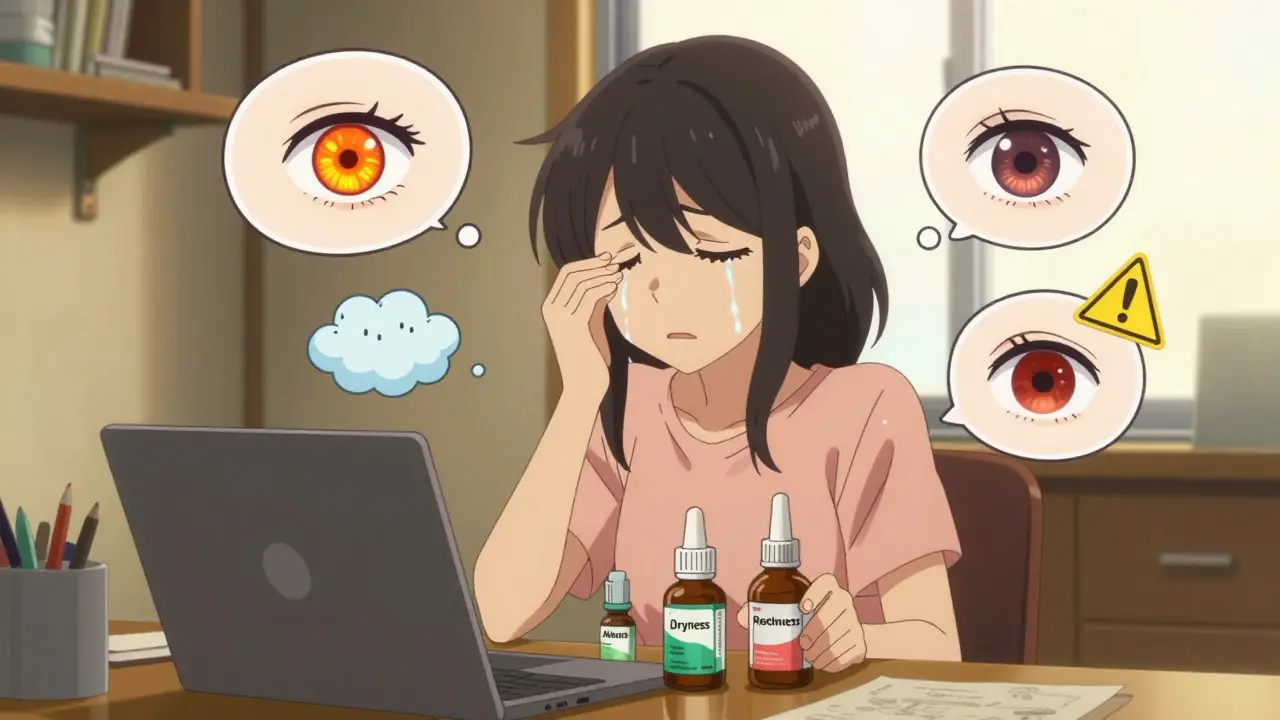
Choosing the right over-the-counter (OTC) eye drops isn’t as simple as grabbing the brightest bottle on the shelf. With dozens of options labeled for allergies, dryness, or redness, picking the wrong one can make your symptoms worse instead of better. You might think all eye drops are the same, but they’re not. Each type targets a different problem - and using one for the wrong condition can cause more harm than good.
Know What’s Really Wrong With Your Eyes
Before you buy anything, figure out what’s causing your discomfort. Many people mix up dryness with allergies or redness, and that’s where things go wrong.Dryness feels like grit, burning, or aching behind the eyes. It gets worse when you’re on a screen, in air-conditioned rooms, or after hours of reading. Your tears aren’t producing enough moisture, or they evaporate too fast. This is called dry eye disease, and it affects over 16 million Americans.
Allergies come with itching, watery eyes, puffiness, and redness - especially during spring or fall. You might also have a runny nose or sneezing. It’s not just irritation; it’s your immune system reacting to pollen, pet dander, or dust.
Redness is often the result of tired eyes, screen strain, or even dryness. But some people use redness-relief drops thinking it’ll fix everything. That’s a trap. These drops don’t treat the cause - they just shrink blood vessels temporarily. When they wear off, your eyes get redder than before.
The Three Main Types of OTC Eye Drops
There are three clear categories of OTC eye drops. Each has a specific job. Mixing them up leads to wasted money and worse symptoms.1. Artificial Tears - For Dry Eyes
These are the most common OTC eye drops. They replace missing moisture. But not all are created equal.Basic versions like Systane Ultra or Refresh Tears contain lubricants like polyethylene glycol and propylene glycol. They last 1-2 hours. If you use them 4-6 times a day, they work fine for mild dryness.
For moderate to severe dryness, look for gel-based or preservative-free drops. Systane Gel Drops or Refresh Optive PF contain thicker ingredients like hydroxypropyl guar or mineral oil. They last 4-6 hours and are better for nighttime use. The trade-off? They blur your vision for a few minutes after application. That’s normal - just blink slowly and wait.
Some advanced formulas like Thealoz Duo combine trehalose and sodium hyaluronate. Clinical studies show they improve corneal healing by 40% compared to regular drops. They’re pricier - around $20 for 30 single-use vials - but worth it if you have chronic dry eye.
2. Antihistamine Eye Drops - For Allergies
If your eyes itch like crazy, you need an antihistamine, not just lubricants. These block the chemical that triggers allergic reactions.The two most effective OTC options are Zaditor (ketotifen 0.035%) and Pataday (olopatadine 0.1%). Pataday is stronger and lasts up to 24 hours. You only need one drop per eye once a day. Zaditor works well too, but you’ll need to use it twice daily.
Avoid older combo drops like Bausch + Lomb Opcon-A. They contain naphazoline (a redness reliever) and pheniramine (an antihistamine). While they give fast relief, 41% of regular users develop rebound redness within two weeks. That means your eyes get worse over time.
Start using antihistamine drops before allergy season hits. Don’t wait until your eyes are already burning. Prevention beats reaction every time.
3. Anti-Redness Drops - Avoid Unless Temporary
These are the ones with bold red packaging: Visine, Clear Eyes, Lumify. They contain vasoconstrictors like tetrahydrozoline or brimonidine. They make blood vessels shrink - so your eyes look white.Here’s the catch: they don’t fix the root problem. If your redness is from dryness or allergies, these drops make it worse. The American Optometric Association says 83% of people who use redness drops for dry eye end up with more severe symptoms.
Lumify (brimonidine 0.025%) is the exception. It’s newer and has less rebound risk - only 5.2% of users experience it. But it can cause headaches in 31% of users. So use it only for special occasions - like a wedding or job interview - not daily.
Visine and similar brands? Avoid them if you have dry eyes. They reduce blood flow to your eyes, which cuts down tear production. That’s like turning off a faucet when you’re thirsty.
What to Look for on the Label
You don’t need a degree in chemistry, but you should understand these key terms:- Preservative-free: Comes in single-use vials. Best if you use drops more than 4 times a day or have sensitive eyes. Preservatives like benzalkonium chloride can damage your cornea over time.
- Oil-based: Look for mineral oil or castor oil. These help with evaporative dry eye (when tears dry out too fast). Systane Complete PF is a top choice.
- Non-stinging: If drops sting, switch brands. Some people react to certain ingredients. Try Refresh Relieva PF - many Reddit users swear by it.
- OSMOLARITY: The best drops match your eye’s natural salt balance (280-320 mOsm/L). TheraTears has a hypotonic formula (230 mOsm/L), which helps severely dry eyes absorb moisture better.

Real User Experiences - What Works
Amazon reviews and patient surveys tell a clear story:- 78% of 5-star reviews for Systane Ultra mention instant relief from computer dryness.
- 89% of Pataday users say it gives all-day allergy relief.
- On Reddit’s r/dryeye community, users consistently praise Refresh Relieva PF for not blurring vision - critical for people who work on screens.
- 67% of people who start with Visine for dryness end up worse within two weeks. That’s not a coincidence.
One patient at Boulder Medical Center said: “I used Visine every day for three weeks. My eyes looked better at first. Then they turned bloodshot. I switched to Systane PF. In five days, the redness was gone. I wish I’d known sooner.”
How to Use Eye Drops Correctly
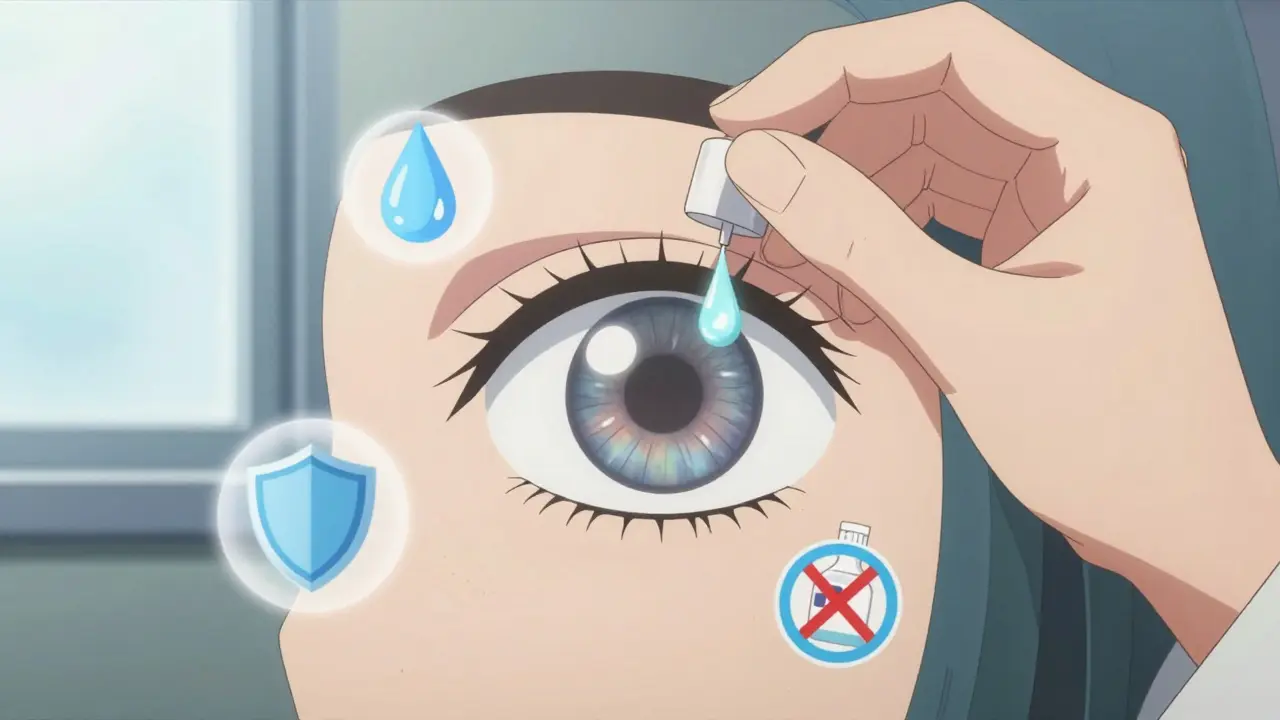
Even the best drop won’t work if you use it wrong. Here’s the right way:- Wash your hands.
- Tilt your head back and look up.
- Pull down your lower eyelid to make a small pocket.
- Hold the bottle close to your eye - don’t touch your eye or eyelashes.
- Squeeze one drop into the pocket.
- Close your eye gently for 30 seconds. Don’t blink hard.
- Press the inner corner of your eye (near the nose) with your finger to keep the drop from draining out.
Most people blink right after applying - that wastes the drop. And touching the dropper to your eye can contaminate the bottle. Use a new bottle every 3 months, or sooner if it looks cloudy.
When to See a Doctor
OTC drops help - but they’re not magic. See an eye doctor if:- Your symptoms last more than 7 days despite using the right drops.
- You have pain, light sensitivity, or vision changes.
- Your eyes are swollen, crusty, or discharge pus.
- You’ve been using redness drops for more than 3 days.
Chronic dry eye can be a sign of autoimmune disease, thyroid issues, or medication side effects. Allergies might need prescription-strength treatment. Don’t ignore warning signs.
Bottom Line: Pick Smart, Not Just Convenient
- For dry eyes: Use preservative-free artificial tears or gels like Systane Ultra, Refresh Optive PF, or Thealoz Duo. - For allergies: Use Pataday or Zaditor. Start before symptoms hit. - For redness: Avoid Visine and Clear Eyes unless it’s a one-time fix. Use Lumify only if you must. - Never use redness drops for dryness - they make it worse. - If you use drops more than 4 times a day, go preservative-free. - Store drops at room temperature unless the label says otherwise.There’s no one-size-fits-all solution. Your eyes are unique. The right drop depends on what’s really going on. Take the time to match the product to your condition - not just the packaging.
Can I use allergy eye drops for dry eyes?
No. Allergy drops like Pataday or Zaditor are designed to block histamine, not add moisture. Using them for dryness won’t help and may irritate your eyes further. Stick to artificial tears for dryness - they’re made to hydrate.
Why do some eye drops sting when I use them?
Stinging usually means your eyes are too dry or sensitive to the preservatives in the bottle. Switch to a preservative-free version. Brands like Refresh Relieva PF or Systane PF are less likely to sting. If it still burns, try a different brand - ingredients vary.
Are gel drops better than liquid drops?
Gel drops last longer - up to 6 hours vs. 2 hours for liquids. They’re ideal for nighttime use or moderate-to-severe dryness. But they blur vision for a few minutes. If you’re driving or working on a screen, stick to liquids. Use gels before bed or during breaks.
Can I use eye drops while wearing contacts?
Only use drops labeled “for contact lens wearers.” Regular drops can stick to lenses and cause irritation. Blink Contacts, Refresh Contacts, and Systane Contacts are designed to be safe with lenses. Always wait 15 minutes after applying drops before putting in contacts.
Do I need to refrigerate my eye drops?
Most don’t need refrigeration. But Thealoz Duo must be refrigerated after opening. Always check the label. Storing drops in heat or sunlight can break down ingredients and make them less effective.