

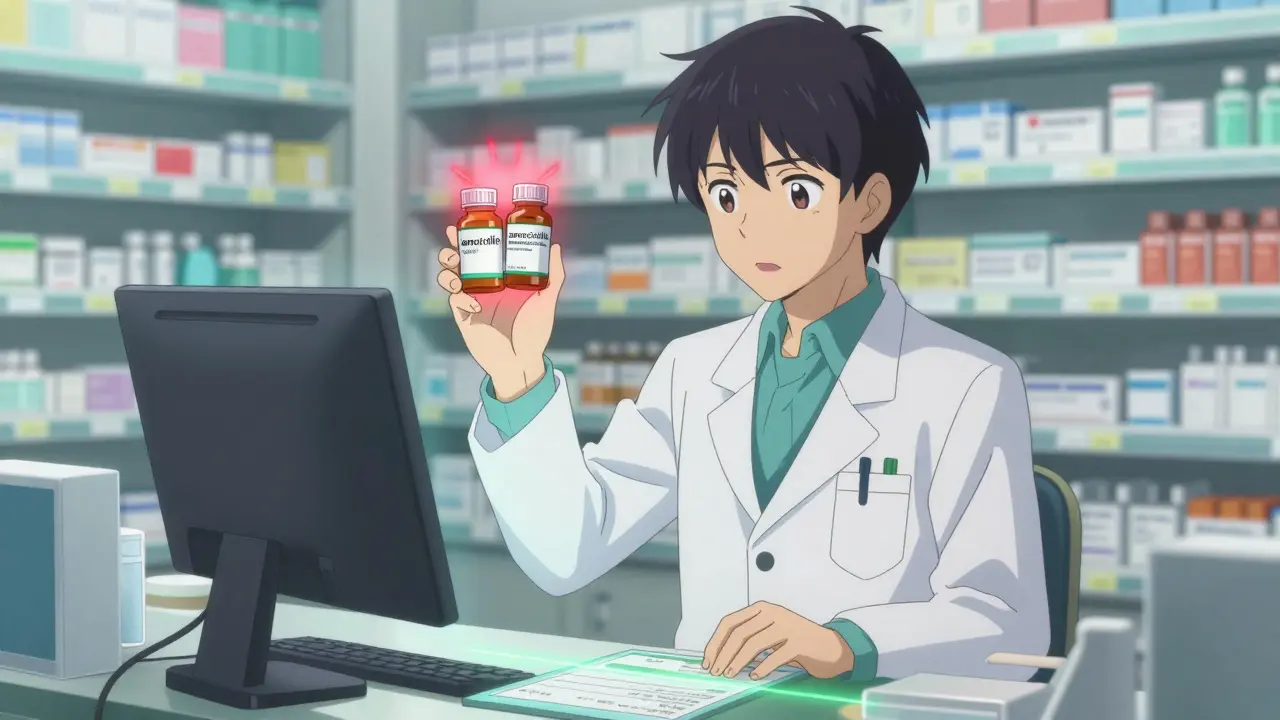
Every time you pick up a prescription, a pharmacist is doing something critical that most people never see: they’re stopping a medication error before it reaches you. It’s not just about counting pills. It’s about catching a 10-fold overdose on warfarin, spotting a dangerous drug interaction, or realizing a doctor meant amoxicillin but wrote amoxicillin-clavulanate by accident. These aren’t rare mistakes-they happen every day. And pharmacists are the last line of defense.
The Final Check Before You Take the Pill
Pharmacists don’t just fill prescriptions. They review them. That means looking at your entire medication list-not just the new one. They check for allergies, duplicate drugs, kidney or liver problems that might make a dose unsafe, and whether this new pill clashes with something you’re already taking. In the U.S., pharmacists prevent about 215,000 medication errors each year, according to the Agency for Healthcare Research and Quality. That’s not a guess. It’s based on years of data tracking what gets caught before it leaves the pharmacy.Think about how many things can go wrong before a prescription even reaches the pharmacist. A doctor writes it by hand and the handwriting is unclear. A nurse transcribes it wrong. An electronic system auto-fills the wrong dose. A pharmacy technician grabs the wrong bottle because two drugs look alike. The pharmacist doesn’t just catch one of these errors-they catch them all.
How They Do It: Tools and Techniques
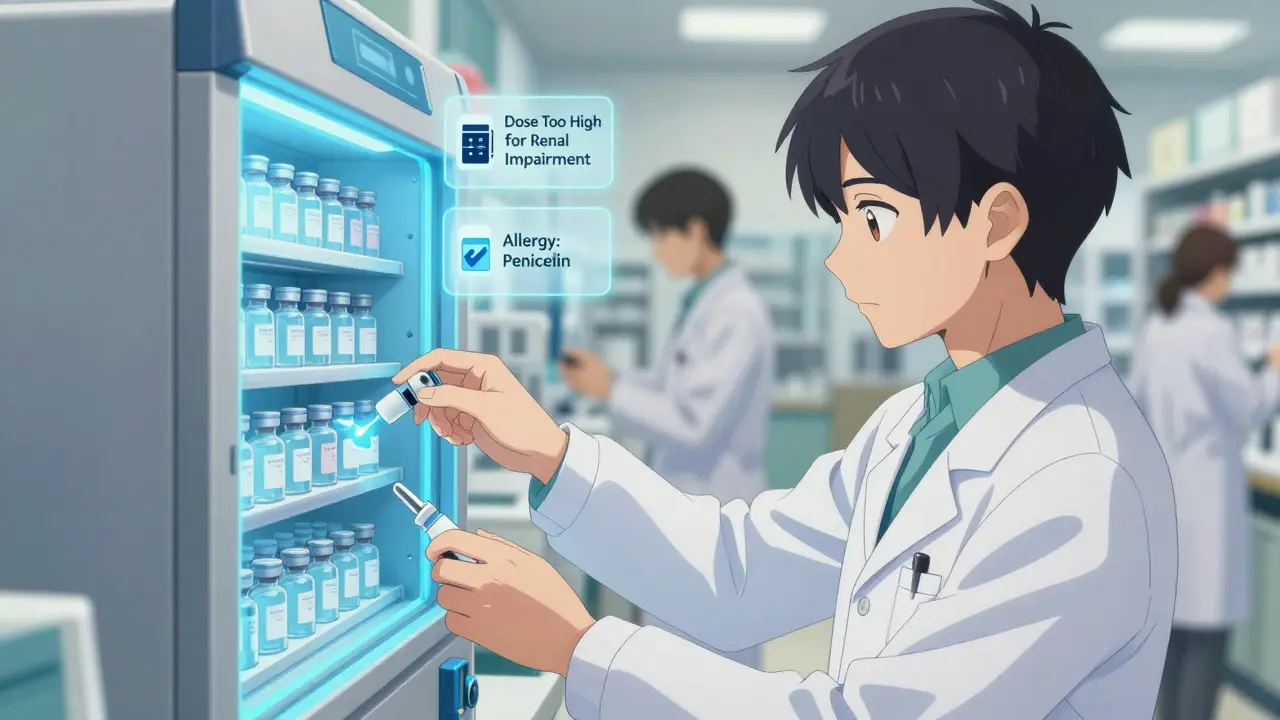
Modern pharmacies aren’t just shelves and counters. They’re high-tech safety hubs. Most use electronic health records that pull up your full medical history. When a prescription comes in, the system automatically flags risks: a potential interaction between your blood thinner and a new antibiotic, or a dose that’s too high for someone with kidney disease. But software doesn’t make decisions. Pharmacists do.Barcodes on medication bottles and automated dispensing cabinets cut dispensing errors by more than half. But even with these tools, mistakes slip through. That’s why pharmacists still do double-checks-especially for high-risk drugs like insulin, heparin, or opioids. A 2022 study found that independent double-checks for these medications reduce errors by 42%. That means two people verify the same thing before it’s handed to you.
In hospitals, clinical pharmacists review every single medication when a patient is admitted. They compare what the patient was taking at home with what’s ordered in the hospital. On average, they catch 2.3 medication discrepancies per patient. That’s more than two chances per person to prevent a dangerous mix-up.
The Human Factor: Why Technology Isn’t Enough
You might think computers would eliminate these errors. But they don’t. Computerized systems reduce errors by 17-25%. Add a pharmacist into the mix, and that jumps to 45-65%. Why? Because machines follow rules. People understand context.For example, a system might flag a drug interaction between two medications. But if the patient has been taking both for months without issue, the pharmacist knows the interaction isn’t dangerous in this case. Or maybe the patient has a rare condition that makes a standard dose unsafe. A computer can’t know that. A pharmacist can.
Alert fatigue is real. Pharmacists get hundreds of warnings a day. About half of them are ignored because they’re not clinically meaningful. That’s why smart systems now prioritize alerts. High-risk interactions-like mixing warfarin with certain antibiotics-get loud, clear flags. Low-risk ones? They’re quieter. This cuts down on noise and helps pharmacists focus on what matters.
Behind the Scenes: Pharmacy Technicians and Teamwork
Pharmacists don’t work alone. Pharmacy technicians are often the first to spot an error. They check the National Drug Code on the bottle against the prescription. They look for confusing names-like Hydralazine vs. Hydroxyzine. They verify dosages and refill limits. Studies show that when technicians do a systematic check before the pharmacist reviews it, up to 78% of dispensing errors are caught before they even reach the pharmacist.The best outcomes happen when pharmacists work as part of a team. In hospitals, when pharmacists collaborate with doctors and nurses, medication errors drop by 52%. That’s more than double the reduction seen when pharmacists work alone. It’s not just about checking boxes. It’s about communication. A pharmacist calling a doctor to clarify a vague order can prevent a hospital stay-or even save a life.
Where the System Still Fails
It’s not perfect. In busy community pharmacies, pharmacists are often under pressure. One pharmacy technician reported seeing 3-4 serious errors per week that slipped past pharmacists because they were rushing. In low-income countries, pharmacist-to-patient ratios can be as high as 1:500. That’s impossible to manage safely.Documentation is another weak spot. Hospitals have solid systems for logging errors. Independent pharmacies? Not so much. One survey gave hospital error reporting systems a 4.2 out of 5. Community pharmacies scored 2.8. That means many errors go unrecorded-and unlearned from.
And then there’s the issue of over-reliance. Experts warn that if we treat pharmacists as the only safety net, the whole system becomes fragile. Errors need to be caught at every stage-by doctors, nurses, technicians, and patients. But when all else fails, the pharmacist is still there.
Real Stories: What Gets Caught
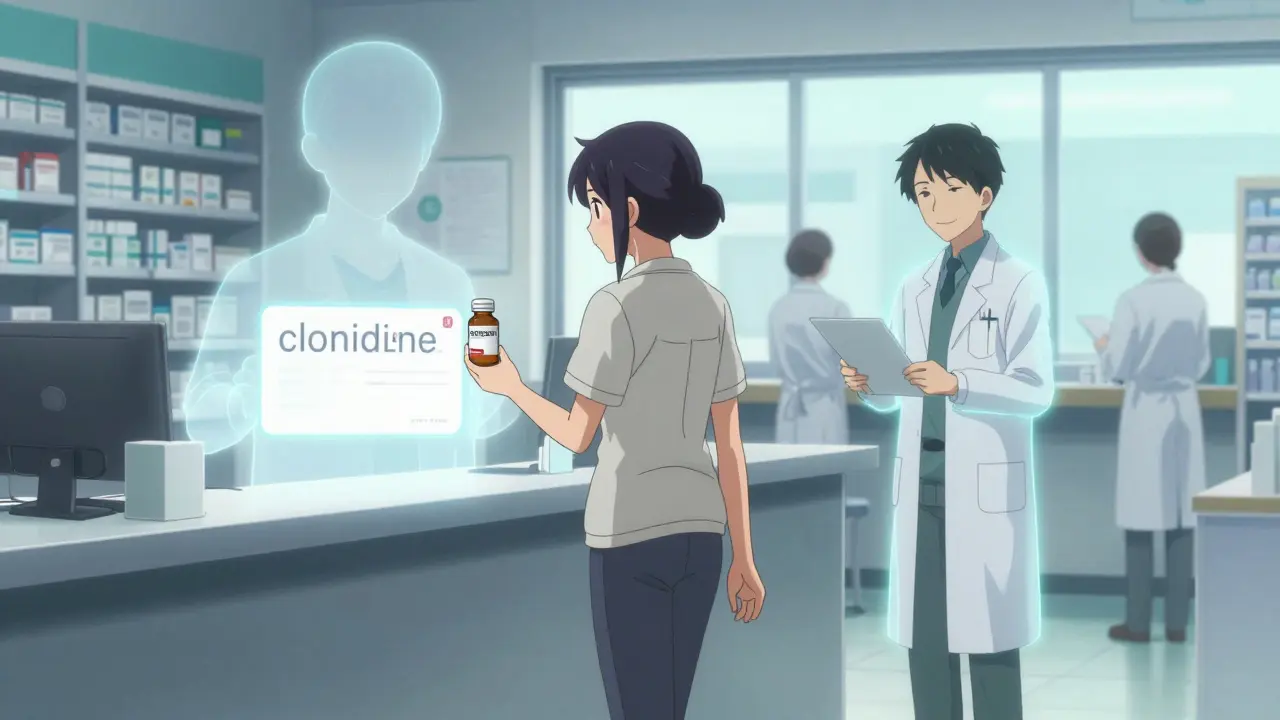
One patient in Sydney left a review on a health platform saying their pharmacist caught a 10-fold overdose on warfarin. That dose could have caused internal bleeding. Another case from a hospital in Tehran found that pharmacists caught 112 errors in just 861 patients. Nearly half of those came from doctors. The rest from nurses or system glitches.On Reddit, pharmacists share stories too. One posted about a prescription for clonazepam that was written as clonidine. The dosages are wildly different. One’s for anxiety. The other’s for high blood pressure. A mix-up could have sent a patient into a coma. The pharmacist caught it. The patient never knew.
The Bigger Picture: Cost, Value, and the Future
Preventing one medication error saves an estimated $13,847 in healthcare costs. Multiply that by 215,000 errors prevented annually in the U.S., and you’re talking about $2.7 billion saved each year. That’s not just money. It’s hospital stays avoided, emergency rooms bypassed, and lives preserved.The market is responding. The U.S. medication safety tech sector hit $3.8 billion in 2022. Pharmacist-led services make up 42% of that. More hospitals are hiring dedicated medication safety pharmacists. States are passing laws that let pharmacists adjust doses independently in certain cases-like for blood thinners or diabetes meds-without needing a doctor’s approval each time.
By 2026, there could be 22% more pharmacist roles focused solely on safety. But there’s a catch: we’re facing a shortage. By 2025, the U.S. could be short 15,000 pharmacists. If that happens, the safety net gets thinner. Every error prevented today is a reminder of how much we depend on them.
What Patients Can Do
You can help, too. Always bring a list of all your medications-prescription, over-the-counter, supplements-to every appointment. Ask your pharmacist: "Is this new medicine safe with what I’m already taking?" Don’t be shy. Pharmacists are trained to answer that question. If something looks off-like a pill that looks different than last time-speak up. You’re not just a patient. You’re part of the safety team.How often do pharmacists catch prescription errors?
Pharmacists prevent an estimated 215,000 medication errors each year in the U.S. alone. In hospitals, they catch an average of 2.3 medication discrepancies per patient during admission. In community pharmacies, they intercept about 1 in 4 potentially harmful errors that would otherwise reach patients. These numbers come from large-scale studies tracked by the Agency for Healthcare Research and Quality and the Institute for Safe Medication Practices.
What kinds of errors do pharmacists catch?
They catch dosing mistakes (like a 10-fold overdose), drug interactions (e.g., warfarin with certain antibiotics), allergies, duplicate prescriptions, and confusing drug names (like clonazepam vs. clonidine). They also spot errors from handwriting, transcription, and system glitches. In one study, 49% of errors came from prescribers, 48% from nurses, and only 3% from patients.
Do pharmacy technicians help prevent errors?
Yes. Pharmacy technicians are often the first line of defense. They check National Drug Codes, verify prescriptions against patient histories, and catch errors from confusing drug names or illegible handwriting. Studies show that when technicians perform a systematic check before the pharmacist reviews the prescription, up to 78% of dispensing errors are caught before they reach the pharmacist.
Why can’t computers catch all these errors?
Computers flag potential problems based on rules, but they don’t understand context. A system might warn about a drug interaction, but if the patient has been taking both drugs safely for years, the pharmacist knows the warning isn’t relevant. Computers also can’t recognize subtle handwriting, patient-specific factors like kidney function, or when a patient is taking an herbal supplement that affects a drug. Pharmacists bring clinical judgment that machines can’t replicate.
What happens if a pharmacist misses an error?
When errors slip through, it’s often due to workload pressure, alert fatigue from too many system warnings, or gaps in documentation. In busy pharmacies, pharmacists may be handling 100+ prescriptions a day. Some studies show that pharmacists override nearly half of all drug interaction alerts because they seem irrelevant. That’s why systems are now using tiered alerts-only the most dangerous ones get loud. Still, no system is perfect. That’s why teamwork, double-checks, and patient involvement are so important.
rebecca klady
March 24, 2026 AT 12:02I used to work in a pharmacy back in college, and let me tell you - it’s not just about counting pills. One time, a script came in for 10mg of lisinopril, but the system auto-filled 40mg. The tech caught it, but if the pharmacist hadn’t double-checked, someone’s kidney would’ve been toast. These folks are unsung heroes.
Also, I’ve seen pharmacists call doctors at 11pm just to clarify a scribble. No one sees that. But it happens.
Namrata Goyal
March 25, 2026 AT 12:05lol 215k errors? sounds like doctors are just bad at their jobs. why dont we just fire them and let AI write prescriptions? pharmacists are just glorified cashiers with a degree. 🤡
Alex Arcilla
March 26, 2026 AT 19:53Bro. I love this post. 🙌
Y’all know what’s wild? I had a pharmacist stop me from picking up a refill of my blood pressure med because the dose had changed - and I didn’t even know. She called my doctor, got it sorted, and saved me from a headache that could’ve turned into a stroke. That’s not a job. That’s a superpower.
Also, pharmacy techs? They’re the real MVPs. I’ve seen them catch more errors than the pharmacists. We gotta pay em more.
Brandon Shatley
March 28, 2026 AT 08:20my grandma got her meds from a small pharmacy and once the bottle said 'take 2' but the label inside said 'take 1'. she didn't notice. the tech did. they called her right away. i cried. we don't talk enough about these people. they're the reason we don't end up in the ER for dumb reasons.
also, yes, computers help. but they miss stuff. humans notice when something 'feels off'.
thank you pharmacists.
Blessing Ogboso
March 28, 2026 AT 15:14As someone from Nigeria, I’ve seen how fragile this system is. In Lagos, I’ve known pharmacists who are handling 500+ prescriptions a day with no tech support, no double-checks, just their eyes and their conscience.
Here in the U.S., you have barcodes, EHRs, automated cabinets - it’s a luxury. In many places, they’re using clipboards and handwritten logs. And still, they catch errors.
It’s not just about training. It’s about dignity. When you’re overworked and underpaid but still choose to protect someone’s life - that’s not a job. That’s a calling. And we owe them more than applause. We owe them better systems.
Also, the fact that community pharmacies score 2.8 on error reporting? That’s criminal. If you don’t track it, you can’t fix it. And if you can’t fix it, people die. Quietly. Alone. And no one notices until it’s too late.
Jefferson Moratin
March 30, 2026 AT 15:51The philosophical underpinning of pharmaceutical safety lies not in algorithmic precision but in the phenomenological experience of the practitioner - the embodied knowledge that arises from repeated, context-rich encounters with human vulnerability.
Computers operate on syntactic rules; pharmacists navigate semantic landscapes. A machine sees 'warfarin + trimethoprim' and flags 'potential bleeding risk.' A human sees 'warfarin + trimethoprim - patient has been on this combo for 3 years, INR stable, no signs of hemorrhage.'
The latter is not merely a judgment - it is a moral act of interpretation, rooted in trust, memory, and responsibility. Technology mitigates; humanity prevents.
Zola Parker
March 30, 2026 AT 22:57Pharmacists are the real heroes?? 😂
What about the guy who wrote the script? Or the nurse who typed it? Or the EHR that auto-filled the wrong dose? Why is the pharmacist always the scapegoat for everyone else’s mess?
Also, I’ve seen pharmacists ignore 50 alerts and then give me the wrong med because they were on their 3rd coffee break. 🤷♀️
Not all heroes wear capes. Some wear scrubs and nap at the counter.
florence matthews
April 1, 2026 AT 12:32Thank you for this. 💙
I’ve had two family members almost die because of med errors. One was caught by a pharmacist who asked, 'Why is this patient on two blood thinners?' - because the doctor had added one without removing the other.
We didn’t even know.
These people are quiet, tired, and overworked. And they still show up. Every. Single. Day.
Please, if you’ve ever had a pharmacist catch something - tell them. Thank them. Buy them coffee. They deserve it.
Kenneth Jones
April 3, 2026 AT 07:42Stop romanticizing pharmacists. They’re paid to do their job. 215k errors prevented? That’s because the system is broken. Doctors shouldn’t be writing illegible scripts. Nurses shouldn’t be transcribing wrong. Techs shouldn’t be grabbing bottles by sight.
Fix the system. Don’t glorify the band-aid.
Mihir Patel
April 4, 2026 AT 23:04OMG I JUST HAD THIS HAPPEN 😭
My pharmacist called me at work because the script said '10mg' but the doctor’s note said '1mg'. She said she almost gave me the wrong one because the handwriting looked like a '1' but looked like a '0' in some lights. I almost cried. I was like 'SIS YOU ARE A LIFESAVER'.
Also, I gave her a cookie. She said 'I haven’t eaten since 7am.'
WE NEED TO TALK ABOUT THIS. WE NEED TO PAY THEM MORE. WE NEED TO STOP TAKING THEM FOR GRANTED.
Also, I’m starting a petition. Who’s in? 🙏