

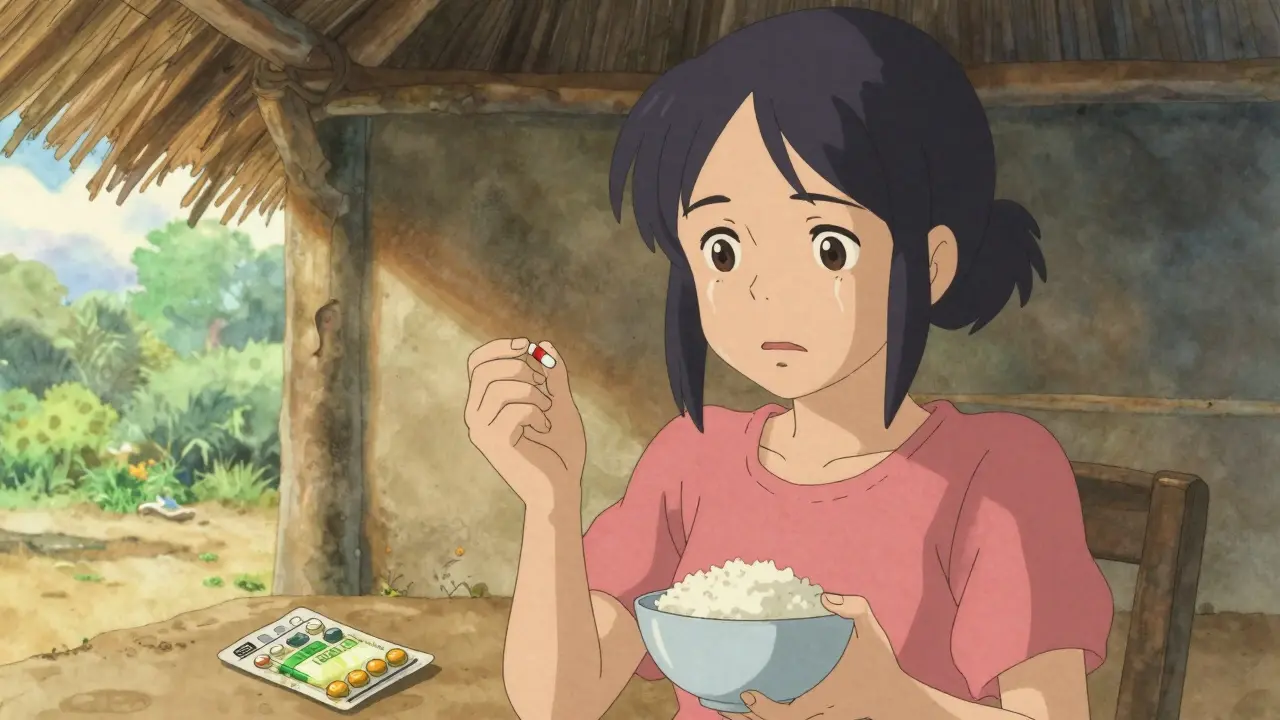
Imagine needing life-saving medicine but having to choose between feeding your family or buying your pills. For 2 billion people around the world, this isn’t a hypothetical-it’s daily reality. The solution isn’t magic. It’s not new technology. It’s generics: the same drugs, at a fraction of the price. Yet even these affordable options remain out of reach for millions.
What Are Generics, Really?
Generics are medicines that contain the exact same active ingredients as brand-name drugs. They work the same way. They’re just cheaper because they don’t carry the cost of research, marketing, or patents. In the U.S., 9 out of 10 prescriptions are filled with generics. In low-income countries? Only 1 in 20.Why the huge gap? It’s not that people don’t want them. It’s that the system makes them hard to get. In places like rural Malawi, Mozambique, or rural India, even a $2 generic antibiotic might cost three days’ wages. And that’s if it’s even in stock.
Why Generics Should Be Everywhere
The math is simple: generics can cut drug prices by 80% or more. That’s not a guess. It’s what the World Health Organization (WHO) has documented for decades. When HIV drugs dropped from $10,000 a year to under $100 thanks to generics, millions of lives were saved. Same with tuberculosis and malaria treatments.Without generics, health systems collapse under the weight of cost. In many low-income countries, medicines make up 20% to 60% of total health spending. And nearly 90% of people pay out of pocket. That means families sell land, pull kids out of school, or go into debt just to stay alive.
The WHO says 100 million people are pushed into extreme poverty every year because of medical bills. Generics could change that. But they’re not being used the way they should.
Why Aren’t Generics More Common in Poor Countries?
Here’s the uncomfortable truth: it’s not about quality. It’s about supply chains, politics, and profit.First, many countries still have high import taxes and tariffs on medicines. Even if a generic is made locally, adding 15% tax makes it unaffordable. The Geneva Network says abolishing these taxes alone could slash costs significantly.
Second, regulatory delays. In some places, getting a generic approved takes years. Meanwhile, people die waiting. In contrast, countries like India and Thailand streamlined approval processes and now produce and distribute generics faster than most high-income nations.
Third, there’s a deep mistrust. Many patients believe branded drugs are better-even when they’re not. A doctor in Kenya told me a patient once refused a generic antiretroviral because it was “too cheap.” The patient thought it was fake. That’s not ignorance. It’s the result of decades of poor-quality counterfeit drugs flooding markets.
And then there’s the supply chain. In rural areas, clinics often run out of medicine for weeks. Even if generics are available in the capital, they never make it to the village. No refrigeration. No trucks. No tracking systems. No one to manage inventory.
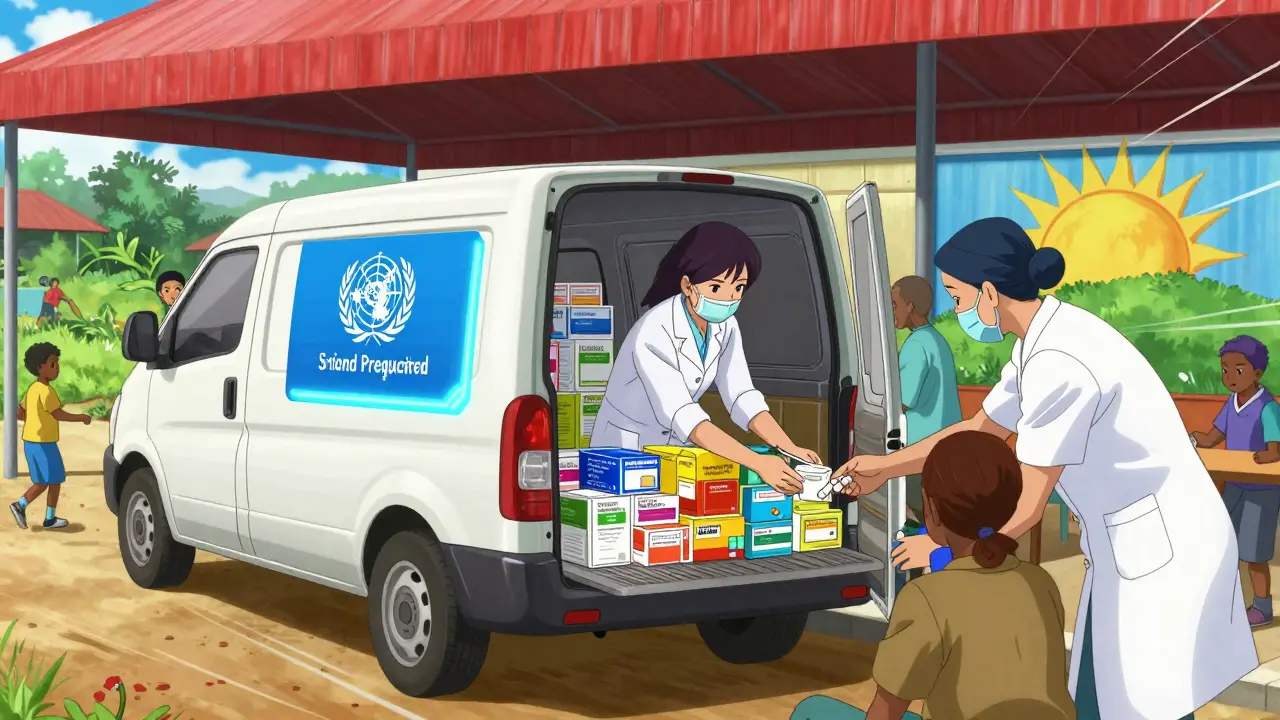
Who’s Making Generics-and Who’s Not Helping?
Five big generic manufacturers-Cipla, Hikma, Sun Pharma, Teva, and Viatris-produce 90% of the essential off-patent drugs needed in low-income countries. Sounds good, right?Not quite. A 2024 report from the Access to Medicine Foundation found these companies have access strategies for only 41 out of 102 priority drugs. And even then, few focus on the poorest patients who pay out of pocket. They’ll sell to governments or big NGOs, but not to the woman walking 10 kilometers to the clinic with no insurance.
Big pharma companies like Pfizer and Novartis do offer patient assistance programs. But they rarely say how many people actually get the drugs. Transparency is almost zero. You can’t fix a problem if you won’t measure it.
Meanwhile, clinical trials for new medicines happen almost entirely in rich countries. Only 43% of trials include participants from low-income nations. That means drugs are tested on populations that don’t reflect the people who need them most. A drug that works for a European patient might not work the same for someone in Uganda due to genetic differences, diet, or co-infections. But we don’t know because they weren’t studied.
What’s Working? Real Examples
There are bright spots. In Rwanda, the government partnered with local manufacturers and cut import taxes. Now, 90% of HIV drugs are generic-and available in nearly every health center. In Ethiopia, a national procurement system pools demand across regions, giving them bargaining power to drive prices down.Merck KGaA and Novartis are running trials in Africa for new antimalarial drugs through the PAMAfrica consortium. Gilead is testing long-acting HIV prevention shots in Uganda. These aren’t charity projects. They’re smart business. They build trust, create local capacity, and open markets.
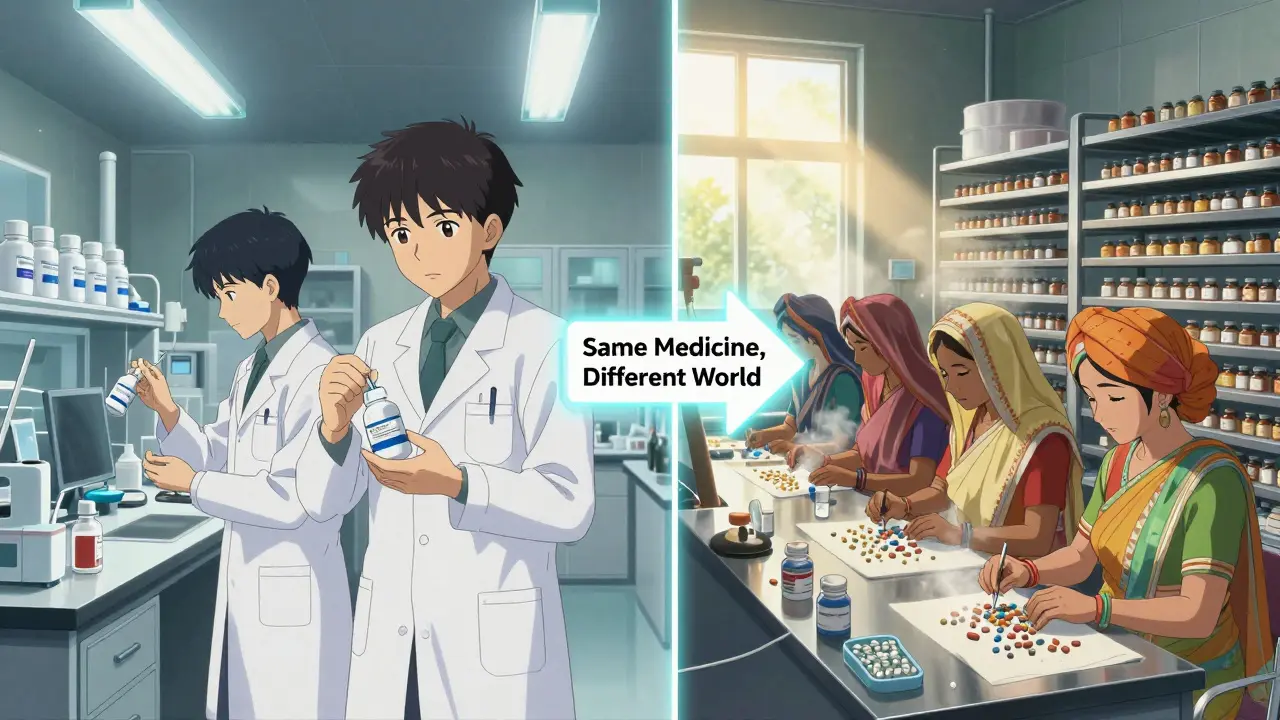
And then there’s India. It’s the pharmacy of the developing world. Indian generic makers produce 60% of all vaccines used globally and supply 40% of the U.S. generic market. They do it because they’ve built strong regulatory systems, invested in quality control, and focused on volume over profit margins.
The Real Barrier: Money, Not Medicine
The Abuja Declaration in 2001 asked African countries to spend at least 15% of their national budgets on health. In 2022, only 23 of 54 African nations met that target. Most spend less than 5%. That’s not a medicine problem. That’s a political one.When governments don’t fund public health, private markets fill the gap. And private markets don’t care about the poor. They care about profit. So even when generics exist, they’re sold in urban pharmacies, not rural clinics. And even then, they’re priced to make money-not to save lives.
Health systems need public investment. Not just for drugs, but for the whole chain: training pharmacists, fixing roads, powering refrigerators, training nurses, building labs to test quality. You can’t just hand out pills and expect people to get better.
What Needs to Change
Here’s what actually works:- Eliminate taxes and tariffs on medicines. Every country should make essential drugs duty-free.
- Speed up approval processes. If a drug is approved in the U.S., EU, or WHO-listed, it should be fast-tracked in low-income countries.
- Build local manufacturing. Countries like Kenya and Senegal are starting to make their own generics. That cuts costs and creates jobs.
- Use data to track supply. Seventy-six percent of health organizations in emerging markets are investing in big data. That’s progress. Use it to know where medicines are running out-and fix it before people die.
- Make affordability a core metric. Companies should report how many low-income patients actually get their drugs-not just how many they sell to donors.
There’s no excuse anymore. We know how to make generics work. We’ve done it for HIV. We can do it for diabetes, hypertension, asthma, and cancer. The tools are there. The science is proven. The only thing missing is the will.
What You Can Do
If you’re not in a low-income country, your voice still matters. Demand transparency from pharmaceutical companies. Support organizations pushing for fair pricing. Ask your government to fund global health initiatives that prioritize generics. And don’t believe the myth that cheap means unsafe. Quality generics are safe, effective, and life-saving.The next time you hear someone say, “We can’t afford to treat everyone,” remember: we can’t afford not to.
Are generic medicines safe for use in low-income countries?
Yes, when they’re produced under quality standards. Many generic manufacturers in India, South Africa, and Thailand follow WHO and FDA guidelines. WHO prequalifies generics for global use, meaning they’ve passed strict testing for safety, potency, and quality. The real issue isn’t safety-it’s counterfeit drugs and poor supply chains. That’s why governments need to enforce quality control and track shipments.
Why don’t low-income countries produce more of their own generics?
Many lack the infrastructure, funding, or technical expertise. Building a pharmaceutical factory requires clean rooms, trained chemists, regulatory oversight, and reliable power. Some countries, like Ethiopia and Kenya, are starting to do it with international support. But without investment in local capacity, they’ll keep depending on imports-often from countries with long shipping times and high tariffs.
Do generic drugs take longer to work than brand-name drugs?
No. Generics must meet the same bioequivalence standards as brand-name drugs. That means they enter the bloodstream at the same rate and in the same amount. If a brand-name antibiotic cures an infection in five days, the generic will too. The difference is in the price, not the performance.
Why do some people in low-income countries still prefer branded drugs?
Because they’ve been misled. Marketing, misinformation, and past experiences with fake drugs have created distrust. Some patients believe that if a drug is expensive, it must be better. Others trust foreign brands because they’ve seen them in hospitals or on TV. Education and community health workers are key to changing this mindset.
Can global health funding solve the generics access problem?
Funding helps, but it’s not enough. Donor money often buys drugs for short-term programs, not long-term systems. What’s needed is sustainable investment in local health infrastructure: trained staff, supply chains, and regulatory bodies. Without that, even free drugs won’t reach the people who need them.
How do patents affect generic access in poor countries?
Patents block generics from being made or sold until they expire. But under international rules (TRIPS Agreement), low-income countries can override patents in public health emergencies. Some countries use this to produce or import cheaper versions. But many lack the legal expertise or political will to do so. Pressure from big pharma and trade deals often discourage them.
What role do NGOs play in improving generic access?
NGOs fill critical gaps. Groups like Médecins Sans Frontières and the Global Fund buy and distribute generics at scale. They also advocate for policy changes, train local health workers, and help governments build supply chains. But they can’t replace government responsibility. Their role is to support, not substitute, public systems.
Generics aren’t a miracle. But they’re the closest thing we have to one in global health. They’re simple, proven, and scalable. The question isn’t whether we can afford to give people access to generics. It’s whether we can afford not to.
Sophia Daniels
December 26, 2025 AT 04:26Okay but let’s be real - if your country can’t even keep a fridge running, why are we acting like generics are the magic bullet? 🤦♀️ I’ve seen Indian-made pills in African clinics that looked like they survived a hurricane. Quality control isn’t a suggestion, it’s survival. And no, ‘WHO prequalified’ doesn’t mean ‘not contaminated.’ We’re romanticizing poverty medicine here. Stop celebrating bandaids while the house burns down.
Brittany Fuhs
December 27, 2025 AT 22:52It's ironic that the same people who demand 'affordable' medicine are the ones who refuse to accept that capitalism drives innovation. Without patents, there would be no breakthroughs to genericize in the first place. You can't have your cake and eat it too - especially when your idea of 'fair' is someone else's bankruptcy.
sakshi nagpal
December 29, 2025 AT 11:01As someone from India, I’ve seen both sides. We make 60% of the world’s vaccines - but we also know how bad the supply chain gets in Bihar or Jharkhand. It’s not that generics don’t work. It’s that the last mile is broken. We need local pharmacists trained, not just pills dumped at clinics. And yes - we need to stop treating patients like statistics.
Sandeep Jain
December 29, 2025 AT 18:25my cousin in delhi got his bp meds from a local generic maker - cost him 20 rupees a month. same drug in usa? $300. no joke. people here think generics are fake because they saw a fake one once. but real ones? they save lives. just need better info, not more ads.
roger dalomba
December 30, 2025 AT 23:02Wow. A 2000-word essay on how capitalism failed the poor. Shocking. Next up: ‘Why Water Is Wet.’
Nikki Brown
January 1, 2026 AT 18:42So… we’re just supposed to trust that some factory in Bangalore made your grandma’s heart pills? 😔 That’s not healthcare - that’s Russian roulette with a pill bottle. And you call that ‘affordable’? I’d rather pay more and know my medicine didn’t come from a warehouse with rats. 🙄
Peter sullen
January 2, 2026 AT 05:58It is imperative to underscore, with rigorous academic precision, that the structural inequities inherent in global pharmaceutical distribution are not merely logistical anomalies - they are systemic failures of governance, capital allocation, and epistemic hegemony. The absence of robust pharmacovigilance infrastructure in low-resource settings constitutes a non-linear risk multiplier for public health outcomes.
Steven Destiny
January 3, 2026 AT 05:36Enough with the ‘we can’t afford it’ nonsense. We can afford to kill people with greed - we do it every day. Stop pretending this is about money. It’s about who you decide is worth saving. Pick a side.
Fabio Raphael
January 5, 2026 AT 01:53I’ve worked in clinics in rural Zambia. People trust the white label pills more than the local generics - not because they’re dumb, but because they’ve been lied to for decades. It’s not about education. It’s about rebuilding trust. And that takes time. And consistency. And someone showing up every week.
Amy Lesleighter (Wales)
January 6, 2026 AT 01:10cheap doesn't mean bad. expensive doesn't mean better. my mom took generic insulin for 20 years. lived to 89. the drug didn't change. the price did. stop overthinking it.
Becky Baker
January 7, 2026 AT 22:25Why do we keep letting other countries make our medicine? America should be making its own generics. We’ve got the tech. We’ve got the brains. Stop outsourcing our health to India and China. It’s embarrassing.
Rajni Jain
January 9, 2026 AT 08:34my aunt in rural odisha got her asthma inhaler from a local pharmacy - 30 rupees. she cried because she thought it was too good to be true. she’s been breathing easy for 3 years now. we don’t need fancy solutions. we need people who care enough to deliver.
Natasha Sandra
January 9, 2026 AT 16:43Generics = life. 🌍💙 Stop acting like cheap = dangerous. My cousin in Kenya got HIV meds for $5/month. She’s alive. Her kid’s in school. That’s not charity - that’s justice. Let’s stop making it complicated. ❤️
Erwin Asilom
January 10, 2026 AT 21:58While the moral imperative is undeniable, the practical implementation requires a calibrated approach that balances scalability with regulatory fidelity. The absence of standardized traceability protocols undermines the very foundation of pharmaceutical integrity in decentralized systems.