

HRT Interaction Risk Checker
Select your HRT delivery method and the medication/supplement you are concerned about to see potential interactions.
Disclaimer: This tool is for educational purposes only. Always consult a healthcare provider before changing medications.Interaction Analysis
Starting a new medication is usually a straightforward process, but when you're on Hormone Replacement Therapy (HRT), the rules change. Whether you're managing hot flashes or overnight sweats, the hormones you're taking don't just affect your mood and temperature-they change how your liver processes other drugs. This means a medication that has worked perfectly for years might suddenly stop working, or a new supplement could make your HRT less effective.
The core issue is that HRT isn't a passive treatment. It actively interacts with your body's chemistry, specifically by influencing enzymes and proteins in the liver. If you're taking medications with a narrow therapeutic index-meaning a small change in the dose can lead to a big change in effect-the stakes are much higher. Understanding these shifts is the key to staying safe and ensuring your treatments actually work.
The Hidden Mechanics: How HRT Changes Your Blood Chemistry
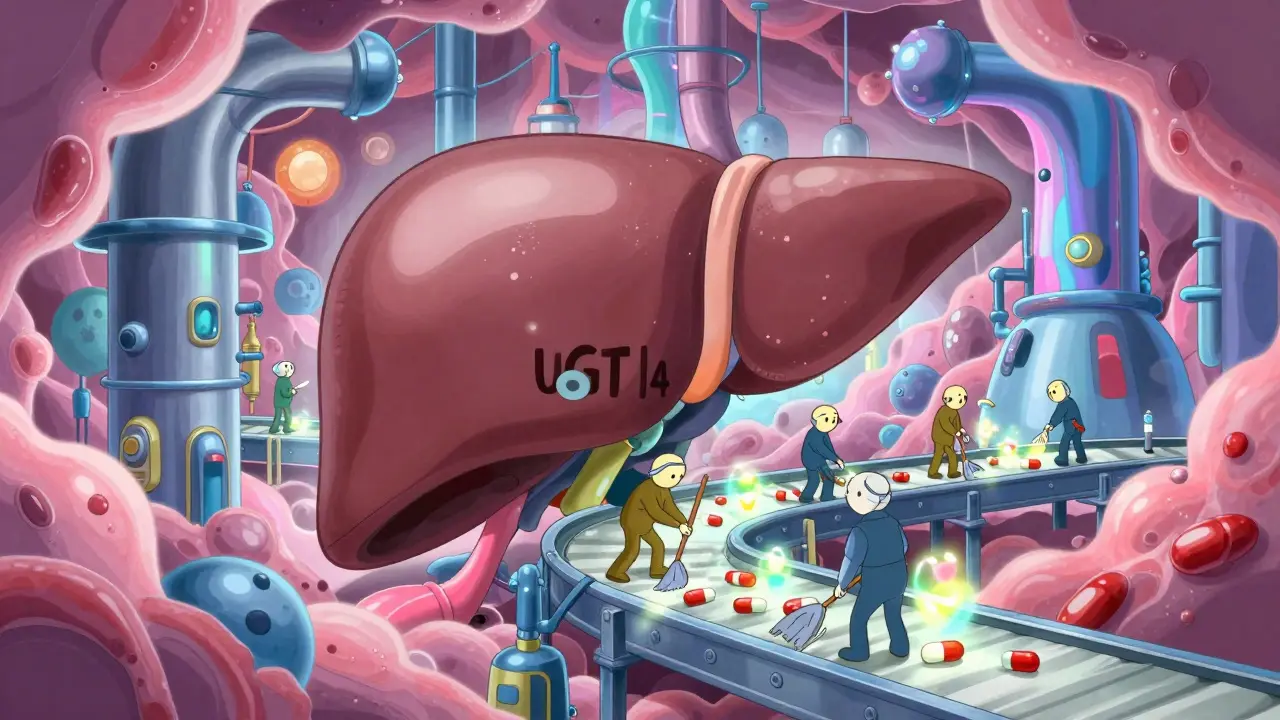
To understand why interactions happen, you have to look at the liver. Estradiol, a primary estrogen used in HRT, can increase the expression of an enzyme called UGT1A4. Think of this enzyme as a disposal crew in your liver; when there are more workers (enzymes), your body clears out certain medications much faster than usual. If a drug is cleared too quickly, the levels in your blood drop, and the medication fails.
There's another twist involving proteins. Female hormones increase the production of Corticosteroid-binding globulin (CBG). This protein acts like a sponge, soaking up Cortisol in the bloodstream. Because more cortisol is bound to these proteins, your total cortisol levels in the blood can almost double. This creates a diagnostic nightmare for doctors because a standard blood test might show high cortisol, but the "free" cortisol available for your body to use remains the same. If you're taking hydrocortisone for adrenal issues, your doctor can't rely on a basic cortisol test to see if your dose is correct.
Critical Interactions: Anticonvulsants and Mental Health Meds
One of the most significant warnings in recent years involves Lamotrigine, a medication often used for epilepsy and bipolar disorder. Because estrogens speed up the metabolism of this drug via the UGT1A4 enzyme, blood levels of lamotrigine can plummet.
This isn't just a theoretical risk. A real-world case reported by the Netherlands Pharmacovigilance Centre Lareb involved a woman treating depressive episodes with lamotrigine. After starting a combined HRT product (estradiol and dydrogesterone), she noticed her depressive symptoms worsening after five months. It turned out the HRT had lowered her lamotrigine levels significantly. Once she stopped the HRT, her medication levels stabilized. This is why it's vital to tell your doctor if you're starting or stopping HRT while on mood stabilizers or seizure medications.
Other medications that may see reduced efficacy or cause instability when paired with HRT include:
- Certain antibiotics and medications used to treat tuberculosis.
- Specific antiviral drugs used for HIV treatment.
- Anticoagulants (blood thinners), where small shifts in chemistry can increase bleeding or clotting risks.
Delivery Matters: Patches vs. Pills
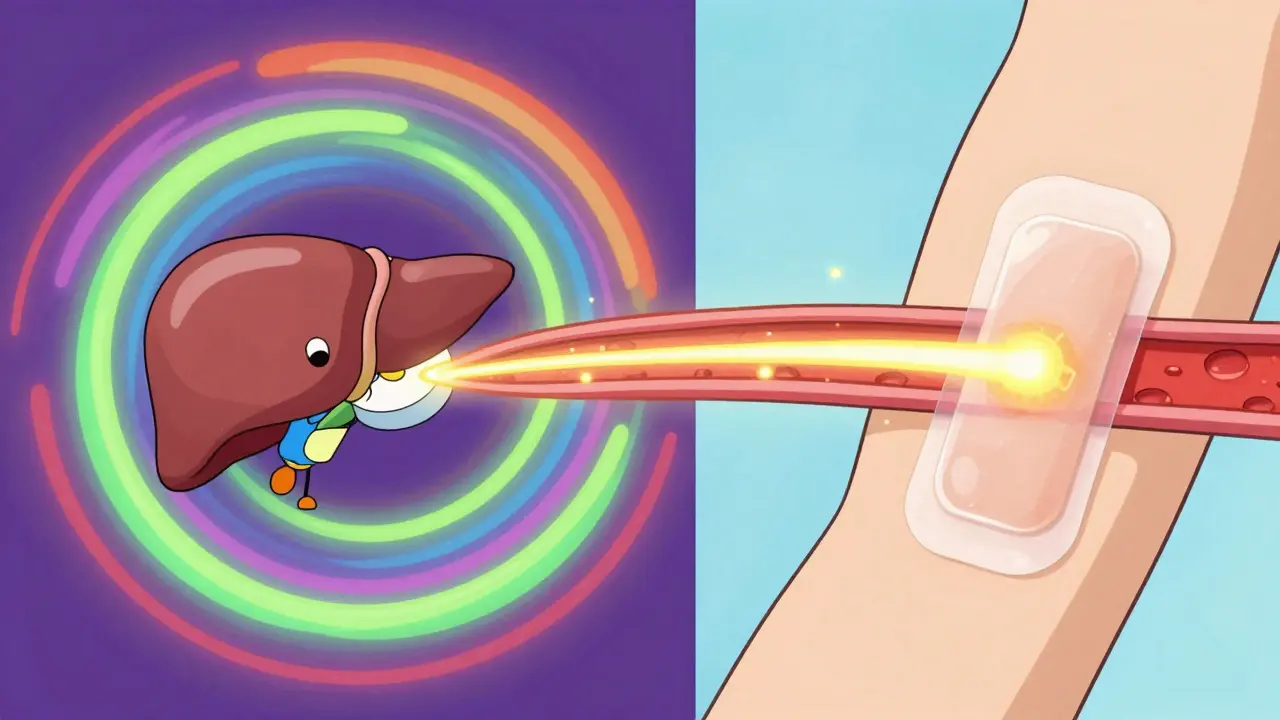
Not all HRT is created equal when it comes to interactions. The way the hormone enters your body changes the risk profile. Oral tablets and capsules must pass through the liver first-this is known as the "first-pass effect." This is where most of the enzyme induction and protein changes happen.
Transdermal delivery systems, such as skin patches or gels, bypass the digestive tract and the first-pass metabolism of the liver. Because the hormones enter the bloodstream directly through the skin, they are generally less likely to interfere with other medications. For example, the NHS notes that skin patches are less affected by St. John's wort, a herbal supplement that often makes oral HRT less effective by speeding up its breakdown.
| Delivery Method | Primary Interaction Route | Risk Level | Common Examples |
|---|---|---|---|
| Oral (Tablets/Capsules) | Hepatic (Liver) First-Pass | Higher | Combination pills, capsules |
| Transdermal (Patches/Gels) | Direct Systemic Absorption | Lower | Estrogen patches, skin gels |
| Vaginal/Local | Localized Absorption | Very Low | Estrogen creams, rings |
The Role of Supplements and Natural Remedies
Many people assume that "natural" means "safe," but herbal supplements can be just as reactive as prescription drugs. St. John's wort is a notorious offender; it can trigger the liver to deactivate HRT hormones faster, effectively neutralizing your treatment. If you find that your menopausal symptoms are returning despite taking your medication, your evening tea or "natural mood booster" might be the culprit.
Then there is Resveratrol. Some research suggests it has a chemical structure similar to synthetic estrogens. While the evidence is less robust than for prescription drugs, there is a potential for it to mimic or interfere with the way estrogen works in your body. Similarly, rosemary has been noted in some research to potentially enhance the rate at which the liver deactivates estrogen, though this is considered a weaker interaction.
High-Risk Scenarios and Safety Protocols
There are certain combinations where a "wait and see" approach is dangerous. If you are taking Hydrocortisone and add testosterone to your regimen, you risk significant water retention. Watch for swelling in your hands, feet, or ankles, as this often signals a need for a dose adjustment.
Additionally, the timing of HRT around surgery is critical. Because combined estrogen and progestin therapy can increase the risk of blood clots in the legs and lungs, medical guidelines generally suggest stopping these hormones 4 to 6 weeks before a planned surgery or a period of prolonged bed rest. This is especially urgent if you have other risk factors like high blood pressure, diabetes, or a history of smoking.
You should seek immediate medical attention if you experience any of the following while on HRT, as they could indicate a serious cardiovascular event triggered by a drug interaction or the therapy itself:
- A sudden, severe headache.
- Unexpected, severe vomiting.
- Sudden loss of vision or difficulty speaking.
- Pain or swelling in one leg (potential blood clot).
Practical Steps for Managing Your Meds
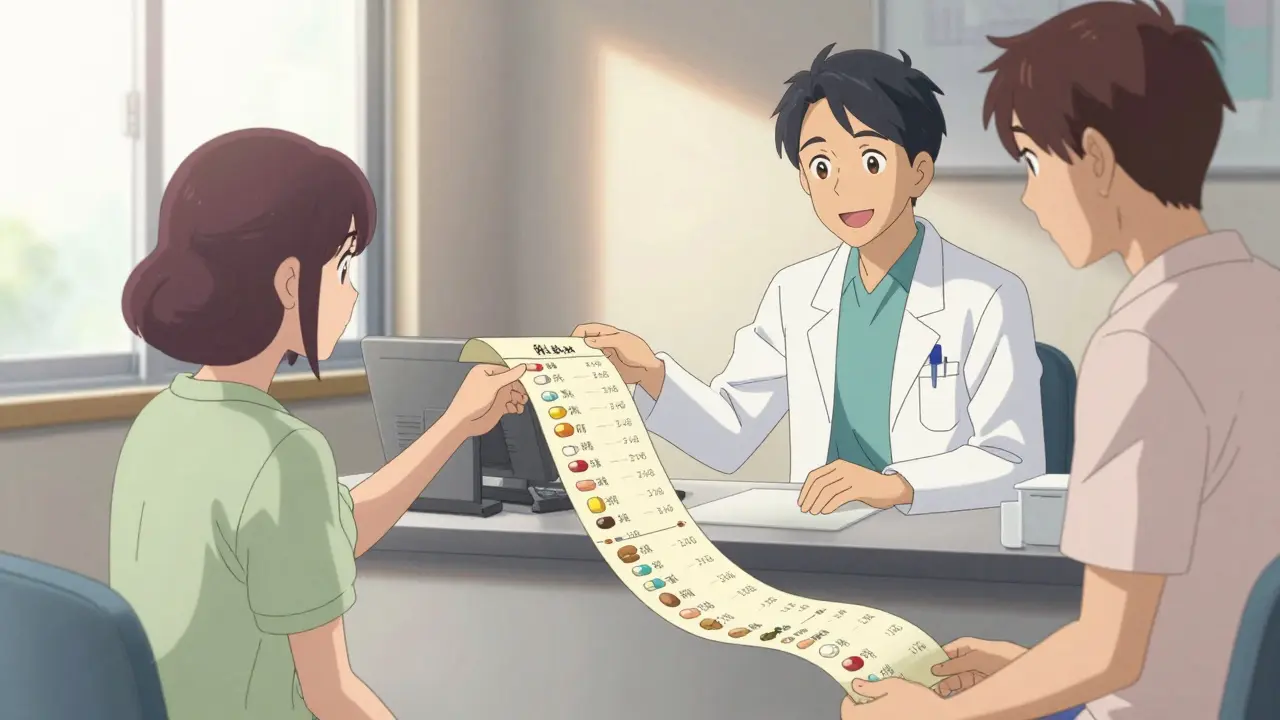
Managing your health doesn't have to feel like a chemistry experiment. The best way to avoid a dangerous interaction is through a comprehensive medication list. This shouldn't just be the prescriptions your GP knows about, but everything: vitamins, over-the-counter pain relief, and herbal tinctures.
If you are starting HRT, ask your doctor specifically: "Will this affect the blood levels of my other medications?" If you are on a medication with a narrow therapeutic window (like certain heart meds or anticonvulsants), ask if you need a baseline blood test before starting and a follow-up test a few weeks after the first dose. This allows your doctor to see if the HRT is "pushing" the other drug out of your system too quickly.
Can I take herbal supplements with HRT?
It depends on the supplement. St. John's wort is known to reduce the effectiveness of HRT tablets and capsules. Resveratrol and rosemary may also interact with estrogen levels. Always check with a pharmacist before adding a supplement to your routine.
Why are patches considered safer regarding drug interactions?
Patches are absorbed through the skin and go directly into the bloodstream, bypassing the liver's first-pass metabolism. Since many drug interactions happen because the liver is processing two substances at once, bypassing this step reduces the likelihood of interference.
Does HRT affect how I take my blood pressure or diabetes meds?
While not as direct as the lamotrigine interaction, HRT can influence risk factors like cholesterol and blood pressure. More importantly, if you have diabetes or high blood pressure, the risk of blood clots increases when using combined HRT, requiring closer monitoring and potentially stopping the meds before surgery.
What should I do if I suspect my medication isn't working since starting HRT?
Do not stop your medications or change your dose without consulting your doctor. Instead, request a blood test to check the current levels of the medication in your system. This can confirm if the HRT is causing the drug to be metabolized too quickly.
Will estrogen-only HRT have the same interactions as combined HRT?
Estrogen is often the primary driver of most documented metabolic interactions, including the effect on the UGT1A4 enzyme. Therefore, estrogen-only and combined therapies often share similar interaction profiles with anticonvulsants and other liver-metabolized drugs.
Goodwin Colangelo
April 4, 2026 AT 23:23Switching to patches is honestly a game changer for anyone worried about liver metabolism. It just makes sense to bypass that first-pass effect whenever possible to keep your other meds stable.
The Charlotte Moms Blog
April 5, 2026 AT 09:23Typical... they barely mention the long-term systemic impact!!! This is just a surface-level summary... totally lacking in depth regarding the hormonal cascades!!!
simran kaur
April 6, 2026 AT 23:10It is quite amusing how the medical establishment only admits to these interactions when a few case studies from the Netherlands leak out. One must wonder what other 'minor' shifts in blood chemistry are being ignored to keep the pharmaceutical machinery humming along smoothly for the masses.
Brian Shiroma
April 7, 2026 AT 18:43Oh sure, because doctors always remember to check for drug interactions. I'm sure your GP is just thrilled to spend an extra ten minutes actually reading a chart.
Jenna Carpenter
April 8, 2026 AT 21:18You guys really need to look into holistc healng. some of these chemists just want to scare u away from natural ways of balancing the body.
Divine Manna
April 8, 2026 AT 22:02The failure to acknowledge the ontological shift in a patient's biological identity upon initiating hormone therapy is a glaring omission here. One does not simply 'adjust a dose'; one alters the very chemical substrate of their existence. It is fundamentally naive to treat this as a mere pharmacy logistical issue when it is, in fact, a transformation of the self via exogenous endocrine modulation.
HARSH GUSANI
April 10, 2026 AT 10:43Why you follow Western advice? 🇮🇳 Our Ayurveda knows better than these patches! 🚩 Stop trusting these fake chemicals! 🇮🇳
Sakshi Mahant
April 11, 2026 AT 16:32It is very interesting to see how different medical systems approach this. In my experience, a balance between modern medicine and traditional wisdom often leads to the best outcome, provided there is mutual respect between the practitioner and the patient.
sophia alex
April 11, 2026 AT 21:42Ugh, the absolute audacity of some people to suggest that basic herbal tea is the same as a clinical prescription! 🙄 Like, please, let's stick to the actual science and stop playing pretend with 'natural' cures! 💅
Hudson Nascimento Santos
April 12, 2026 AT 17:10The dichotomy between the oral route and transdermal absorption is a perfect metaphor for how we perceive truth: some of it must be digested and processed through a filter, while other truths enter us directly and unmistakably.
Rachelle Z
April 14, 2026 AT 05:34Wow... just wow!!! Imagine thinking that a tiny patch solves everything... so cute!!! 🙄✨
Branden Prunica
April 14, 2026 AT 15:01I literally cannot believe the drama of my last doctor's visit over this! He acted like I was mixing chemicals for a bomb just because I mentioned a supplement! The sheer panic in the room was honestly a cinematic experience!
Ace Kalagui
April 16, 2026 AT 07:30I really think it's so important for everyone to feel supported during this transition because menopause is already such a whirlwind of emotion and physical change, and when you add the stress of worrying about whether your blood pressure meds are still working, it can just feel like too much for one person to handle alone, so please reach out to your community and keep a detailed log for your doctors to make things easier for everyone involved in your care team.
Beth LeCours
April 17, 2026 AT 04:55Too long.
angel sharma
April 18, 2026 AT 14:21Keep pushing forward everyone because managing your health is the ultimate victory and even though the chemistry seems complicated just remember that every single step you take to educate yourself is a massive win for your future self and you have the strength to navigate these medical complexities with total confidence and energy so keep that spirit high and keep asking the hard questions until you get the answers you deserve for your well-being!