

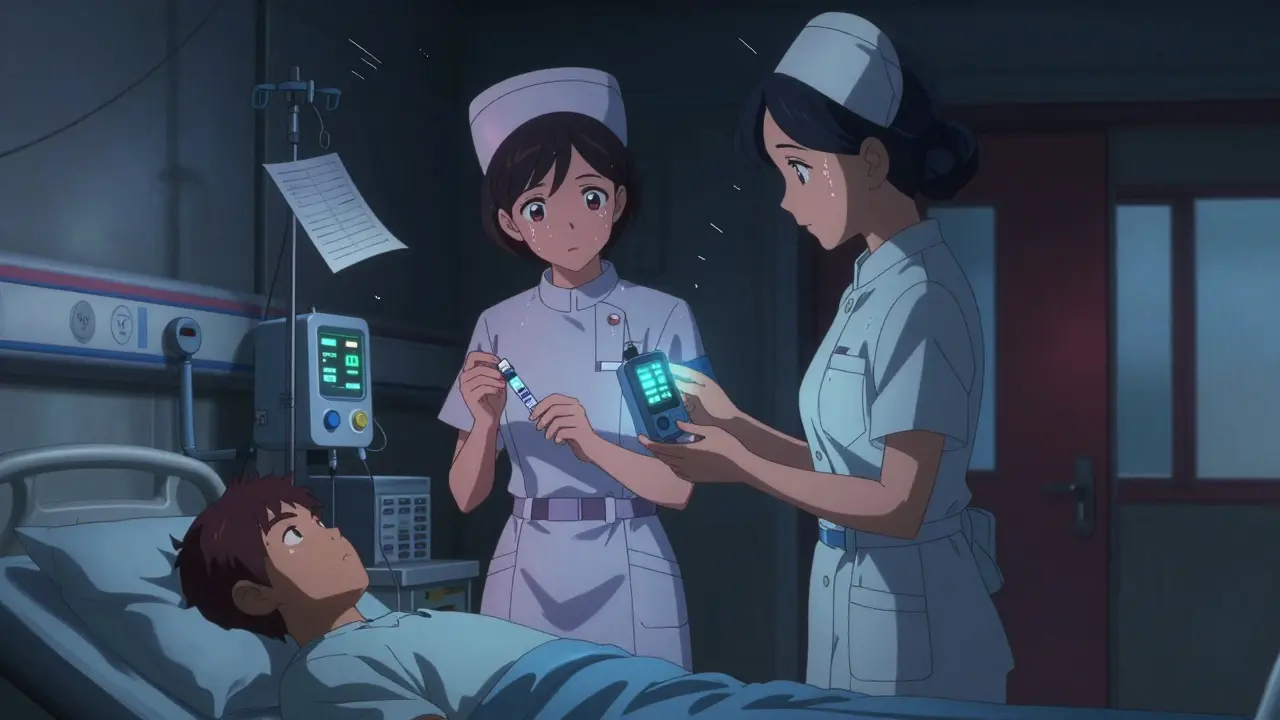
One wrong dose of insulin. One misprogrammed IV pump. One missed check. These aren’t hypotheticals-they’re real events that happen in hospitals, clinics, and nursing homes every day. And when they do, the results can be fatal. That’s why certain medications aren’t just handled with care-they’re locked down with extra verification procedures that demand two trained professionals to confirm every step before it reaches a patient.
What Makes a Medication High-Risk?
Not all drugs are created equal when it comes to danger. A high-risk medication isn’t defined by how expensive it is or how new it is. It’s defined by one thing: what happens if you get it wrong. Even a small mistake-like giving 10 units instead of 1, or hitting the wrong IV line-can lead to cardiac arrest, coma, or death. The Institute for Safe Medication Practices (ISMP) calls these high-alert medications, and they’re the ones that trigger mandatory double checks in most healthcare systems. These aren’t random picks. They’re based on decades of error reports, patient harm data, and clinical outcomes. For example, insulin is one of the most common drugs involved in medication errors. Why? Because it’s used everywhere-from diabetic patients on the ward to critically ill patients in ICU-and even a 10% dosing error can send blood sugar crashing. Heparin, a blood thinner, is another. Too much? Internal bleeding. Too little? A deadly clot. And then there’s chemotherapy. One wrong concentration, one missed expiration date, one mislabeled bag-and a patient could be poisoned.Which Medications Need a Double Check?
Here’s the short list of medications that almost always require two people to verify before administration:- Insulin (all types, all routes)-especially concentrated forms like U-500 or IV infusions
- IV opioids (morphine, fentanyl, hydromorphone)-especially when given via epidural or intrathecal routes
- IV heparin (both standard and low molecular weight forms)
- Chemotherapy agents (all antineoplastic drugs, including those prepared in IV bags or syringes)
- Potassium chloride concentrate-a single undiluted vial can kill
- Cardiovascular drugs like IV digoxin, amiodarone, and sodium nitroprusside
- Total parenteral nutrition (TPN) and lipid emulsions
- Neuromuscular blocking agents (e.g., succinylcholine, rocuronium)
How a Double Check Actually Works
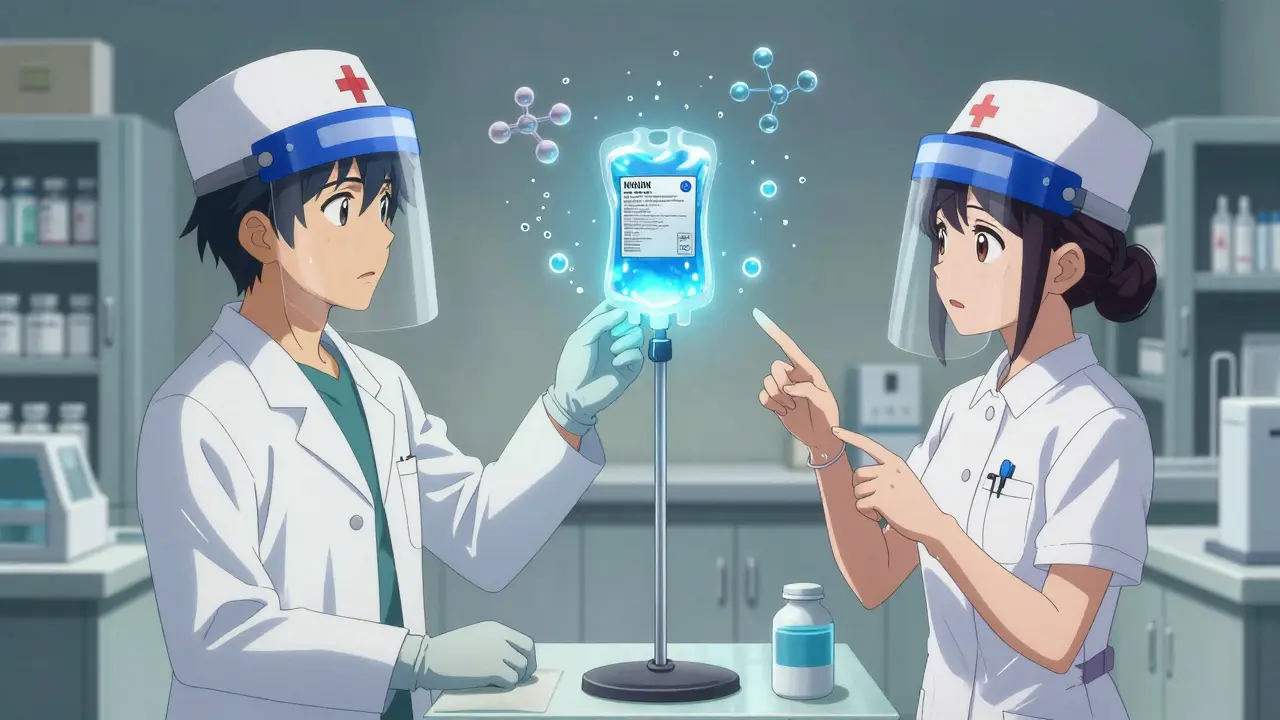
A double check isn’t just two people looking at the same label. It’s a structured, independent process designed to catch mistakes that one person might miss. Here’s the real procedure:- The first person prepares the medication and checks all details: patient name, drug name, dose, route, time, expiration, and appearance.
- The second person-completely separate, no peeking-goes through the same checklist independently. They don’t just nod along. They recalculate doses, verify concentrations, check syringe labels, and confirm the right IV line.
- They both verify the Nine Rights: right patient, right drug, right dose, right route, right time, right documentation, right reason, right response, and right to refuse.
- Both sign the Medication Administration Record (MAR) in real time.
Why This Isn’t Just Red Tape
Some staff see double checks as slow, annoying, or outdated. Especially when they’re rushed, understaffed, or working overtime. But here’s the truth: these checks have saved lives. In one 2021 study, a hospital saw a 40% drop in insulin dosing errors after implementing mandatory double checks for all IV insulin. Another hospital cut heparin overdoses by 65% after requiring two people to verify concentrations before hanging the bag. These aren’t small wins. They’re preventable deaths avoided. But here’s the catch: double checks only work if they’re done right. If the second person is distracted, tired, or just going through the motions, the system fails. A 2022 ISMP survey found that 68% of nurses admitted skipping double checks during busy shifts. The top reason? No second person available.The Growing Role of Technology
Manual double checks aren’t perfect. They rely on human attention, which fades under pressure. That’s why hospitals are turning to technology-smartly. Barcode scanning at the bedside is now standard in most major hospitals. Before giving any medication, a nurse scans the patient’s wristband and the drug’s barcode. If the system says “match,” it’s a green light. If it says “mismatch,” the system stops everything. This catches 90% of the common errors: wrong patient, wrong drug, wrong dose. But technology can’t catch everything. It can’t tell if a vial looks cloudy or if the concentration was mixed wrong. It can’t detect if a pump was programmed incorrectly. That’s where human verification still matters. The smartest hospitals now use a hybrid model:- Use barcode scanning for routine meds
- Keep manual double checks for high-risk drugs only
- Use smart infusion pumps with built-in dose error reduction software
- Automate documentation so staff aren’t buried in paperwork
What’s Changing in 2026?
The rules are tightening. The Joint Commission now requires every facility to have a written, evidence-based list of high-alert medications tailored to their own patient population. A hospital that rarely uses chemotherapy doesn’t need to double-check every chemo drug. But if they give insulin to 30 patients a day, they need a solid process for it. The big shift? Less is more. Instead of checking everything, experts now say: check the right things. Focus on the medications that cause the most harm. Focus on the moments when errors are most likely-like when a drug is being prepared, or when a pump is being programmed. Training is also changing. New staff aren’t just told to do double checks-they’re trained on why they matter. They learn how to spot subtle signs of error: a vial that doesn’t look right, a dose that seems too high, a patient who doesn’t match the diagnosis.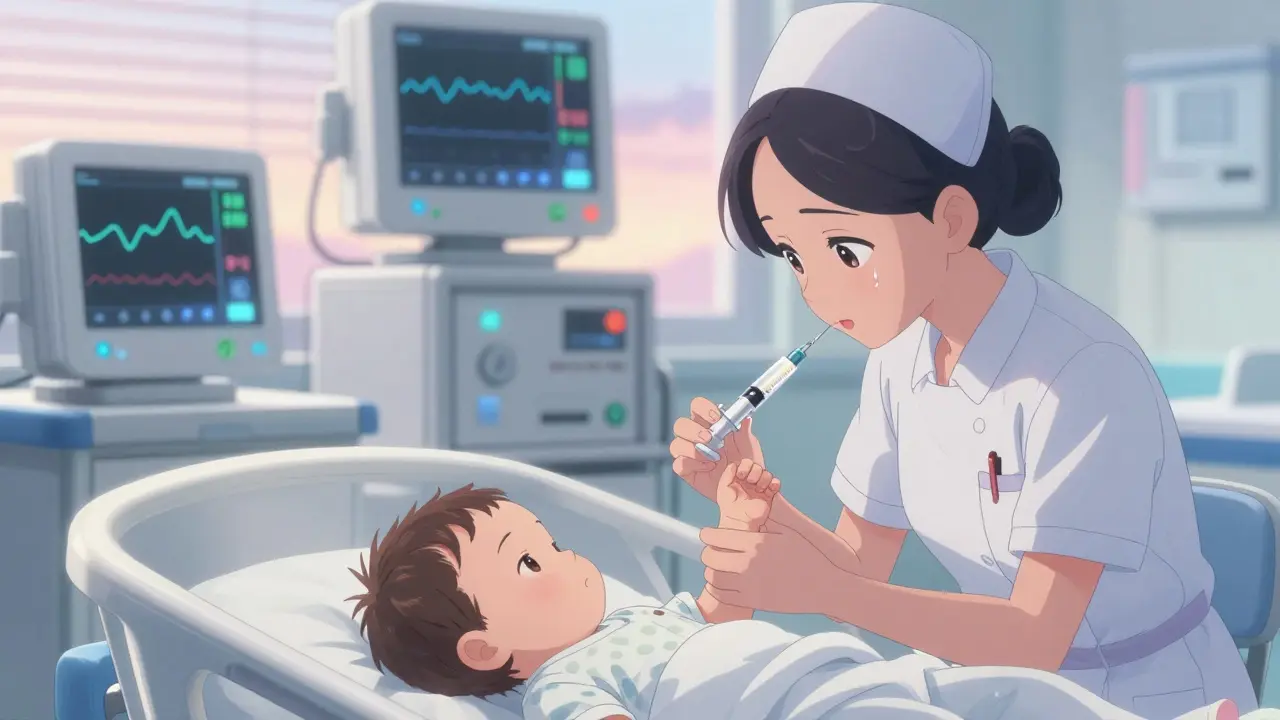
What Happens When the System Fails?
When a double check fails, it’s rarely because one person made a mistake. It’s because the system was broken. - Too many checks, too little time → staff burnout - No second person available → checks skipped - Poor training → staff don’t know what to look for - Inconsistent documentation → no audit trail - Technology that doesn’t integrate → more work, not less The goal isn’t to make things harder. It’s to make them safer.What You Can Do
If you’re a patient or family member: ask. If you’re being given insulin, heparin, or chemotherapy, ask: “Will two people check this before it’s given?” Don’t be shy. This isn’t distrust-it’s due diligence. If you’re a healthcare worker: speak up. If you’re asked to do a double check and no one’s available, say so. If you see someone rushing through a check, gently remind them. Safety isn’t a policy-it’s a culture. If you’re a manager: invest in the right tools. Don’t just add more checks. Fix the bottlenecks. Hire enough staff. Train properly. Use technology to reduce, not replace, human judgment.Final Thought
Medication errors aren’t caused by bad people. They’re caused by complex systems under pressure. High-risk medications demand more than good intentions. They demand structure, discipline, and accountability. The double check isn’t about suspicion. It’s about respect-for the patient, for the profession, and for the fact that even the best of us can make a mistake. When done right, it’s one of the most powerful safety nets in healthcare.What medications require a double check in hospitals?
Medications that require double checks include IV insulin, IV opioids (like fentanyl or morphine), IV heparin, chemotherapy drugs, potassium chloride concentrate, TPN, neuromuscular blockers, and certain cardiovascular drugs like digoxin or amiodarone. Pediatric and neonatal units often require double checks for all cardiac medications.
Who can perform a double check?
Only qualified healthcare professionals can perform a double check: registered nurses, pharmacists, physicians, nurse practitioners, or physician assistants. Unlicensed staff, students, or aides are not permitted to serve as the second checker.
Is a double check always necessary?
No. Experts now recommend targeting double checks only to the highest-risk medications and situations. For routine drugs, barcode scanning and smart pumps are often more reliable. Blanket double-checking can lead to fatigue and false security.
What’s the difference between a double check and barcode scanning?
A double check is a manual process where two people independently verify the medication. Barcode scanning is a technology that electronically confirms the right patient, drug, dose, and route before administration. Barcode scanning catches more common errors, but human double checks are still needed for complex preparations like chemotherapy mixing or pump programming.
Why do nurses sometimes skip double checks?
The most common reasons are lack of time, staffing shortages, and high workload. A 2022 survey found 68% of nurses skipped required double checks during busy shifts, and 42% said they couldn’t find a second person available. This is a systemic issue-not a personal failure.
Are double checks required by law?
Yes. The Joint Commission mandates that healthcare organizations identify high-alert medications and implement processes to manage them safely. While they don’t specify every medication, facilities must have written policies in place, and failure to comply can result in loss of accreditation.
Marian Gilan
January 27, 2026 AT 05:05lol so now we need TWO people to check insulin? what’s next, a priest and a quantum physicist? i’ve seen nurses do this in 30 seconds while texting their boyfriend. they’re not checking-they’re just nodding like robots. this whole system’s a joke. someone’s gonna die because someone forgot to unplug the pump and no one cared enough to look. #conspiracy
Conor Murphy
January 27, 2026 AT 14:29Just wanted to say thank you for writing this. I work in pediatrics and I’ve seen what happens when a 0.1 mL error hits a 3kg baby. It’s not theoretical. I cried after my first near-miss with potassium. Double checks saved that kid. I know they’re slow, but they’re sacred. 🙏
Conor Flannelly
January 28, 2026 AT 09:26There’s a deeper truth here: we treat safety like a checklist instead of a mindset. The double-check isn’t about catching errors-it’s about creating a culture where no one feels rushed enough to skip it. Technology helps, but if the soul of the system is broken-no barcode will fix it. We need to stop punishing nurses for being tired and start asking why they’re so tired in the first place.
Patrick Merrell
January 28, 2026 AT 11:08They’re lying to you. They say double checks save lives-but they’re really just covering their own asses. If you’re not a nurse, you don’t know how many times you’re forced to sign off on something you didn’t even see. The real danger isn’t the meds-it’s the bureaucracy that makes you complicit. And don’t get me started on the VA’s ‘smart pumps’-they glitch more than my phone. 💀
Renia Pyles
January 28, 2026 AT 14:03Oh please. You think two people checking insulin stops errors? I worked at a hospital where the second checker was the guy who brought the coffee. He didn’t even know what he was looking at. This whole thing is performative safety. Real change? Hire more staff. Stop treating nurses like disposable widgets. But no-let’s keep making them do pointless rituals while the admins buy new chairs for the break room.
Rakesh Kakkad
January 29, 2026 AT 15:42Respected colleagues, I must respectfully assert that the implementation of dual verification protocols is not merely a procedural formality but a critical epistemological safeguard against systemic medical fallibility. In the Indian context, where resource constraints are acute, such measures must be calibrated with contextual fidelity, not imported wholesale from Western paradigms. The human factor remains irreplaceable, yet must be supported by infrastructural equity.
Nicholas Miter
January 29, 2026 AT 21:05Been a nurse for 18 years. Did double checks every time. Never skipped one. But I’ll be honest-I’ve seen people fake them. The system’s broken because we don’t give people time to breathe. I don’t care if it’s insulin or Tylenol-if you’re running on fumes, you’re not checking anything. Just say it. We need more hands. Not more paper.
Ashley Karanja
January 30, 2026 AT 15:04What’s fascinating here is the ontological tension between procedural compliance and cognitive load theory. The human brain operates under bounded rationality, and when subjected to high-stakes, high-frequency verification tasks without adequate restorative downtime, the cognitive architecture begins to degrade-leading to normalization of deviance. The fact that 68% of nurses report skipping checks isn’t negligence-it’s an adaptive response to a misaligned system. We need to redesign the workflow, not just retrain the worker. Smart pumps + targeted double-checks + just-in-time training + psychological safety = sustainable safety. It’s not about doing more-it’s about doing better. 🧠💉