

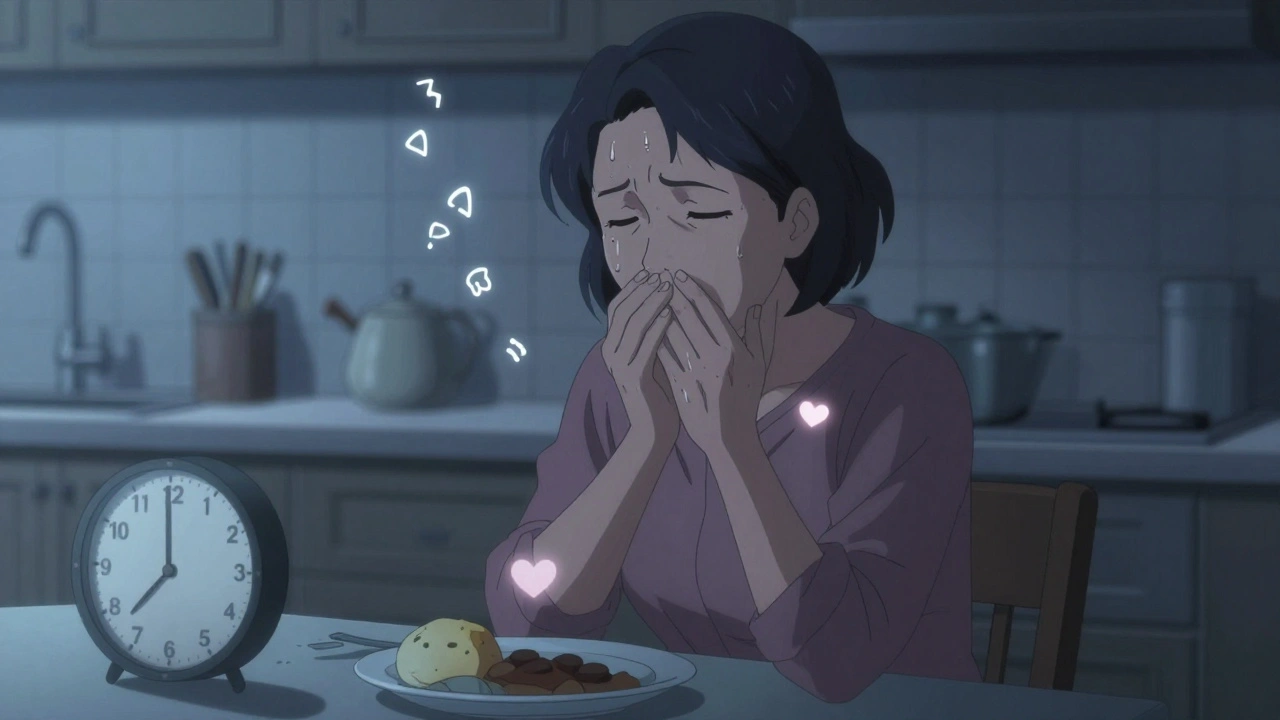
Heart attack isn’t always the dramatic chest-clutching moment you see in movies. For many people, especially women and older adults, it starts with subtle, confusing symptoms that feel like indigestion, fatigue, or anxiety. The truth? If you wait to see if it’s "just a bad feeling," you could lose precious minutes-and heart muscle. Every minute without blood flow kills about 1.5 million heart cells. But if you act fast, your chances of survival jump by up to 50%.
What a Heart Attack Actually Feels Like
The classic sign is pressure, tightness, or squeezing in the center of your chest that lasts more than a few minutes-or comes and goes. But that’s only part of the story. About 65% of people feel discomfort elsewhere too: in one or both arms, the back, neck, jaw, or even the stomach. Some describe it as a heavy weight on the chest. Others say it feels like heartburn that won’t go away.Shortness of breath is another major red flag. You might feel winded even when sitting still, or it might show up before any chest discomfort at all. In fact, nearly 40% of heart attack patients report breathing trouble as their main symptom. If you’re suddenly struggling to catch your breath and can’t explain why, don’t ignore it.
Other common signs include:
- Breaking out in a cold sweat-no reason, no exercise
- Nausea or vomiting, especially if it comes with dizziness
- Unusual, extreme tiredness that lasts for days
- Lightheadedness or feeling like you might pass out
- Rapid or irregular heartbeat that doesn’t settle down
Women Don’t Always Have Chest Pain-And That’s Dangerous
Men are more likely to have the textbook chest pain during a heart attack. But women? Only about 64% do. That’s why so many women delay help-they think it’s not "real" heart trouble.Women are far more likely to have symptoms like:
- Shortness of breath as the main symptom (58% more likely than men)
- Nausea or vomiting (47% more likely)
- Back or jaw pain without chest pressure
- Overwhelming anxiety or a sense of doom
- Unexplained fatigue that lasts for days
One woman in Sydney told her doctor her jaw hurt for three days. She was told it was TMJ. It was a heart attack. Another woman thought her stomach upset was food poisoning. She ended up in the ICU. These aren’t rare cases. Women’s heart attacks are misdiagnosed 50% more often than men’s-and their one-year death rate is 50% higher because of it.
Older Adults and Silent Heart Attacks
If you’re over 75, your heart attack might not hurt at all. About 30% of heart attacks in older adults show no chest pain. They might just feel unusually tired, confused, or short of breath. Some call these "silent" heart attacks because they’re so easy to miss.That’s why if you’re older and suddenly feel off-like you’ve lost your energy, can’t sleep, or feel dizzy-you shouldn’t brush it off. It could be your heart trying to tell you something.
Warning Signs Can Start Weeks Before
Heart attacks don’t always come out of nowhere. Research shows symptoms can begin as early as a month before the event. You might notice:- Unexplained weakness that won’t go away
- Palpitations-your heart skipping or racing for no reason
- Swelling in your legs or ankles
- Difficulty sleeping or waking up gasping for air
These aren’t normal aging. They’re signals your heart is under stress. If you’ve had these symptoms for more than a few days, talk to your doctor-even if you don’t think it’s serious.
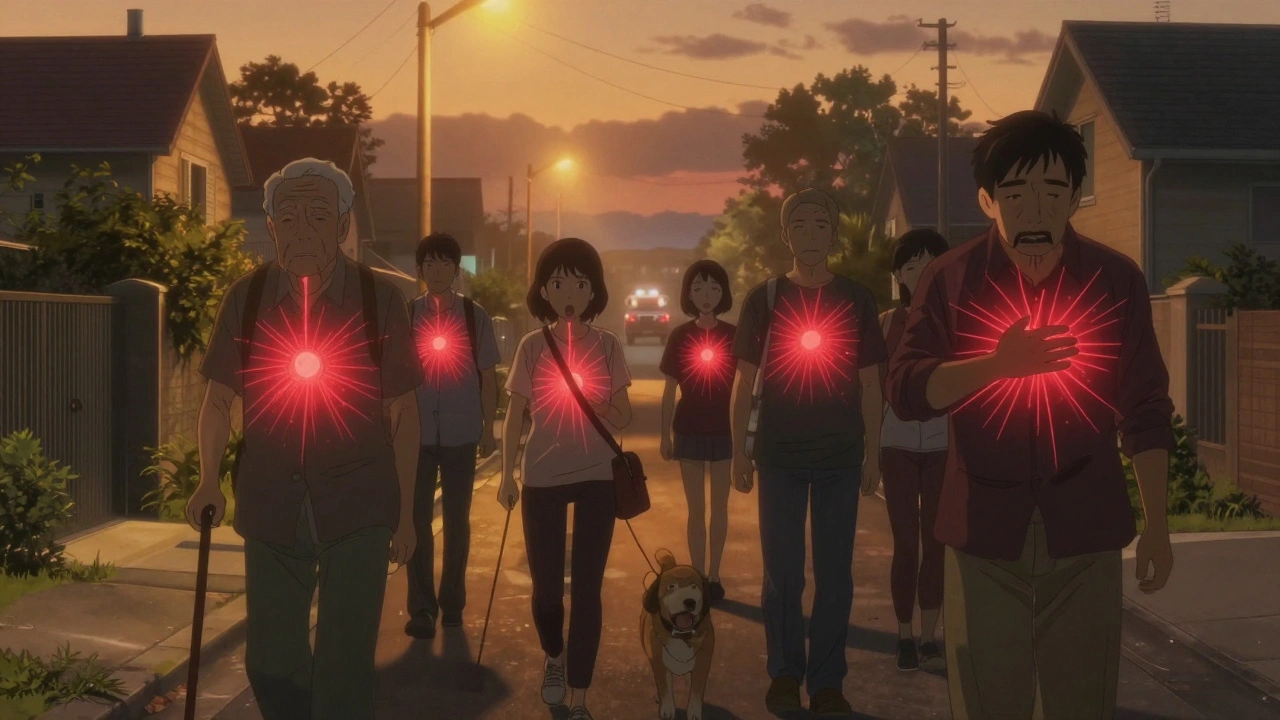
What to Do the Moment You Suspect a Heart Attack
Don’t wait. Don’t call a friend. Don’t drive yourself. Call emergency services right away.Here’s what to do:
- Call 000 (in Australia) or 911 (in the U.S.) immediately. Say, "I think I’m having a heart attack."
- While waiting for help, chew one 300mg aspirin (if you’re not allergic and your doctor hasn’t told you not to).
- Stay seated. Don’t exert yourself.
- Don’t try to drive yourself to the hospital. Ambulances can start treatment on the way-and they get you to the hospital 25% faster than private cars.
People who wait more than two hours to call for help have much worse outcomes. And the average person waits three hours. That’s too long. Your heart doesn’t wait. Neither should you.
Why People Wait-And Why That’s a Mistake
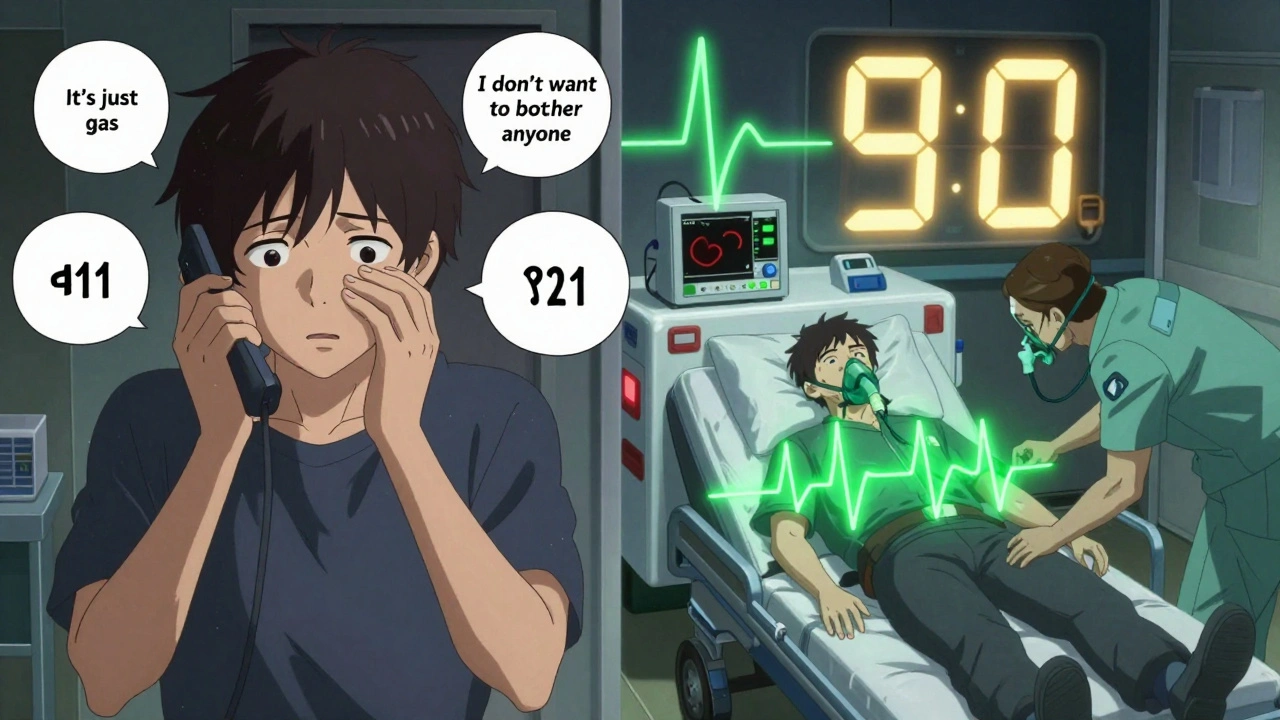
Many people delay because they’re scared of being wrong. They think, "What if it’s just gas?" or "I don’t want to make a fuss." But here’s the hard truth: 33% of heart attack victims wait over two hours because they’re afraid of embarrassment.And it’s not just denial. A lot of people don’t recognize the symptoms. One survey found that 52% of survivors delayed help because they weren’t sure what was happening. Women were more likely to wait, averaging 2.7 hours before calling-compared to 1.9 hours for men.
But here’s what survivors say: "My spouse made me call 000. I’d still be at home if they hadn’t insisted." In fact, 44% of people who survived credit someone else for pushing them to get help.
What Happens When You Get to the Hospital
Hospitals have standardized protocols now. When you arrive with suspected heart attack symptoms, they’ll immediately check your heart rhythm with an ECG, run blood tests for cardiac enzymes, and start treatment within minutes. Since 2021, the FDA has required all hospitals to follow these protocols-and they’ve cut treatment delays by 37%.If a blockage is found, doctors will either give clot-busting drugs or perform an emergency angioplasty to open the blocked artery. The goal? Get blood flowing again within 90 minutes of symptom onset. That’s the golden window.
Technology Is Changing the Game
New tools are helping catch heart attacks before they happen. In March 2023, the FDA approved the first AI-powered system-CardioLogics AI-that can predict a heart attack 30 minutes before symptoms start, with 92.7% accuracy, just by analyzing an ECG.More people are also using smartwatches with ECG features. About 38% of U.S. adults now own devices that can detect irregular heart rhythms like atrial fibrillation, which can lead to heart attacks. If your watch says your heart is acting up, don’t ignore it. Talk to your doctor.
What You Can Do Now
You don’t have to wait for a crisis to act. Here’s how to protect yourself and your loved ones:- Learn the symptoms-not just the ones you see on TV. Know what’s different for women and older adults.
- Talk to your family. Make sure everyone knows what to do if someone feels off.
- Keep aspirin in your medicine cabinet (if approved by your doctor).
- Consider a smartwatch with ECG if you’re at risk.
- Encourage your older parents to get checked if they’re unusually tired or short of breath.
Heart attacks aren’t just a "man’s problem." They’re a human problem. And the best defense isn’t medicine-it’s awareness.
Can you have a heart attack without chest pain?
Yes. About 30% of heart attacks in people over 75 have no chest pain at all. Women are also more likely to experience symptoms like shortness of breath, nausea, back or jaw pain, and extreme fatigue without classic chest pressure. These are still heart attacks-and they’re just as dangerous.
Is it safe to take aspirin during a suspected heart attack?
If you’re not allergic to aspirin and your doctor hasn’t told you to avoid it, chewing one 300mg aspirin while waiting for emergency help can help reduce damage. Don’t swallow it whole-chew it so it enters your bloodstream faster. If you’re unsure, wait for paramedics. Never give aspirin to someone who’s unconscious or having trouble breathing.
Should I drive myself to the hospital if I think I’m having a heart attack?
No. Ambulances can start treatment immediately-giving oxygen, monitoring your heart, and even administering medications before you reach the hospital. They also get you to the ER 25% faster than driving yourself. Plus, if your condition worsens on the way, paramedics can respond right away. Driving yourself delays care and puts you at greater risk.
Do heart attacks only happen to older people?
No. While risk increases with age, heart attacks in adults aged 25-44 have been rising by 2% each year since 2000. Stress, poor diet, lack of exercise, smoking, and genetics can cause heart attacks in younger people. Don’t assume you’re too young to be at risk.
What’s the difference between a heart attack and cardiac arrest?
A heart attack is a circulation problem-blood flow to the heart is blocked. Cardiac arrest is an electrical problem-the heart suddenly stops beating. A heart attack can lead to cardiac arrest, but they’re not the same. Cardiac arrest is immediately life-threatening and requires CPR and a defibrillator. If someone collapses, stops breathing, and doesn’t respond, start CPR and call 000 right away.
Can I prevent a heart attack?
You can’t eliminate the risk entirely, but you can reduce it significantly. Eat more vegetables, less processed food, move daily, don’t smoke, manage stress, and get regular checkups. If you have high blood pressure, high cholesterol, or diabetes, follow your doctor’s treatment plan. Prevention isn’t about perfection-it’s about consistent, smart choices.
What Happens After You Survive
Recovery doesn’t end when you leave the hospital. Most survivors need cardiac rehab-a program that includes monitored exercise, nutrition counseling, and emotional support. Studies show people who complete rehab reduce their risk of another heart attack by 25% and live longer.Community programs that teach CPR and heart attack awareness also make a difference. Places with strong public education programs see 28% higher survival rates for out-of-hospital cardiac arrests. That’s why knowing the signs-and knowing how to act-isn’t just personal. It’s community survival.
Heart attacks don’t care if you’re young or old, male or female. They don’t wait for convenient times. But awareness? That’s something you can control. Learn the signs. Talk to your family. Call 000 if something feels wrong. Your heart-and the people who love you-will thank you.
Ada Maklagina
December 5, 2025 AT 12:42My grandma ignored jaw pain for days thought it was a toothache. Turned out she had a silent heart attack. They didn’t catch it until she collapsed at bingo. Don’t be her.
Call 911. Always.
sean whitfield
December 6, 2025 AT 19:09They told us heart attacks were about chest pain. Then they told us it’s about gender. Now it’s about age. Next they’ll say it’s the aliens messing with our ECGs. The real danger? Trusting the system that sells you aspirin and calls it prevention.
William Chin
December 7, 2025 AT 05:34It is imperative that all individuals recognize the physiological indicators of myocardial infarction. Delayed intervention constitutes a severe breach of personal responsibility. The medical establishment has provided unequivocal guidelines; failure to adhere is tantamount to negligence.
Harry Nguyen
December 7, 2025 AT 08:18They say women have different symptoms. Yeah, because the medical industry needs more excuses to charge you $800 for an EKG. You want to live? Stop eating kale smoothies and start lifting weights. Real men don’t wait for symptoms. They die mid-bench press.
Katie Allan
December 8, 2025 AT 08:02This is exactly why we need community education. Not just facts, but conversations. Talk to your parents. Tell your friends. Normalize saying "I think something’s wrong" even if you feel silly. That one sentence could save a life. We’re all in this together.
Deborah Jacobs
December 9, 2025 AT 18:00I remember my aunt saying she felt like a ghost had sat on her chest. No pain. Just… gone. Like her soul had left before her body did. She didn’t tell anyone for two days. When she finally went in, they said she’d lost nearly half her left ventricle. She’s alive now, but she walks with a limp in her spirit. Don’t wait for your soul to whisper. Shout.
James Moore
December 11, 2025 AT 17:05Let me be perfectly clear: the modern medical-industrial complex has weaponized fear, rebranded it as "awareness," and sold it back to you in the form of smartwatches, aspirin packets, and overpriced cardiac rehab programs. The truth? The heart doesn’t care about your Apple Watch. It cares about your diet, your stress, your sleep, your loneliness. And yet, they want you to believe that a $300 device will save you from the consequences of living in a broken society. Wake up. The system doesn’t want you healthy-it wants you monitored.
Kylee Gregory
December 13, 2025 AT 15:07It’s interesting how we’ve turned something so biological into a checklist of symptoms. Maybe the real answer isn’t knowing every sign-but trusting your gut when something feels off. Not because the science says so, but because your body’s been talking to you all along. You just stopped listening.
Lucy Kavanagh
December 15, 2025 AT 02:10Did you know the FDA approved that AI system right after the big pharma lobbyists met with Congress? And the smartwatches? They’re only 92% accurate because the algorithm was trained on data from white men. So if you’re a Black woman over 60? The AI probably thinks you’re just tired. They’ve been doing this for decades. They want you to think you’re safe… while the real danger keeps growing.
Chris Brown
December 15, 2025 AT 18:27People who delay calling 911 are not just irresponsible-they are morally deficient. The notion that one might "not want to make a fuss" is a luxury of the entitled. Life is not a social media post. Your hesitation does not deserve empathy. It deserves condemnation.
Stephanie Fiero
December 16, 2025 AT 18:06ok so i read this whole thing and i just wanna say-your mom, your dad, your bff, your neighbor who’s always tired? tell them. right now. like, open text and type "hey i just read this and i think you need to know". it’s not dramatic. it’s love. and if they laugh? keep talking. i did. my dad thought i was being weird. he had a silent heart attack 3 weeks later. he’s alive. because i didn’t shut up. you can be the reason someone lives.