

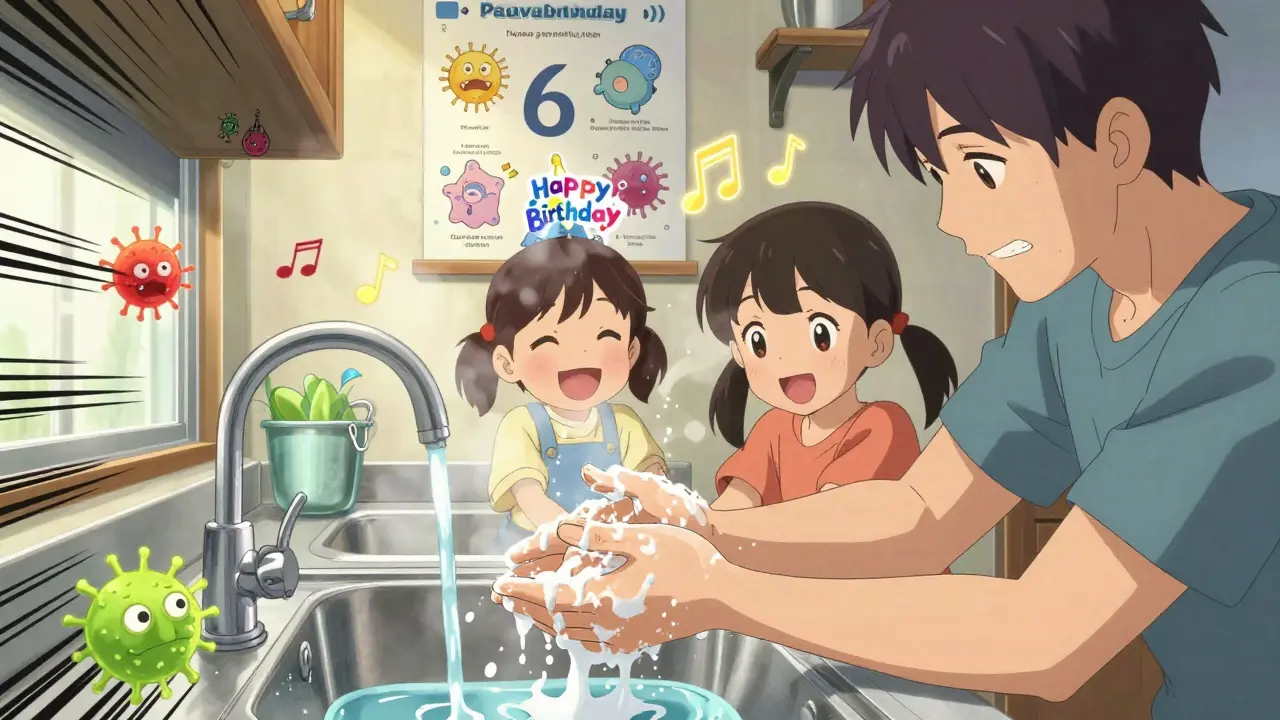
Every time you touch your face, pick up a doorknob, or handle groceries, you’re in contact with invisible germs. Most of them are harmless-but some aren’t. The simple act of washing your hands properly can stop colds, flu, stomach bugs, and even deadly infections before they spread through your home. It’s not rocket science, but most people do it wrong. And that’s why infection rates stay high-even in places with clean water and soap.
Why Hand Hygiene Works
Hand hygiene isn’t just about feeling clean. It’s about breaking chains of infection. Germs like norovirus, influenza, and SARS-CoV-2 spread through touch. One person sneezes into their hand, touches a light switch, and someone else touches it five minutes later-then rubs their nose. That’s how illness moves through households. The science behind this goes back to 1847, when Dr. Ignaz Semmelweis noticed that doctors who washed their hands after autopsies had far fewer patients dying from childbed fever. His findings were ignored at the time, but today, we know handwashing saves lives. The CDC estimates that proper hand hygiene reduces respiratory illnesses by 16-21% and gastrointestinal illnesses by 31% in homes. That’s not a guess-it’s from a national survey of over 30,000 households. And it’s cheap. For less than $1.27 per person per year-just the cost of soap and water-you can cut your family’s risk of sickness dramatically. Compare that to doctor visits, missed work, or hospital stays. This is the highest-return public health move you can make.Soap and Water vs. Hand Sanitizer: What Actually Works
Not all hand cleaning is the same. Many households treat hand sanitizer like a magic bullet, but it has limits. Soap and water is the gold standard. It physically removes dirt, grease, and germs. It’s especially critical for:- Norovirus (the stomach bug that spreads fast in homes)
- C. difficile spores (a dangerous bacteria that causes severe diarrhea)
- Visible dirt or grease on hands
- Your hands are visibly dirty or greasy
- The alcohol concentration is below 60%
- You don’t use enough (you need about 2.4-3 mL, or a quarter-sized dollop)
The 6-Step Technique: How to Wash Right
Washing your hands isn’t just about lathering up. It’s about covering every surface. A 2018 study in the American Journal of Infection Control found that people who followed the WHO’s 6-step technique reduced germs by 90% compared to those who just rubbed their hands together. Here’s the correct way:- Palm to palm
- Right palm over left dorsum (back of hand) and vice versa
- Palm to palm with fingers interlaced
- Backs of fingers to opposing palms with fingers interlocked
- Rotational rubbing of right thumb in left palm and vice versa
- Rotational rubbing of fingertips in opposite palm and vice versa
- Fingertips (missed in 68% of washes)
- Thumbs (missed in 57%)
- Between fingers (missed in 43%)
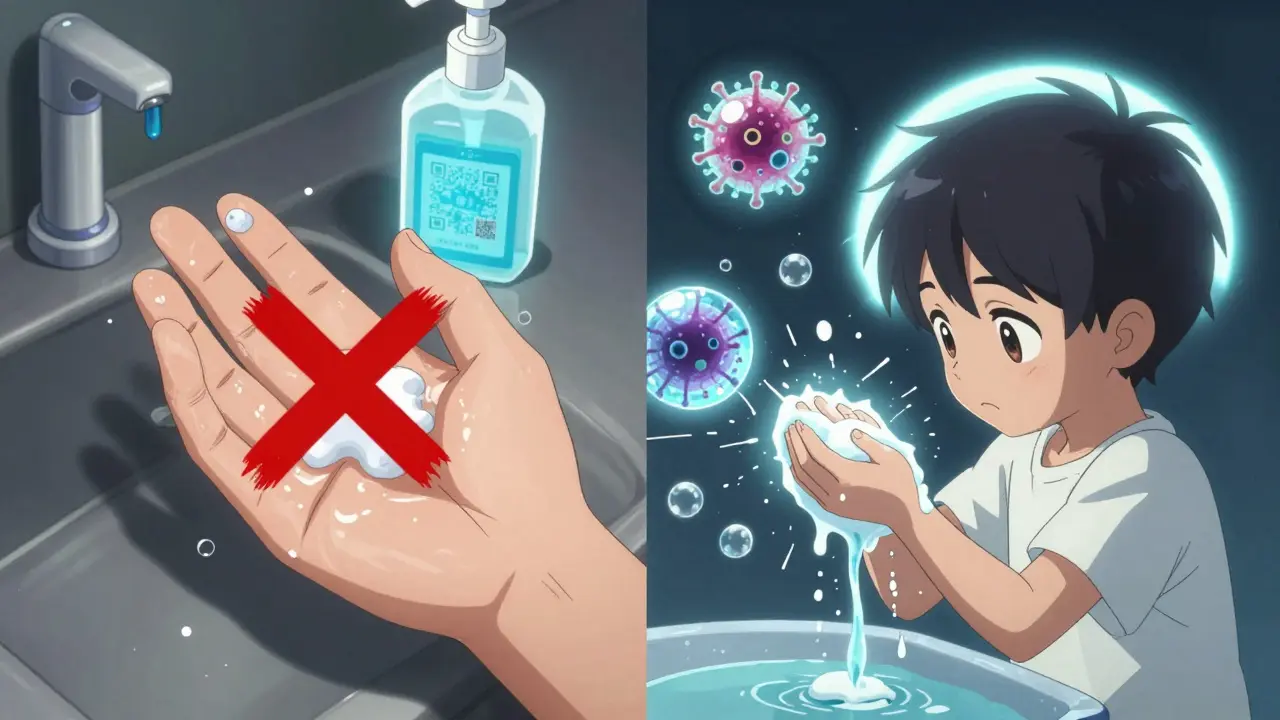
Common Mistakes at Home (And How to Fix Them)
Even when people try, they mess up. Here’s what goes wrong-and how to fix it: Mistake 1: Washing too fastKids average just 8.2 seconds. Adults aren’t much better. A 2021 study found that 73% of families don’t hit the 20-second mark. Solution? Use a timer. Apps like "Clean Hands Timer" or even a simple sand timer work. One mom on Amazon said her kids’ colds dropped from six per year to two after using a 20-second timer. Mistake 2: Drying with air dryers
Air dryers spread germs. A 2012 Mayo Clinic study found that paper towels reduce bacteria by 76% more than air dryers. Always use a single-use paper towel. If you don’t have one, let hands air-dry-but don’t touch anything until they’re dry. Mistake 3: Touching the faucet after washing
You just washed your hands… then turned the knob with your clean hands. 89% of households do this. The faucet is covered in germs from everyone else who used it. Solution: Use a paper towel to turn off the faucet, or install a foot-pedal faucet (cost: $45-$120). Mistake 4: Skipping handwashing at key moments
You don’t need to wash after every little thing-but there are five critical times:
- When you come home from outside
- Before preparing or eating food
- After using the bathroom
- After changing diapers or helping someone use the toilet
- After touching pets or pet food
Special Considerations: Kids, Skin, and Low-Resource Homes
Children don’t have the patience for 20 seconds. But you can train them. Visual posters with the 6-step technique (available in 24 languages from the Minnesota Department of Health) increase compliance from 28% to 63% in classrooms. Make it fun: let them pick out soap with their favorite cartoon character. Turn it into a game. Consistency matters more than perfection. Frequent washing can dry out skin. 28% of households report irritation. That’s especially true for healthcare workers who wash 20+ times a day. Use a moisturizer right after drying. A 2020 study showed this cuts dermatitis by 62%. In homes without reliable running water or soap, handwashing is still possible. The "tippy tap"-a simple, low-cost device made from a bottle hanging from a stick-lets you wash hands with just a few drops of water. It’s used in over 1.2 million households across 47 countries. You don’t need a fancy sink to be safe.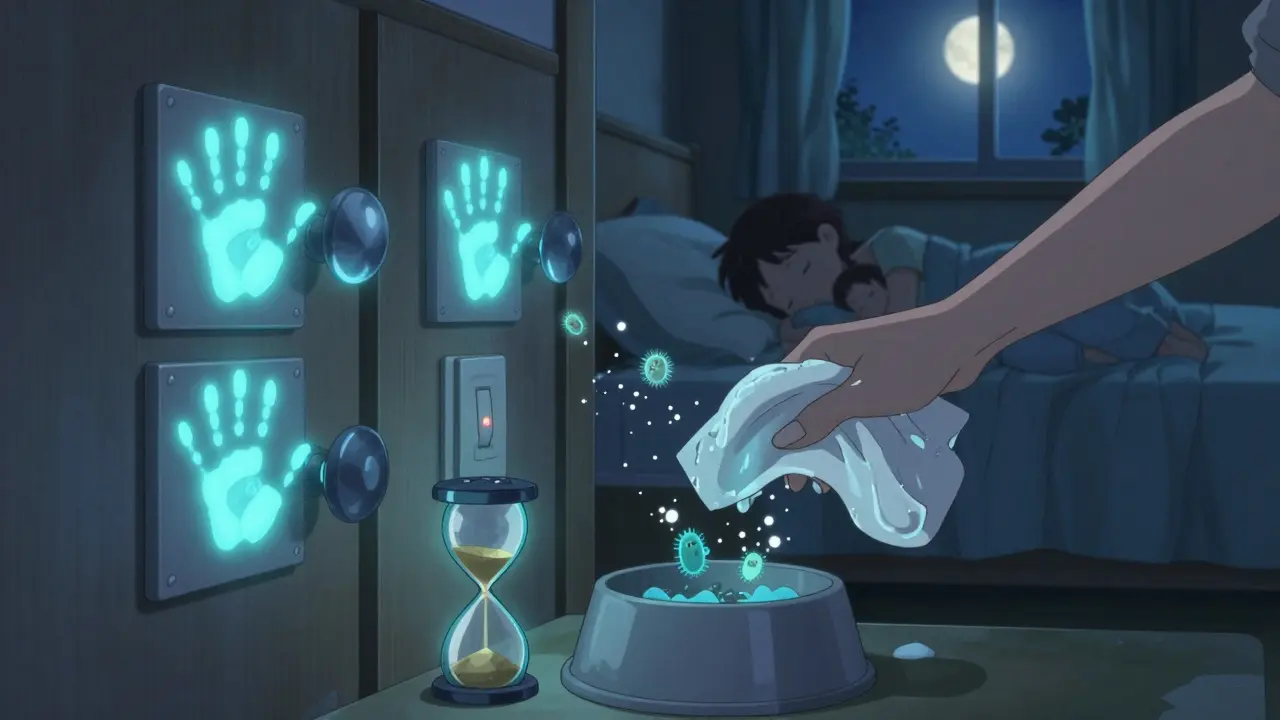
What’s Changing in 2026
The WHO updated its guidelines in May 2024 to better fit home use. They now say: "The 20-second rule applies to all ages-even children." No shortcuts. The CDC’s 2023 Household Infection Prevention Toolkit now includes QR codes that link to video demos. One video from Johns Hopkins has over 2.4 million views. You can watch it on your phone while waiting for soap to lather. Smart tech is entering homes too. Devices like GOJO’s PURELL SMART DISPENSING SYSTEM now track how often people wash and send reminders. A 2023 pilot study found it cut compliance gaps by 33% in families. The future? Habit stacking. The NIH is funding research to link handwashing to existing routines-like washing hands right after unlocking your front door, or before brushing your teeth. Early results show it works better than posters or reminders.Final Takeaway
Hand hygiene isn’t complicated. You don’t need special products. You don’t need to be perfect. Just do it right, at the right times, and long enough. Wash with soap and water for 20 seconds. Cover all surfaces. Dry with paper towels. Don’t touch dirty surfaces afterward. Use sanitizer only when soap isn’t available-and only if it’s 60%+ alcohol. Do this consistently for 21 days, and it becomes automatic. That’s how long it takes to form a habit, according to behavioral studies tracking 500 households. In a world full of expensive health solutions, handwashing is the one that actually works-and costs less than your morning coffee.Do I need hot water to wash my hands effectively?
No. Warm water (100-108°F) helps lather soap better, but cold water removes germs just as effectively. A 2017 study in mSphere found no significant difference in germ removal between cold and warm water. The key is soap, scrubbing time, and rinsing-not temperature. Using cold water also saves energy and reduces scald risk, especially for kids.
Can hand sanitizer replace handwashing?
Only if your hands aren’t visibly dirty. Sanitizer kills germs but doesn’t remove dirt, grease, or chemicals. For norovirus, C. difficile, or after using the bathroom, soap and water are required. Sanitizer is a backup-not a replacement. The WHO and CDC both say: wash with soap and water when available and hands are soiled.
Is antibacterial soap better than regular soap?
No. The FDA banned triclosan and 18 other antibacterial ingredients in consumer soaps in 2016 because they offered no extra protection against germs. Studies show plain soap works just as well. Worse, antibacterial soaps may contribute to antibiotic resistance. Stick with plain soap-it’s cheaper, safer, and just as effective.
How do I get my kids to wash their hands long enough?
Use a timer or sing a song. "Happy Birthday" twice takes about 20 seconds. Many parents use visual posters showing the 6-step technique. One Minnesota school program increased compliance from 28% to 63% just by hanging posters in bathrooms. Let kids pick their favorite soap scent or use a fun sand timer. Make it part of a routine-like brushing teeth.
What if I don’t have running water at home?
You can still wash hands effectively. The "tippy tap" is a low-cost, water-saving device made from a bottle hanging from a stick. A small amount of water drips out when you pull a string. Add soap to the water, scrub, and rinse. It’s used in over 1.2 million homes across 47 countries. Even with limited water, proper technique reduces germs by over 80%.
Do I need to wash my hands after touching pets?
Yes. Pets carry germs like Salmonella, E. coli, and ringworm. The CDC estimates 3.2 million zoonotic infections happen each year in the U.S. from pets. Always wash hands after petting, feeding, or cleaning up after animals-even if they seem clean. Don’t let them lick your face or hands.
Lorna Brown
March 12, 2026 AT 11:47Hand hygiene isn’t just about germs-it’s about respect. Respect for your body, your family, the people who clean your spaces, and the invisible ecosystems living on every surface you touch. We treat cleanliness like a chore, but it’s a ritual. A daily act of humility. You don’t need to be perfect. You just need to show up. And that’s harder than it sounds.
I’ve watched my grandmother wash her hands for a full minute after every bathroom trip. No timer. No app. Just quiet intention. She never got sick. Not once. Maybe it wasn’t the soap. Maybe it was the reverence.
We’ve turned hygiene into a checklist. But what if it’s supposed to be a pause? A moment to reset before re-entering the world?
I don’t care if your water’s cold. I care if you’re present when you do it.
Rex Regum
March 12, 2026 AT 22:35Oh great. Another virtue-signaling handwashing manifesto. Let me guess-you also recycle your toilet paper and whisper affirmations to your reusable water bottle?
The CDC’s numbers? Bullshit. They’re based on self-reported data from people who lie about how often they wash. I’ve seen families with hand sanitizer on every counter and still sneeze into their hands. And you think singing ‘Happy Birthday’ twice fixes that?
Real solution? Stop touching your face. Not ‘wash more.’ Just stop. It’s not rocket science. It’s willpower. And most people don’t have it.
Also-air dryers are fine. The Mayo Clinic study? Tiny sample. Also, paper towels are a waste. Go vegan. Go zero-waste. Don’t just scrub harder.
Kelsey Vonk
March 14, 2026 AT 20:39Okay but like… I just started using a sand timer with dinosaurs on it for my kid 🦖⏱️ and it’s changed everything. We sing the WHO 6-step song now (yes, I made one up) and she insists on scrubbing her thumbs. I didn’t even know I was missing that until I saw the data.
Also-soap with glitter? Yes. It works. She doesn’t skip washes anymore. And honestly? I’m doing better too. We’re all just trying to survive the germ apocalypse. Small wins count.
Also also-my hands are dry as sandpaper. Moisturizer after every wash. Life saver. 🧴❤️
Jinesh Jain
March 16, 2026 AT 19:13In India, we use water and ash when soap is not available. It works. Not because of tradition, but because ash has alkaline properties that break down grease and pathogens. No need for fancy gadgets.
My village uses tippy tap. One liter of water, five washes. We teach kids to scrub nails with a bamboo stick. Simple. Effective. No marketing. Just survival.
Also-no one here uses sanitizer. Too expensive. Soap is rare. Water is the real hero.
Shruti Chaturvedi
March 18, 2026 AT 15:33Handwashing is the only thing that keeps my family from turning into germ factories
My mom used to say wash before you eat and after you touch anything outside
Now I tell my kids the same thing
No fancy steps no apps just clean hands clean home
And yes we use cold water
And yes we reuse towels
Because we don’t have money for single use
But we still don’t get sick
Because we do it right
Not because we follow CDC
But because we have to
Devin Ersoy
March 19, 2026 AT 11:45Oh honey. You really believe this? The 6-step technique? The 20-second rule? The QR codes? The SMART DISPENSING SYSTEM? Please. You’re being marketed to. This isn’t science-it’s a corporate hygiene-industrial complex.
My cousin in rural Tennessee washes her hands with dish soap, cold water, and a rag. She’s 72. Never had the flu. No one in her house has been to a doctor in 12 years.
Hand sanitizer? That’s just corporate overkill wrapped in a plastic bottle. And don’t get me started on antibacterial soap. You think triclosan was banned because it didn’t work? No. It was because Johnson & Johnson stopped paying lobbyists.
Stop consuming hygiene. Start living it. Touch your face. Live a little. You’re not a lab rat.
Scott Smith
March 21, 2026 AT 04:55I’ve been a nurse for 22 years. I’ve seen every infection you can imagine. And I can tell you this: the only thing that matters is consistency.
Not the water temperature. Not the soap brand. Not the timer.
It’s whether you wash before you feed your baby, after you change a diaper, and after you touch your dog. Do those five moments religiously? You’ll cut your sick days by 80%.
Everything else? Noise. Focus on the anchors. Not the glitter.
Emma Deasy
March 22, 2026 AT 13:54Oh. My. GOSH. I had NO IDEA that the back of my fingers were being neglected-68% of people miss their fingertips?! 57% miss their thumbs?! I’m horrified. I’ve been doing this wrong my entire life. And now I’m sobbing into my organic, hypoallergenic, cruelty-free, handcrafted, cold-process lavender soap.
But! I’ve just ordered the WHO 6-Step poster with holographic glitter and a Bluetooth timer that syncs to my Apple Watch. I’m also installing a foot-pedal faucet. I’ve already told my husband we’re switching to paper towels. I’m even considering a handwashing meditation app.
This isn’t just hygiene. It’s a spiritual awakening.
Thank you for this life-changing revelation. I will never look at soap the same way again. 💕
tamilan Nadar
March 22, 2026 AT 14:33In Tamil Nadu, we wash with coconut oil before soap. It cuts grease better than any detergent. We don’t use sanitizer. We don’t need it. Water, oil, scrub, rinse. Done.
My aunty uses a neem twig to brush her teeth and hands. It’s antibacterial. Natural. Cheap.
You overthink this. The body knows how to protect itself. Just wash. Not too much. Not too little. Just enough.
Adam M
March 23, 2026 AT 09:44You’re overcomplicating this. Wash. Rinse. Dry. Don’t touch the faucet. Done. Stop reading studies. Start doing.
Rosemary Chude-Sokei
March 24, 2026 AT 02:59I appreciate the depth of this post. The integration of historical context, epidemiological data, and behavioral psychology is truly compelling. I particularly value the emphasis on habit stacking as a behavioral intervention model-this aligns with the principles of nudging theory as outlined by Thaler and Sunstein.
That said, I would respectfully suggest that the assumption of universal access to soap and water may inadvertently marginalize populations in peri-urban and informal settlements. The tippy tap reference is commendable, but perhaps a deeper exploration of community-led WASH initiatives would further enrich the narrative.
Also: I use a 20-second timer. I sing ‘Happy Birthday’ twice. And yes, I dry with paper towels. Consistency, not perfection.
Noluthando Devour Mamabolo
March 24, 2026 AT 14:38As a public health epidemiologist working in rural KwaZulu-Natal, I can confirm: the tippy tap is not a ‘low-tech hack’-it’s a structural intervention. When you reduce water usage to 200ml per wash while maintaining >85% pathogen reduction, you’re not just saving water-you’re decolonizing hygiene.
Handwashing is a social justice issue. Not a product recommendation.
Also-emoji: 🌍💧🧼🫶
Serena Petrie
March 26, 2026 AT 04:31So… I just wash my hands. Sometimes. When I remember. I’m tired. Can we just… not?
Lorna Brown
March 26, 2026 AT 04:57You’re right, Scott. It’s not about the steps. It’s about the moments.
I used to think I was doing it right-until I watched my daughter scrub her hands for 30 seconds after petting the cat… then turn the faucet with her bare hand.
So now? I leave a paper towel on the counter. Just one. She grabs it. Turns the knob. Throws it away.
Simple. No app. No timer. Just a towel.
Maybe that’s the real 6-step technique: observe. Adapt. Repeat.