

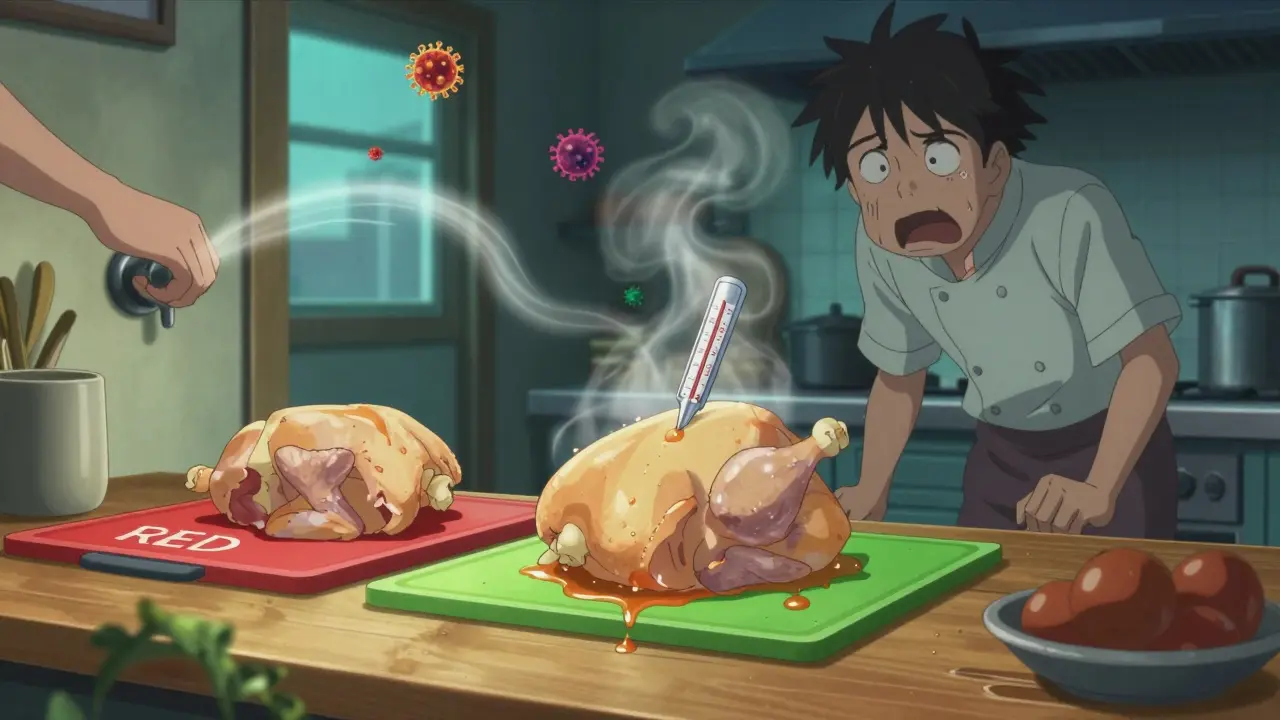
Every year, millions of people get sick from food that seems perfectly normal - a grilled chicken sandwich, a salad from the deli, or even leftover pasta. It’s not always obvious what went wrong. The real danger lies in the invisible invaders: bacteria, viruses, and parasites that slip into our meals unnoticed. These aren’t rare events. In the U.S. alone, foodborne illness affects 48 million people annually, sends 128,000 to the hospital, and kills 3,000. That’s more than the population of many small towns. And it’s not just about bad restaurants - most outbreaks start at home.
What’s Really Making You Sick?
Not all foodborne illnesses are the same. Some hit hard and fast. Others creep in slowly, with long-term consequences. The biggest culprit by number of cases is Norovirus. It’s responsible for nearly 60% of all outbreaks. You don’t need to eat something contaminated - just touch a doorknob after someone who’s sick washed their hands poorly, then touch your mouth. It spreads through ready-to-eat foods handled by infected workers. Symptoms? Nausea, vomiting, stomach cramps. Most people feel better in 1-3 days. But it’s contagious for weeks after you feel fine.
Then there’s Salmonella. It doesn’t cause as many cases as Norovirus, but it’s far more dangerous. It’s linked to undercooked eggs, poultry, and even peanut butter. Each year, it sickens over a million Americans, hospitalizes 26,500, and kills 420. What makes it scary is the long tail: 1 in 10 people who get Salmonella develop reactive arthritis that can last months. And it’s not just the food - 33% of Salmonella outbreaks trace back to eggs.
But the real silent killer is Listeria. It causes only 1,600 illnesses a year - less than 1% of total cases. Yet it’s behind 19% of all foodborne deaths. Why? Because it doesn’t care about your fridge. Unlike other bacteria, Listeria grows at refrigerator temperatures. It hides in soft cheeses, deli meats, and smoked seafood. For healthy adults, it might cause mild flu-like symptoms. For pregnant women, it’s catastrophic. One in five infections leads to miscarriage or stillbirth. Newborns who survive often face lifelong neurological damage.
Campylobacter is another major player. Found mostly in raw or undercooked chicken, it causes bloody diarrhea, fever, and cramps. Around 850,000 people get sick from it every year in the U.S. And it’s getting worse - antibiotic resistance has doubled since the 1990s. That means the drugs doctors used to treat it are now less effective.
And don’t forget Clostridium perfringens. It’s the classic buffet killer. Leftover meat sitting out too long, gravy cooling slowly on the counter - this bacteria multiplies like crazy in the danger zone between 41°F and 135°F. It causes nausea and diarrhea, but rarely hospitalization. Still, it’s the second most common cause of foodborne illness in the U.S. after Norovirus.
Why Some Pathogens Are Deadlier Than Others
It’s not just about how many people get sick - it’s about how badly they get hurt. Norovirus makes the most people sick, but most recover quickly. Listeria? It kills one in six people who catch it. Salmonella sends one in five to the hospital. And Toxoplasma, often found in undercooked meat or cat litter, causes 24% of foodborne deaths - even though it’s rarely talked about.
The numbers tell a clear story: the most common pathogen isn’t the deadliest. Listeria causes only 1.5% of illnesses but nearly 1 in 5 deaths. That’s because it targets the most vulnerable: pregnant women, the elderly, and people with weak immune systems. A healthy 30-year-old might brush off a case of Salmonella. A 75-year-old with diabetes could die from it.
And the economic cost reflects this. A single Listeria outbreak averages $15.4 million in losses - hospital stays, lost wages, legal fees. A Norovirus outbreak? Around $1.8 million. The difference? Length of hospital stays and severity of complications.

How Food Gets Contaminated - And How to Stop It
Contamination doesn’t happen in a lab. It happens in your kitchen. Here’s how it usually goes:
- Raw chicken drips juice onto the counter. You wipe it with a towel - but don’t wash the towel.
- You chop lettuce on the same cutting board. The bacteria from the chicken gets on the salad.
- You eat the salad. Two days later, you’re vomiting.
This is cross-contamination. It’s the #1 mistake at home. Studies show color-coded cutting boards - red for meat, green for veggies - reduce this risk by 63%. Simple. Cheap. Effective.
Another big issue: cooking temperatures. Nearly half of home cooks judge meat doneness by color. That’s dangerous. Chicken can look cooked and still harbor Salmonella. The only reliable way? A food thermometer. The USDA says poultry must reach 165°F (74°C). Ground beef? 160°F (71°C). Whole cuts of beef? 145°F (63°C) with a 3-minute rest. Using a thermometer cuts undercooking by 58%.
Thawing meat on the counter? That’s a recipe for disaster. Bacteria multiply fast at room temperature. Always thaw in the fridge, in cold water, or in the microwave. And never leave cooked food out for more than two hours - one hour if it’s over 90°F.
What You Can Do Right Now
Food safety isn’t about perfection. It’s about habits. Here’s what actually works:
- Wash your hands for 20 seconds - sing "Happy Birthday" twice - before handling food and after touching raw meat, eggs, or garbage.
- Separate raw and ready-to-eat foods. Use different cutting boards. Store raw meat on the bottom shelf of the fridge so it doesn’t drip.
- Cook to the right temperature. Buy a $10 digital thermometer. Use it every time.
- Chill food fast. Don’t let leftovers sit out. Put them in the fridge within two hours. Divide big pots into smaller containers to cool faster.
- Clean your fridge. Listeria grows in drip pans and door seals. Wipe them down monthly with hot, soapy water.
And if you’re pregnant, immunocompromised, or over 65? Avoid soft cheeses like Brie or feta unless they’re labeled "made with pasteurized milk." Skip deli meats unless you heat them until steaming. Don’t eat raw sprouts. They’ve caused more than 30 outbreaks since 2010.
The Bigger Picture
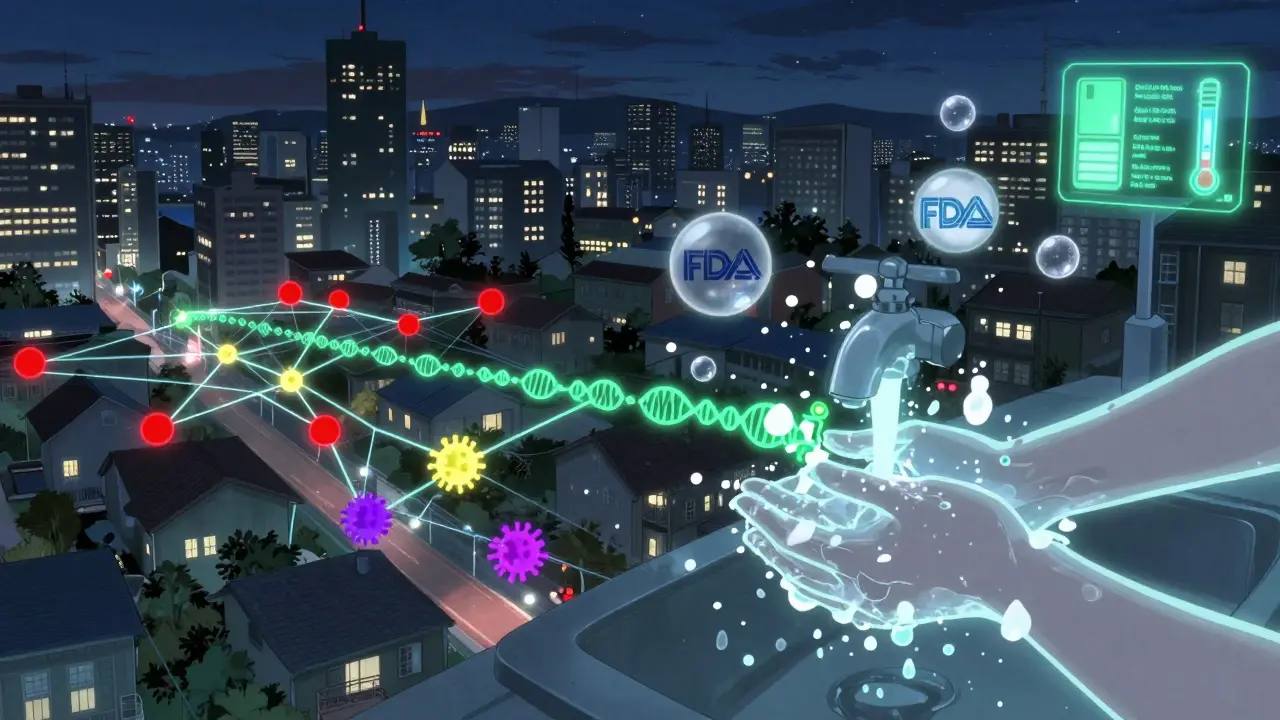
Food safety isn’t just your job - it’s everyone’s. The FDA’s Food Safety Modernization Act (FSMA), passed in 2011, was the biggest change in U.S. food law since 1938. It shifted focus from reacting to outbreaks to preventing them. It gave the FDA power to recall food without waiting for companies to agree. And it forced farms and factories to write safety plans.
Technology is helping too. Whole genome sequencing now lets scientists match a sick person’s bacteria to a contaminated batch of spinach in days - not weeks. In 2010, tracing an outbreak took 14 days. Today, it takes 3.5. That’s saving lives.
But gaps remain. Only 40% of leafy green farms get inspected each year - even though they’re linked to 22% of E. coli outbreaks. And climate change is making things worse. Warmer oceans mean more Vibrio bacteria in seafood. Heavy rains wash animal waste into fields where lettuce grows. By 2050, foodborne illness from produce could rise by 30%.
The good news? We know what works. We have the tools. The problem isn’t lack of knowledge - it’s consistency. One person skipping handwashing. One restaurant not checking temperatures. One family thawing chicken on the counter. Those small choices add up.
What’s Next?
By 2025, the FDA plans to require mandatory pathogen reduction plans for leafy greens. New rapid tests will detect E. coli or Salmonella in under two hours - instead of waiting 24 to 72. That means contaminated food gets pulled faster.
But none of that matters if you don’t wash your hands after handling raw meat. Or if you don’t use a thermometer. Or if you ignore the expiration date on that leftover chicken salad.
Foodborne illness isn’t a mystery. It’s preventable. The science is clear. The tools are cheap. The risk is real. And the next outbreak? It won’t start in a factory. It’ll start in your kitchen.
Juan Reibelo
January 24, 2026 AT 23:31Just saw this and had to share: I used to think food poisoning was just ‘bad luck’-until my mom got listeria from a pre-packaged sandwich. She was 68, diabetic, and spent three weeks in the hospital. Now? We use color-coded boards, thermometers, and I even label leftovers with dates. It’s not paranoia-it’s survival.
Amelia Williams
January 25, 2026 AT 16:27Y’all need to stop treating food safety like a chore-it’s literally life insurance. I started using my thermometer religiously after my cousin got salmonella from ‘just a little pink chicken.’ Now? My whole family does it. Even my 7-year-old checks the temp before I eat. Small habits = massive protection. You got this!
Viola Li
January 26, 2026 AT 10:16Let’s be real-most of this is fearmongering. People have been eating undercooked meat for centuries. You think your $10 thermometer is going to stop a pandemic? Listeria? It’s in the soil. It’s in the air. You can’t sanitize life. Maybe stop obsessing and just live?
venkatesh karumanchi
January 28, 2026 AT 08:11In India, we’ve always cooked food until it’s screaming hot-no thermometer needed. We know by smell, by sight, by instinct. But I get it-Western kitchens are messy. Still, this article? Spot on. Handwashing? Non-negotiable. I teach my kids: wash like you’re singing ‘Jai Ho’ twice. Simple. Effective.
Jenna Allison
January 29, 2026 AT 07:27As a food safety inspector, I see this every day. The biggest gap? People think ‘if it smells fine, it’s fine.’ Nope. Listeria has no odor. Salmonella doesn’t change the color of egg whites. Cross-contamination is silent. Use a thermometer. Separate cutting boards. Chill within 2 hours. These aren’t suggestions-they’re CDC protocols. Your life depends on it.
Kat Peterson
January 29, 2026 AT 09:28OMG I JUST REALIZED I LEFT CHICKEN ON THE COUNTER FOR 4 HOURS LAST NIGHT 😭😭😭 I’M GOING TO DIE A LISTERIA DEATH AND MY CAT WILL BE ORPHANED 💔💔💔
Izzy Hadala
January 30, 2026 AT 05:19While the empirical data presented herein is statistically significant and corroborated by the CDC’s 2023 Foodborne Illness Surveillance Report, the implicit assumption that individual behavioral modifications are sufficient to mitigate systemic food safety failures is, in my view, epistemologically flawed. The regulatory apparatus remains under-resourced, and consumer education, while beneficial, cannot substitute for structural reform.
Elizabeth Cannon
January 31, 2026 AT 07:47ok so i just learned that i’ve been thawing chicken on the counter for 10 years… i’m so sorry to my immune system. 🙈 i just bought a thermometer and i’m gonna start using it. also, i’m washing my hands like i’m scrubbing off glitter. no more excuses. we got this, fam 💪
blackbelt security
February 1, 2026 AT 08:25Thermometer. Color-coded boards. No counter thawing. These aren’t tips-they’re tactical protocols. You wouldn’t walk into a warzone without body armor. Why risk your gut with zero protection? This isn’t about being perfect. It’s about being prepared.
Patrick Gornik
February 3, 2026 AT 00:18Let’s deconstruct the myth of control. We are not stewards of purity-we are transient hosts in a microbial ecosystem. The kitchen is not a sterile lab; it’s a chaotic, living theater of decay and regeneration. Listeria doesn’t care about your thermometer. It thrives in the liminal space between fear and convenience. Your obsession with hygiene? A modern ritual to appease the anxiety of mortality. But here’s the truth: death is inevitable. The only rebellion? Eat the cheese. Feel the bacteria. Live dangerously. And if you die? At least you tasted life.